Porsche’s Profit Playbook: Fewer Cars, Fatter Margins, and a Hypercar Bet
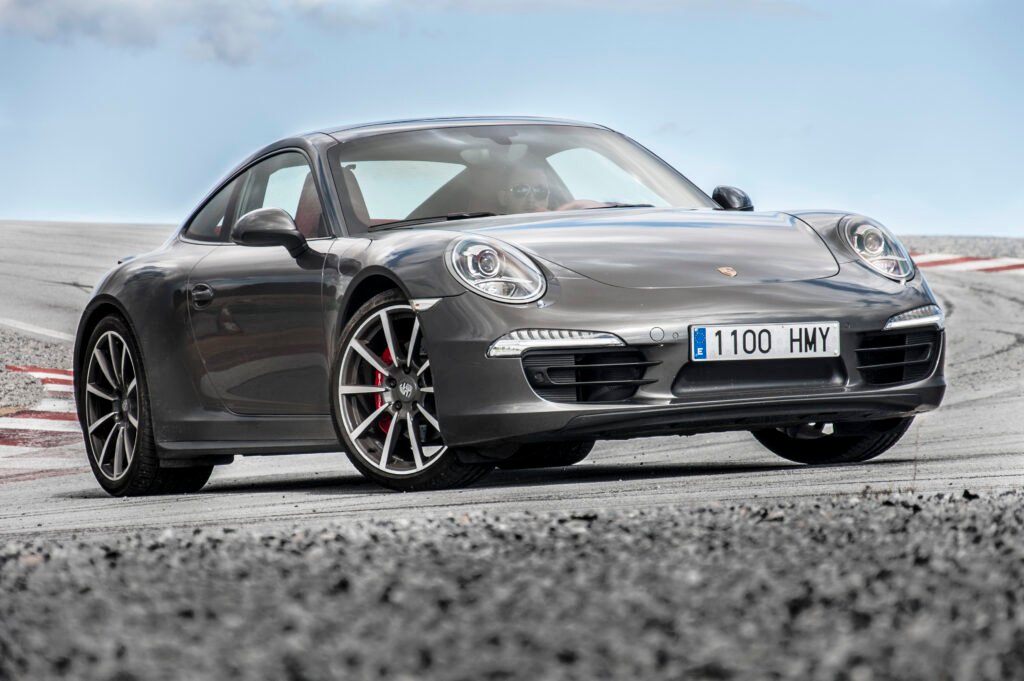
Porsche has a math problem it thinks it can solve: sell fewer cars, make more money. After watching sales plummet by 40,000 units from their 2023 peak and taking a beating in China, the Stuttgart brand isn’t doubling down on volume—it’s pivoting hard toward margin.
CEO Michael Leiters laid it out plainly to the German newspaper Frankfurter Allgemeine Zeitung: “Porsche has to make money even with fewer cars. We are planning for lower capacities in the future.” It’s a gamble wrapped in pragmatism. The company hemorrhaged sales globally, dropping from 320,221 units in 2023 to 279,449 in 2025. The 718 lineup is currently out of production, the Macan has disappeared from Europe, and China—once a growth engine—has become a weight around the brand’s neck. So Porsche’s solution? Trim the fat, recalibrate expectations, and swing harder at the high end.
The Spending Problem Nobody Wants to Admit
Leiters was blunt about something that rarely gets said out loud in the auto industry: costs have “spiraled out of control.” That’s corporate speak for “we’ve been spending like we’re drunk.” Reducing production capacity isn’t just about matching demand—it’s about forcing discipline back into an organization that got too comfortable when the money was flowing.
This is actually a smart move, even if it stings short-term. Porsche can’t compete with volume players; it never could and never should. The brand’s entire identity is built on exclusivity and performance, not moving metal like a Toyota or Volkswagen. By cutting capacity and focusing on high-margin special editions and core enthusiast models, Porsche is essentially admitting that chasing scale was a mistake.
The 718 Comes Back—But Don’t Expect Cheap
Here’s where Leiters’ strategy gets interesting: Porsche is planning to resurrect the 718 Boxster and Cayman. On the surface, that contradicts everything he just said about high-margin vehicles. The 718 has always been positioned as a more accessible entry point to the Porsche ecosystem—it’s supposed to bring in new customers at lower price points.
But notice the emphasis: bring in new customers to the brand. Leiters is threading a needle here. The 718 will return, sure, but expect it to be reframed as a pure driving experience rather than an affordable Porsche. Think of it less as a volume play and more as a gateway drug—get people into a Porsche, make them believers, then upsell them into a 911 or Cayenne down the line. That’s margin math.
The Real Story: Hypercars and Crown Jewels
The truly interesting bit is what Porsche isn’t saying directly but is hinting at loudly. Leiters mentioned at an annual press conference that the brand is planning flagship models positioned above the 911 and Cayenne—models that would sit at the absolute apex of the lineup. That’s code for hypercar, and Porsche has already been rumored to be working on something like this for years.
A hypercar above the 911? That’s not a volume play; that’s a halo project. It’s the kind of flagship that costs $1 million-plus, sells in the dozens per year, and exists almost entirely for prestige. It’s also the kind of car that costs a fortune to develop and is, frankly, a luxury that struggling automakers can’t afford. Porsche can—and it’s betting that one hypercar can do more for the brand’s profile than 10,000 base-model cars ever could.
Then there’s the K1, Porsche’s planned three-row SUV that was supposed to slot above the Cayenne. According to the FAZ report, that project is now on shaky ground. Why? Because Porsche just hit the brakes on its electrification push, and the K1’s entire business case was built around EV technology. A traditional gas-powered three-row SUV in 2026? That’s a harder sell than it was two years ago.
The Electrification Pullback Nobody Saw Coming
Buried in all this is a quiet admission: Porsche’s electrification strategy didn’t work the way leadership hoped. The company had been pushing hard into EVs, but consumer demand, supply chain realities, and profitability concerns have forced a recalibration. That’s why the K1—which was supposed to be a flagship electric SUV—is now under review.
This mirrors what we’re seeing across the industry. Automakers bet big on EV conversion timelines that turned out to be wildly optimistic. Porsche, with its aging platform structure and heavy reliance on internal combustion performance, got caught between a strategy that wasn’t working fast enough and a market that wasn’t ready to abandon traditional cars as quickly as boardrooms hoped. The smart play now is to hedge: keep ICE vehicles in the mix longer, focus profitability on the segments that still work, and let EV development continue at a slower, less expensive burn rate.
A Brand Recalibrating for Reality
What Leiters is really describing is a return to Porsche fundamentals. The brand made its name building expensive, uncompromising sports cars—not trying to be everything to everyone. The past five years were an aberration: aggressive expansion, global growth targets, platform sharing, EV investments. Now Porsche is pulling back and saying, “Let’s be really, really good at the things that made us money in the first place.”
That’s 911 variants, high-end Cayenne trims, the returned 718, and potentially some halo hypercar that sells for phone-number prices. It’s fewer cars but ones that come packed with significantly higher margins. It’s also an implicit acknowledgment that the auto industry’s growth era may be behind us, and smart players now compete on profitability per unit, not raw volume.
Porsche’s bet is that it can make this work—that cutting production, raising prices, and focusing on special editions and flagship projects will translate to stronger profits than the broader, shallower approach of recent years. It’s a credible strategy for a brand with Porsche’s heritage and pricing power. Whether it works depends entirely on whether the ultra-wealthy remain willing to spend freely on six-figure sports cars. Given that market has held up better than almost any other automotive segment, Leiters might actually be onto something.
- Porsche sales dropped 40,000 units from 2023 peak; CEO Michael Leiters says the brand will make more profit on fewer cars.
- The 718 Boxster and Cayman are returning, but expect them reframed as premium entry points, not budget Porsches.
- Porsche is developing flagship models above the 911 and Cayenne—likely a hypercar—while the K1 three-row SUV sits in limbo due to shelved electrification plans.
Sources: Car and Driver