Corvette ZR1X Crushes Production Record at Pikes Peak. Ford Still Won.
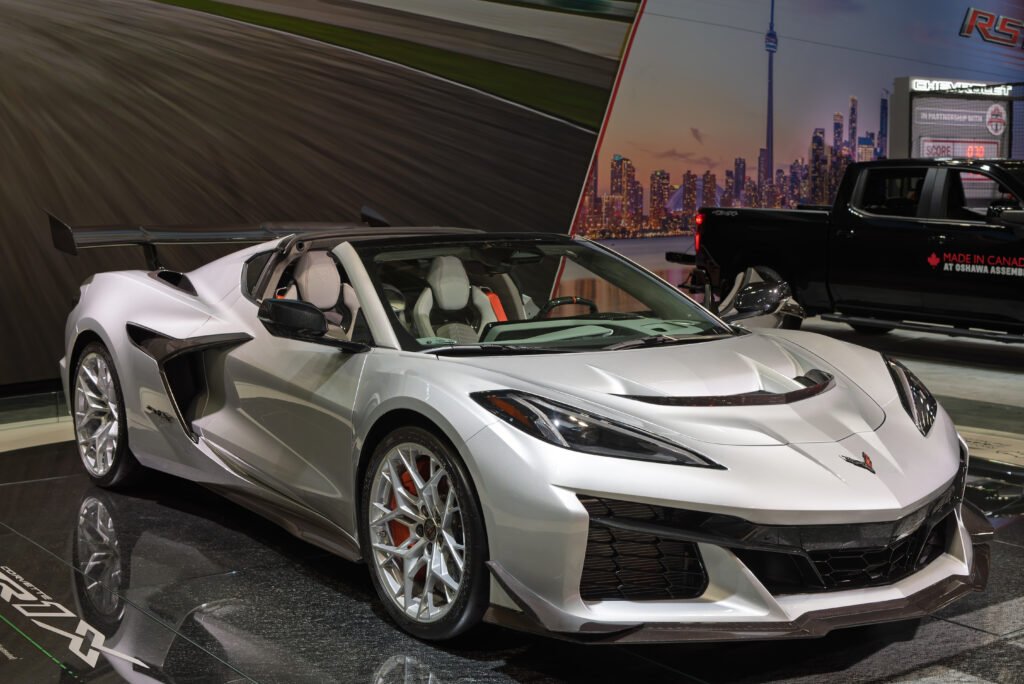
Chevrolet just quietly demolished a significant speed record without making a single press release about it. The 2027 Corvette ZR1X stormed up Pikes Peak in 9:30.104, obliterating the previous production car benchmark by 23 seconds. JR Hildebrand piloted the 1,250-horsepower all-wheel-drive supercar up the gnarly 12.42-mile course, and the result was so dominant it almost feels like Chevy wanted to slip it under the radar.
Almost. But here’s the thing: Ford still won the day.
The Corvette’s Stunning Run
Let’s be clear about what the ZR1X just did. This isn’t some heavily modified prototype masquerading as a production car—Chevrolet ran the thing basically stock, complete with factory exhaust and Michelin Cup 2R performance tires from the road car’s optional ZTK Performance Package. The 5.5-liter V8 paired with a front-mounted electric motor generates 1,250 hp, which translates to a 0-60 time of just 1.89 seconds. That’s hypercar-adjacent acceleration stuffed into something you can actually buy and drive every day.
The numbers alone explain why a 23-second improvement over the previous record feels seismic. This isn’t a marginal gain—it’s the kind of dominance that happens when engineering gets serious. And yet, Chevrolet’s communications team apparently decided radio silence was the move. No press release, no victory lap, just a production car doing what engineers built it to do.
There’s also the peripheral story: Emelia Hartford set a new women’s record at Pikes Peak, piloting a 2026 Corvette to the summit in 10:11.018 and claiming the “Queen of the Mountain” title. Hartford’s run was nearly 7 seconds faster than the previous women’s benchmark, which speaks to how capable the current generation Corvette platform has become across the board.
But Ford‘s Electric Mustang Had Other Plans
Here’s where it gets interesting. While the Corvette was setting a production car record, the overall winner at this year’s Pikes Peak International Hill Climb wasn’t a gas-powered supercar at all. Romain Dumas took top honors behind the wheel of the Super Mustang Mach-E, crossing the line in 8:18.202—more than 11 seconds faster than the second-place finisher.
The Super Mustang Mach-E is basically what happens when you take Ford’s electric performance Mustang and ask “what if we went absolutely insane?” The tri-motor powertrain produces over 1,400 hp from a 50 kWh battery pack. This is Ford’s second overall Pikes Peak victory, and it underscores a bigger trend: when the course demands acceleration, handling, and relentless power delivery without the complexity of a combustion engine, EVs are starting to look like the obvious choice.
The margin—11 seconds—matters. Hildebrand’s ZR1X ran an exceptional time by any measure, but Dumas’ electric Mustang demonstrated that for all-out Pikes Peak dominance, instant torque and the weight distribution advantages of electric powertrains have become legitimate advantages. The Corvette owns the production car category. The Super Mustang owns the race.
What This Says About Performance in 2027
There’s a broader story hiding in these two results. The Corvette ZR1X represents the ultimate expression of internal combustion performance—a naturally aspirated V8 enhanced by electric assist, delivering supercar numbers from a manufacturer that’s been refining the formula since the eighth-generation Corvette debuted in 2019. It’s a masterclass in hybrid engineering.
But the Super Mustang Mach-E’s victory reveals the endgame. Pure electric powertrains, when given sufficient capacity and motor count, have begun outpacing even the most sophisticated combustion-based systems on courses like Pikes Peak—a hill that demands explosive acceleration, sustained power, and thermal management. The 8:18 time isn’t a fluke; it’s a statement.
This creates an odd moment in automotive performance. The best naturally-aspirated-plus-electric supercar just crushed a 23-second margin on the production car record. And the best overall performance vehicle at the same event was a three-motor EV. Neither outcome is surprising anymore, but seeing them happen simultaneously at the same competition highlights just how fragmented the performance landscape has become. The EPA rates the ZR1X at reasonable efficiency for a 1,250-hp machine, while electric platforms continue to rewrite the performance rulebook.
Chevrolet’s silence about the ZR1X record is puzzling—beating a benchmark by 23 seconds should warrant at least a blog post. But maybe that’s intentional. Maybe Chevy’s letting the performance speak for itself while Ford takes the victory lap. Either way, both represent legitimate engineering achievements. The Corvette showed that hybrid performance cars can still dominate their category. Ford proved that when you’re chasing overall bragging rights, going full electric and adding a third motor isn’t just competitive—it’s superior.
- The 2027 Corvette ZR1X set a new production car record at Pikes Peak with a 9:30.104 run, beating the previous time by 23 seconds.
- The 1,250-hp hybrid supercar ran stock, using only factory exhaust and standard performance tires, proving the road version’s real-world capability.
- Ford’s Super Mustang Mach-E (1,400+ hp, tri-motor EV) won overall with an 8:18.202 time, claiming Ford’s second Pikes Peak victory and proving electric powertrains dominate the outright competition.
- Emelia Hartford set a new women’s record in a 2026 Corvette (10:11.018), adding another milestone to the current generation’s performance credentials.
Sources: Carscoops