Porsche Finally Ditches the Cayman for GT4 Racing—Meet the 911 GT4 R
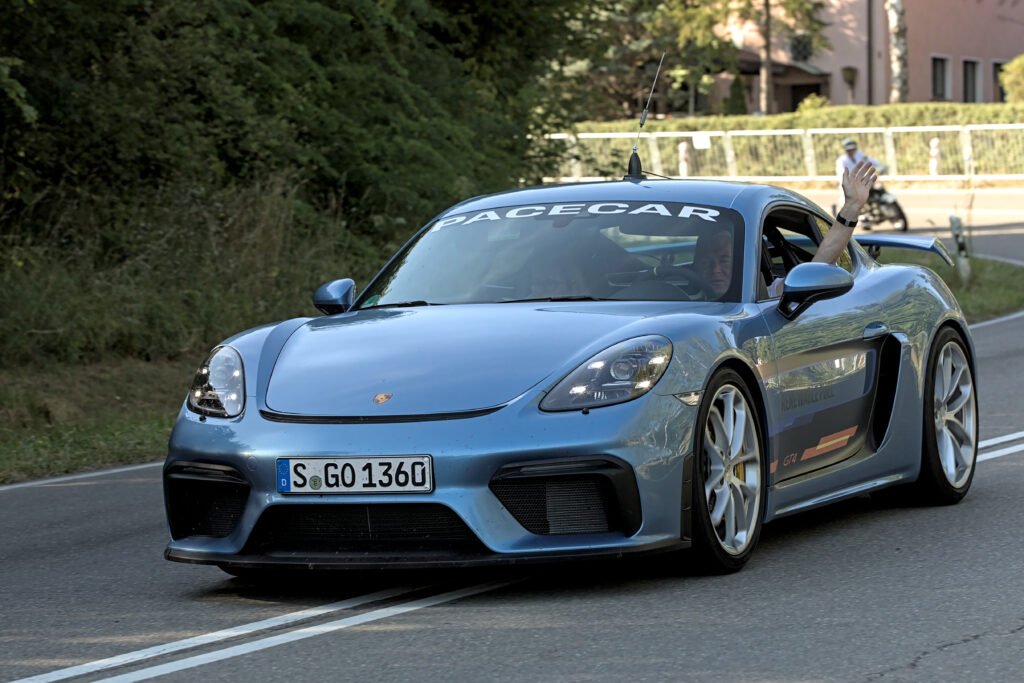
Porsche just ended a ten-year streak. Since 2016, every GT4-spec race car bearing the Porsche badge has been built on the 718 Cayman platform—roughly 1,500 of them sold to privateers and factory teams worldwide. But with the entry-level Cayman headed for the history books, the company made a bold call: the new 911 GT4 R becomes the first 911-based GT4 racer in the category’s existence. It arrives with 513 horsepower, a naturally-aspirated 4.0-liter flat-six, and a $375,000 price tag that’ll make your accountant weep.
The 911 Takes Over—and It’s Already Faster
This isn’t some half-hearted rebadge. The 911 GT4 R is homologated to race in SRO GT4 America, the IMSA Michelin Pilot Challenge, and various Porsche one-make series—meaning it’s ready for the fights that matter. Porsche engineered it from the 992.2 911 Cup platform, which gives it a serious competitive advantage over the outgoing 718 Cayman GT4 RS Clubsport.
The engine is the headline grab: a 4.0-liter naturally-aspirated flat-six producing up to 513 horsepower and 346 pound-feet of torque. That’s significantly more grunt than the Cayman it replaces, though exact outputs will flex depending on Balance of Performance regulations—when it rolls off the factory floor, restrictors dial it down to 424 hp to level the playing field. Power routes through a sequential six-speed dog-box with a four-disc racing clutch and paddle shifters, the same hardware found in the 911 Cup.
Matthias Scholz, director of GT racing cars at Porsche Motorsport, summed up the shift cleanly: “The 911 embodies Porsche’s motorsport DNA like no other car. Transferring this to a GT4 car opens up new possibilities in terms of performance and driving experience.” Translation: the old formula was getting stale.
Track-Focused Engineering That Splits the Difference
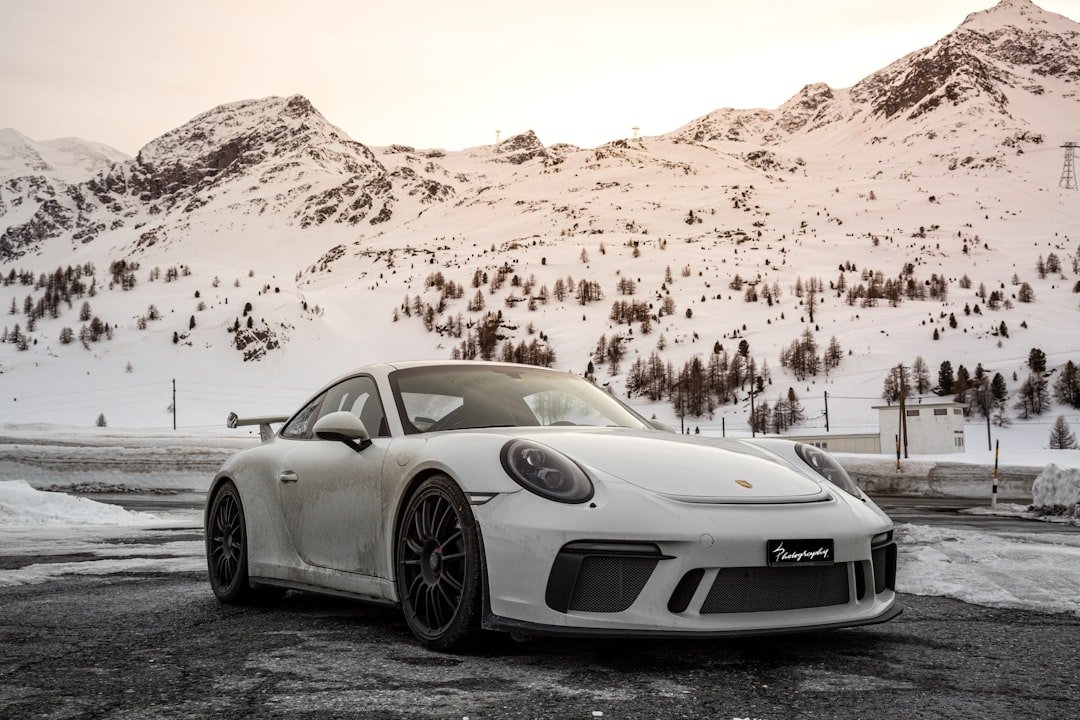
Here’s where Porsche got thoughtful. The GT4 R shares structural components with the 911 Cup, but class regulations forced some key differences. Wheels are one inch narrower and use a traditional five-lug pattern instead of the Cup’s sophisticated center-locks—a nod to the more accessible nature of GT4 racing versus higher-tier prototypes.
Suspension geometry reflects the same DNA: dual-adjustable dampers with three selectable spring rates give teams real tunability without overcomplicating setup. The aerodynamic package is where Porsche swung for the fences. The rear wing flips between 11 manually adjustable positions, letting drivers and engineers dial in downforce for everything from tight street circuits to high-speed road courses. Doors, engine cover, and aero components are sculpted from natural-fiber-reinforced plastic—a lightweight material that doesn’t sacrifice durability. Carbon fiber shows up where it matters too.
Inside the cockpit, a 10.3-inch digital display feeds the driver real-time telemetry alongside a built-in data logger and GPS system. That’s pro-level kit designed for teams that actually know how to interpret lap data. Ballast mounting points let teams dial in weight distribution to meet BoP requirements without gutting interior panels.
What This Means for GT4 Racing—and Porsche’s Strategy
The shift from Cayman to 911 isn’t just nostalgia. It’s Porsche acknowledging that the 718 Cayman is out of production, and pivoting its motorsport lineup accordingly. The 911 Cup platform was already battle-tested and refined; piggybacking on that development meant faster time-to-market and a car that’ll likely run rings around the competition right out of the box.
More importantly, this signals where Porsche sees its future in grassroots racing. The GT4 category has exploded over the past five years—it’s become the de facto entry point for teams wanting factory support without the six-figure-per-weekend budgets of higher tiers. By bringing the 911’s prestige and performance to GT4, Porsche elevates the entire category while securing its own pipeline of brand loyalty. A privateer who cuts their teeth in a 911 GT4 R is far more likely to graduate to a Porsche factory seat down the road.
Price, Availability, and What’s Next
The 911 GT4 R will retail for $375,000 in the United States and is expected to begin competing in the 2027 motorsports season. That’s not cheap, but it’s positioned as a turnkey race car—not a half-baked street-to-track conversion. Teams buying in are getting genuine factory engineering, Porsche’s motorsport credibility, and access to the most competitive customer racing programs on the continent.
Porsche Motorsport will also field works entries in the IMSA Michelin Pilot Challenge and SRO GT4 America championships, giving the new platform real-world validation before customer cars hit the track. Beyond that, the 911 GT4 R is eligible for the Porsche Sprint Trophy, Porsche Sprint Challenge North America, Porsche Carrera Cup North America, and various SRO GT America series—basically every major customer racing series that matters.
The 911 GT4 R is Porsche doubling down on what it does best: building race cars that own their class from day one. The Cayman’s reign in GT4 was solid, but this move feels inevitable. The 911 is the car that wins. Now it’s the car that wins everywhere.
- The 911 GT4 R replaces the 718 Cayman as Porsche’s GT4-spec race car—the first 911-based GT4 racer ever.
- It’s powered by a naturally-aspirated 4.0-liter flat-six with up to 513 hp, 346 lb-ft torque, and a six-speed sequential dog-box.
- Priced at $375,000, it launches in the 2027 motorsports season and will compete in IMSA Michelin Pilot Challenge and SRO GT4 America.
Sources: Car and Driver · Carscoops