Nissan’s Crossover Surge Masks a Deeper Problem: Sports Cars and EVs Are Dying
Nissan just released its Q2 2026 numbers, and the headline looks fine: 10.2% sales growth, 230,443 units moved, 16 consecutive months of year-over-year gains. Sounds great. But dig one layer deeper and you’ll find a company desperately clinging to what’s working while watching its future burn.
Crossovers Are Carrying the Entire Brand
The Rogue — Nissan’s bread-and-butter crossover — hauled in 65,796 sales in Q2, up 38.6% from last year. That single vehicle accounted for nearly 30% of Nissan‘s entire quarterly volume. The Pathfinder jumped 32.1%, the Frontier 34.6%, the Armada 27%, and even the budget Kicks hit a record June. Nissan’s redesigned 2027 Rogue with its new e-Power hybrid system is coming later this year, and the company is already talking up expectations for even bigger numbers.
Meanwhile, the Sentra — Nissan’s sedan play — posted a respectable 28.5% jump to 39,817 units, thanks to a recent redesign. That’s the good news. The bad news is that the Altima, its larger sedan sibling, tanked 26.5%. Nissan is essentially conceding that sedans are a shrinking market and betting the farm on utilities.
That’s a rational move in 2026. But it masks what’s actually happening underneath: Nissan is failing at the future.
The Z Sports Car Just Died
The Nissan Z hemorrhaged 50.7% of its sales, dropping to just 806 units in Q2. That’s not a decline. That’s a death spiral. For context, that’s fewer units than the Ariya electric sports car segment probably moves in a month, and we’re not even counting those numbers here.
Nissan blames the timing of the facelifted 2027 Z, which was announced in March and is arriving at dealerships this summer with revised styling, updated equipment, and a handful of performance tweaks — including a new six-speed manual transmission on the Nismo variant. Sure, some buyers are sitting tight waiting for the refresh. But a 50% collapse? That’s not just pent demand; that’s market evaporation.
The hard truth: sports cars don’t move volume anymore. They’re passion projects that pad manufacturer portfolios and enthusiast magazines. The Z has always been Nissan’s halo — a symbol that the company still cares about fun. That symbol is now flickering badly. And Nissan’s response is to wait for a refresh instead of fixing the fundamental problem that nobody’s buying sports cars in 2026.
The EV Story Is Even Worse
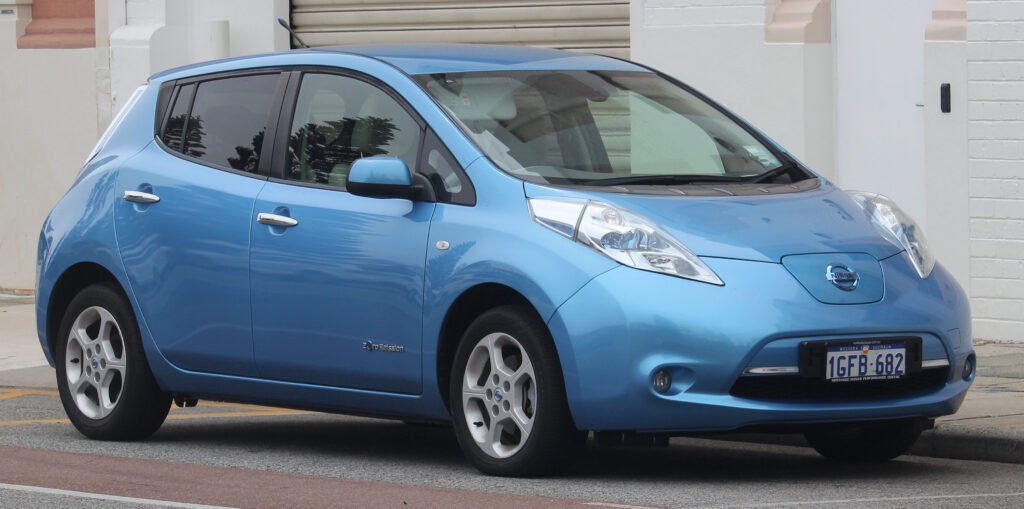
Then there’s the Leaf, Nissan’s aging EV that should be the future but is rapidly becoming a punchline. Leaf sales collapsed 36.6% in Q2 to 1,016 units, and year-to-date it’s down 57.1%. Those numbers aren’t even in the same universe as the Rogue.
Nissan blamed high gas prices for the weakness. That’s laughable. High gas prices should make EVs more attractive, not less. What actually happened is that the Leaf got old, slower, and less appealing while competitors like the Tesla Model 3, Chevy Bolt, and a dozen new Chinese challengers stormed the market. The Leaf used to be America’s EV workhorse. Now it’s the car your aunt buys because she doesn’t know better.
Nissan is supposedly working on new electric vehicles — the Ariya is gaining traction in Japan, and there’s talk of more models — but the timing matters. Right now, while EPA fuel economy standards are tightening and EV adoption is accelerating, Nissan’s electric lineup is a ghost ship. The company that invented mass-market EVs is getting lapped by almost everyone.
Infiniti’s New QX65 Is a Band-Aid on a Bigger Wound
Over at Infiniti, second-quarter sales essentially flatlined (down 0.2%). The brand’s response? Introduce the new QX65 at $53,990, a turbocharged crossover based on the larger QX60 that’s meant to recapture the spirit of the legendary FX. The QX65 managed 1,256 sales in its debut quarter, which is solid for a new model. The QX80 had its best Q2 ever at 3,402 units, even though year-to-date sales are down 9.4%.
But here’s the thing: Infiniti’s entire strategy is now three SUVs and a prayer. The QX50 and QX55 are gone. The luxury brand has essentially given up on sedans and coupes. That might work for quarterly earnings, but it’s a slow fade into irrelevance. Every luxury brand now sells crossovers. None of them stand out by selling even more crossovers.
The Bigger Picture: Nissan Is Playing Defense, Not Offense
Here’s what Nissan’s Q2 tells you: the company is executing well in mature segments where it already has market share and proven products. The Rogue is dominant. The redesigned Sentra is clicking. The Pathfinder and Frontier are revitalized. Those are wins.
But Nissan is simultaneously conceding every forward-looking category. The Z is being allowed to slowly die instead of being reimagined as something the market actually wants. The Leaf is being strangled by neglect while EV adoption accelerates. Infiniti is becoming a crossover-only brand with zero differentiation. And the company’s EV vision — like the Ariya — remains a regional story instead of a global force.
Nissan is printing money today on vehicles it designed years ago. But it’s not investing that cash in the future. It’s using it to smooth out quarterly reports and keep Wall Street happy. In 2026, when every automaker is supposed to be racing toward electrification and next-gen platforms, Nissan is running the playbook from 2016.
That strategy works until it doesn’t. And Q2’s crossover surge is masking the moment when that flip happens.
- Nissan Q2 2026: 230,443 units sold, up 10.2% year-over-year; 16 consecutive months of growth.
- The Rogue crushed it with 65,796 sales (+38.6%); crossovers now carry the entire brand.
- The Z sports car tanked 50.7% to 806 units; the Leaf EV collapsed 36.6% to 1,016 units—a 57.1% year-to-date decline.
- Infiniti’s new QX65 debuted at $53,990 with 1,256 sales, but the luxury brand is now basically a three-crossover operation.
- Nissan is winning in mature segments but ceding every forward-looking category: sports cars, EVs, and differentiation.
Sources: Carscoops