The Czinger 21C Is Obsessed With Weight, and It Shows
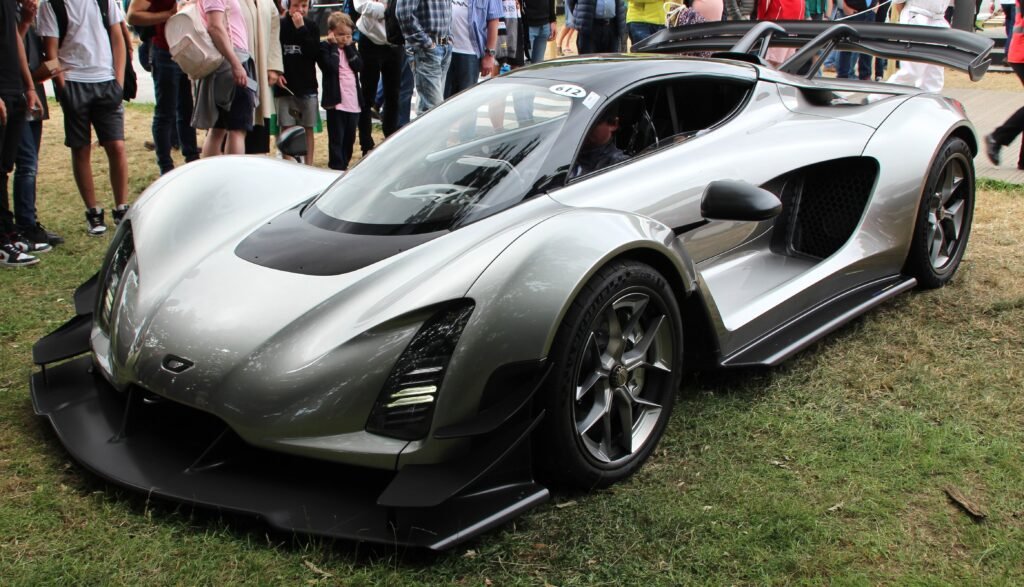
Forget everything you know about how supercars are supposed to be built. The Czinger 21C doesn’t just break the mold — it 3D-prints a new one, melts it down, and builds something that shouldn’t exist.
This is a hybrid V8 that weighs almost nothing, handles like it’s on rails, and looks like it was sketched by someone who’d never seen a car before but understood aerodynamics at a molecular level. Ars Technica recently got behind the wheel, and the result is one of the most genuinely unhinged automotive engineering stories of the year.
When Weight Obsession Becomes Art
The 21C’s entire design philosophy orbits around a single, fanatical principle: shed every unnecessary gram. This isn’t some marketing tagline plastered across a press release — it’s baked into every component, down to the 3D-printed titanium and composite parts that look like something from a sci-fi movie but are genuinely functional suspension brackets and chassis elements.
Most supercars talk about lightness. Porsche did it with the 918 Spyder hybrid, using carbon fiber and careful material selection to hit their weight targets. But Czinger went a step further — they automated the design and manufacturing process itself. The result is parts that look almost organic, as if evolution designed them rather than engineers.
That obsession translates to real-world performance. The 21C has been shattering lap records at various circuits, posting times that would make conventional hypercars blush. When you remove 300 pounds from a sports car, physics rewards you with better acceleration, braking, and handling — it’s that simple.
Hybrid Power That Actually Makes Sense
Here’s where the 21C diverges from the typical “slap a battery in it” approach that’s infected supercar design. This is a V8 hybrid that feels like a V8 hybrid, not a compromise.
The gas engine does what it does best — produce that raw, visceral power delivery. The electric motors handle the grunt work that internal combustion does poorly: instant torque, smooth power delivery, and regenerative braking. It’s not about emissions virtue-signaling; it’s about engineering optimization. Under NHTSA ratings and real-world testing, hybrid powertrains in lightweight applications consistently outperform their purely combustion counterparts on track.
The combination gives the 21C the ability to accelerate like a madman, maintain lap consistency that would exhaust a traditional V8, and still hit apex speeds that conventional supercars can’t touch. It’s the kind of engineering that makes you wonder why everyone isn’t doing this.
The 3D-Printing Revolution, Finally Real
For years, manufacturers have dangled 3D printing as the future of automotive production. It sounded great in boardroom presentations, but the reality was usually: expensive, slow, and mostly cosmetic. The 21C proves that the technology has actually arrived — and it’s transformative.
Czinger isn’t using 3D printing for show pieces or one-off art installations. These are structural and suspension components that handle real forces under real stress. The manufacturing process allows for designs that traditional subtractive manufacturing simply couldn’t execute — shapes that are stronger, lighter, and more efficient than anything a CNC machine could produce.
This is the real inflection point for the technology. Once it becomes economically viable to 3D-print load-bearing chassis elements at scale, the entire automotive industry’s approach to weight, strength, and durability gets rewritten. The 21C is basically the proof of concept that this isn’t vaporware anymore.
Why This Matters Beyond the Hypercar Bubble
You might be thinking: “Cool story, but this is a million-dollar hypercar that like 50 people will ever own.” Fair point. But the 21C is basically a laboratory for technologies that’ll trickle down faster than you’d expect.
Hybrid efficiency gains, weight reduction through advanced manufacturing, and optimized power delivery are already showing up in cars regular people can actually buy. EPA fuel economy data consistently proves that lighter, hybrid-assisted vehicles dramatically outperform their heavier alternatives. The 21C is just taking that principle to its logical extreme.
The real story here isn’t “look at this impossible car.” It’s “here’s what becomes possible when you stop accepting conventional wisdom and start engineering from first principles.” That mindset — radical weight reduction, hybrid efficiency, additive manufacturing — is going to reshape how we build cars, period.
The Drive Was Unhinged
According to Ars Technica’s report, piloting the 21C isn’t like driving other supercars. The response is immediate, the feedback is visceral, and the lap times are genuinely shocking for a production car. There’s no fat, no compromise, no softening for the sake of comfort. Just pure automotive intent.
That’s the Czinger philosophy distilled: build the absolute minimum required to make a car work, then make it work better than anything else on four wheels.
The 21C won’t revolutionize the industry tomorrow. But five years from now, when those 3D-printed suspension brackets are showing up on AMG models and hybrid powertrains are standard on anything performance-focused, remember that you watched it start here. Czinger didn’t just build a car; they built a roadmap for what’s possible when you stop compromising. And honestly, that’s wild.
- The Czinger 21C pairs a hybrid V8 with 3D-printed titanium and composite chassis components to achieve obsessive weight reduction and track dominance.
- Ars Technica confirmed the 21C shatters lap records across multiple circuits, delivering real-world performance that justifies its extreme engineering approach.
- 3D printing is finally viable for load-bearing automotive structures, opening the door for rapid adoption across the industry’s performance and efficiency sectors.
Sources: Ars Technica Cars