Audi’s New A6 Allroad Gets RS6 Muscles and Actually Justifies Wagon Life
Audi just made the wagon cool again—or at least gave it a fighting chance against the SUV apocalypse. The revived A6 Allroad, returning after a four-year hiatus, ditches the timid station wagon formula and shows up with RS6-wide fenders, aggressive cladding, and a chassis setup that actually means something. This isn’t a jacked-up sedan pretending to be rugged. This is a real alternative to bloated premium SUVs, and it’s finally bringing plug-in hybrid power to the party.
Widebody Wagon Energy
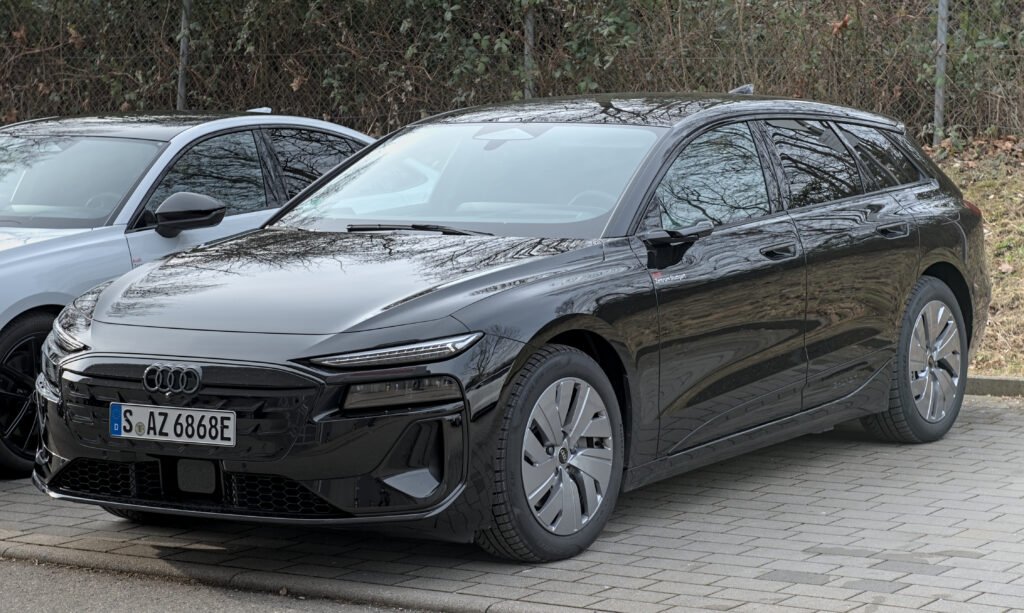
The visual transformation is the headline. For the first time, Audi slaps its widest fenders—traditionally reserved for the fire-breathing RS6—onto the Allroad. Combined with gloss-black bumper inserts, honeycomb grille detailing, and rugged plastic cladding that wraps the side skirts and flared arches, the wagon actually looks like it could do something other than haul yoga mats to the suburbs. The rear bumper features a faux diffuser that doubles as a skid plate, and buyers can spec the cladding in either matte black or matte silver chrome, backed by aluminum roof rails and chrome tailpipes.
The dimensional gains are substantial. At 5,016 mm long and 1,986 mm wide, the new Allroad is 111 mm wider than a standard A6 Avant and 84 mm wider than its own predecessor. That width isn’t just for show—it houses a genuinely different vehicle underneath. The digital Matrix LED headlights can project lane boundaries and ice warnings onto the road, while the rear OLED lights display warning symbols for trailing traffic. These aren’t gimmicks; they’re the kind of over-engineered detail that justifies Audi‘s pricing.
Chassis Tech That Actually Matters
Here‘s where the Allroad stops being a cosmetic trick and becomes legitimately interesting. The suspension isn’t borrowed from the regular A6—it’s purpose-built. The active air suspension starts 34 mm higher than standard, then can drop another 20 mm in Dynamic mode or raise an additional 15 mm in offroad mode, with a maximum 20 mm lift function available at low speeds. Above 75 mph, the system automatically lowers itself for better highway efficiency. That’s not revolutionary, but it’s thoughtful engineering.
The real party trick is the rear-axle steering, which turns the back wheels up to 5 degrees against the fronts at low speed, shrinking the turning circle by as much as a meter. At higher speeds, it reduces that angle to 2 degrees for stability instead. Throw in a stiffer, progressive steering setup, and Audi is building a wagon that actually wants to be driven—not just parked in a driveway as a family hauler masquerading as an adventure vehicle.
Power: Hybrid First, Diesel Second
For the first time in Allroad history, plug-in hybrid power is available. The new e-Hybrid version pairs a turbocharged 2.0-liter four-cylinder with an electric motor, delivering 362 hp and 500 Nm (369 lb-ft) of torque from a 25.9 kWh battery. That battery gives you 95 km (59 miles) of zero-emission range—genuinely useful for commutes—and charges in 2.5 hours on a standard 11W AC socket. It’s the sensible choice for Europeans who want to score parking privileges and bypass fuel prices.
The alternative is a mild-hybrid 3.0-liter V6 turbodiesel producing 295 hp and 580 Nm, with the 48V system adding another 24 hp. The diesel is quicker—0-100 km/h in 5.4 seconds versus the e-Hybrid’s likely 5.5 or slower—and it can tow 2,500 kg compared to 2,000 kg for the electric version. Both cap out at 250 km/h and come with standard quattro all-wheel drive. Neither will set your pants on fire, but both will happily cruise long distances without apology. The choice comes down to how much you care about stopping for gas versus electricity.
Interior and Practicality
The cabin inherits the spacious, tech-forward setup already rolled out across the A6 family. You get an 11.9-inch digital cluster, a 14.5-inch touchscreen, and an optional 10.9-inch passenger display. The optional stuff reads like an Audi brochure fever dream: four-zone climate, an air quality package with dust sensor, acoustic glass, a dimmable panoramic roof, and seats with pneumatically adjustable bolsters, heating, ventilation, and massage functions. The trim choices are equally indulgent—silver-brown poplar wood or light gray linen mesh made from recycled plastics.
For actual wagon duties, the diesel offers 466–1,497 liters of boot space compared to 404–1,423 liters for the e-Hybrid (the battery eats 73 liters). That’s not class-leading, but it’s competitive. Add the optional matte-black aluminum roof basket from Audi Genuine Accessories, and you’ve got a legitimately practical family hauler dressed up as something interesting.
Pricing, Availability, and the American Question
European order books open June 18, with first deliveries this fall. German pricing starts at €77,250 ($89,600) for the diesel and €80,250 ($93,100) for the e-Hybrid. The direct competition is surprisingly thin—only the Mercedes-Benz E-Class All-Terrain plays in the same sandbox, since Volvo killed the V90 Cross Country. That’s a massive opening for Audi.
As for the US market, Audi isn’t saying yet. The company sells only the A6 sedan in America right now, which is a crime. Past generations of the Allroad made the journey—both the original C5 and the outgoing C8 sold here—so there’s historical precedent. If Audi finally brings the wagon back to the States, it would hand American buyers the Allroad before the bonkers RS6 Avant eventually arrives, making this the forgotten middle child that suddenly becomes the smart person’s alternative to a Q5 or Q7.
The Real Story
This wagon matters because it proves that not every family vehicle needs to be a bloated SUV. The new Allroad isn’t trying to be a sports car or an off-roader—it’s trying to be a genuinely useful, genuinely engaging alternative to the crossover conveyor belt. The RS6 widebody gives it visual credibility. The rear-axle steering and active suspension give it real agility. The plug-in hybrid option gives it a low-emissions card to play. And the pricing, while premium, undercuts both the Q7 and the E-Class All-Terrain.
Whether it survives the SUV apocalypse depends on whether buyers remember that wagons used to be the smart choice. Audi is betting they do. If nothing else, the new Allroad is proof that someone at the Four Rings still thinks driving a car should be more interesting than just existing in one.
- 2026 Audi A6 Allroad debuts with RS6-style widebody fenders, making it visually aggressive for the first time.
- Rear-axle steering (up to 5 degrees at low speed) shrinks the turning circle by up to a meter; active air suspension adds 15mm ground clearance in offroad mode.
- New plug-in hybrid (362 hp, 59-mile EV range) joins the turbodiesel V6 (295 hp); starts at €77,250 ($89,600) in Europe with no US confirmation yet.
Sources: Carscoops