
Slate Auto Just Raised $650 Million. They Actually Seem to Know What They’re Doing.
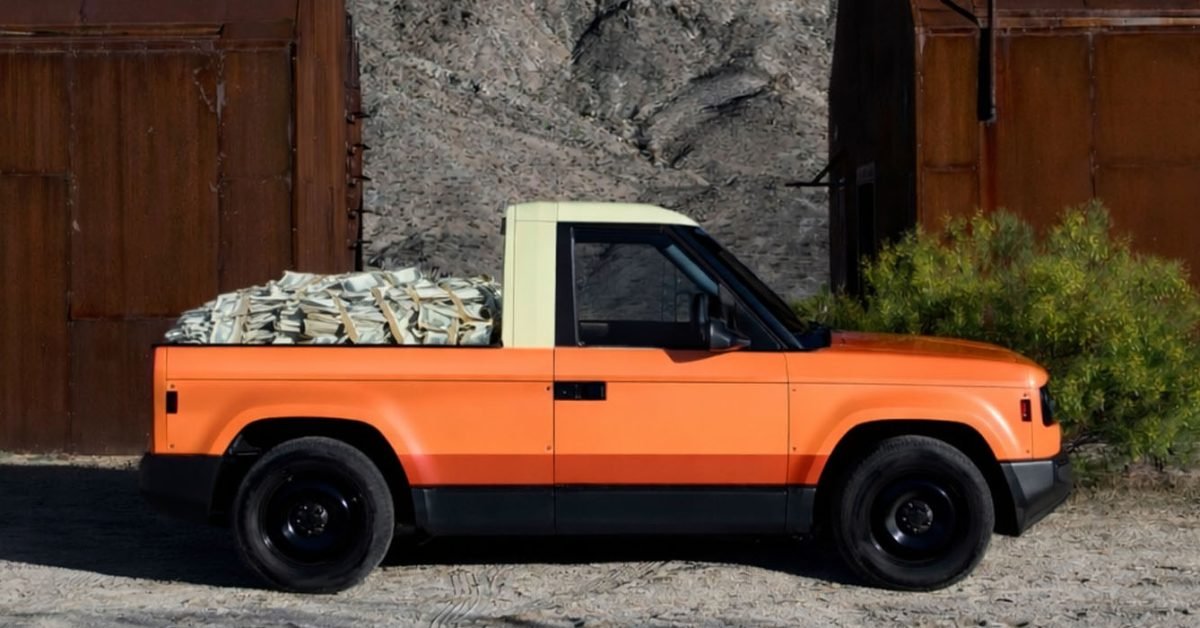
Here’s what’s refreshing about Slate Auto: they’re not trying to revolutionize the dashboard or convince you that your truck needs to be a rolling content platform. They’re just building a cheap pickup truck, and they’re raising serious money to do it right.
The Indiana-based EV startup announced this morning that it closed a $650 million Series C funding round led by previous backer TWG Global. That’s real capital, real momentum, and—critically—real proof that someone with actual money believes these guys can deliver on an increasingly rare promise in the EV startup world: an affordable vehicle that regular people might actually want to buy.
The Anti-Startup Approach
Slate’s entire philosophy stands in sharp contrast to how every other EV startup has played this game. Lucid chased the premium sedan dream. Rivian went supercar suspension and digitally integrated everything. Sony Honda Mobility wanted to turn a car into a content platform before one half of that partnership quietly bailed.
Slate looked at all of that and said: What if we just made a truck that‘s simple, cheap, and actually available?
The company’s flagship—the Slate Truck—is being engineered to undercut the Ford Maverick XL, currently the cheapest new pickup you can buy in America. Before the federal EV tax credit got axed, Slate was targeting a sub-$20,000 price. Now? Mid-$20,000s. That’s not a compromise; that’s still insane for a new EV truck.
Here’s how they’re actually pulling it off: 600 parts instead of 6,000. No painted body panels—it’s plastic, blank slate (get it?). No stamping. No paint shop. No infotainment system. No touchscreen. Every truck rolls off the line in Warsaw, Indiana, identically configured: two doors, manual windows, bare bones.
For years, people on the internet have screamed that they want an uncomplicated car. Slate’s calling their bluff.
The Team Behind the Capital
Here’s the second reason to take this seriously: this isn’t a startup full of tech bros and venture capitalists. The core team has been working behind the scenes for four years before even coming out of stealth. Most of them are industry veterans—people who actually know how to manage and scale automotive production at a real factory.
CEO Peter Faricy put it plainly in the announcement: the Series C round will let them “reach the next stages of production this year: on time and on budget.” That’s not typical startup theater. That’s someone who’s built cars before and knows exactly what “on time and on budget” actually means.
Slate’s planning to invest roughly $400 million into the reindustrialized Warsaw facility itself, create over 2,000 regional jobs, and contribute an estimated $39 billion to Indiana’s economy over two decades. These aren’t pie-in-the-sky promises—they’re specific financial commitments that regulators and local governments will hold them accountable for.
The Modular Wild Card
One more thing worth paying attention to: Slate designed the Slate Truck on a modular platform that can transform from a 2-seat pickup into a 5-seat SUV or fastback. That’s not a gimmick; that’s manufacturing flexibility. One factory floor making multiple products means better capacity utilization and less financial risk if market demand shifts.
Preorders open in June, which is also when we’ll finally get official pricing and the full menu of add-ons. Late-2026 deliveries are the target. As of now, they’re tracking to hit that.
The Brutal Reality Check
Here’s the thing nobody wants to say out loud: in the EV startup world, funding doesn’t mean anything until vehicles actually ship. Lucid burned through billions. Rivian’s valuation cratered. Fisker imploded spectacularly. Theranos had funding too.
Slate has the cash. Slate has the team. Slate has a credible strategy—cheap, simple, modular, and actually targeted at a real market need. But the product has to ship. The trucks have to not catch fire. Owners have to be happy. All of that still has to happen.
Right now, though? All eyes are on June. If Slate sticks the landing on pricing and that preorder number is as insane as we expect it to be, we might actually be looking at the one EV startup that figured out how to do this without the hype and the vaporware.
That alone would be worth $650 million.
Via Ars Technica Cars and Electrek — Original article