The 2026 Mini Countryman SE ALL4 Is Genuinely Fun—If You Can Live With Its Biggest Flaw
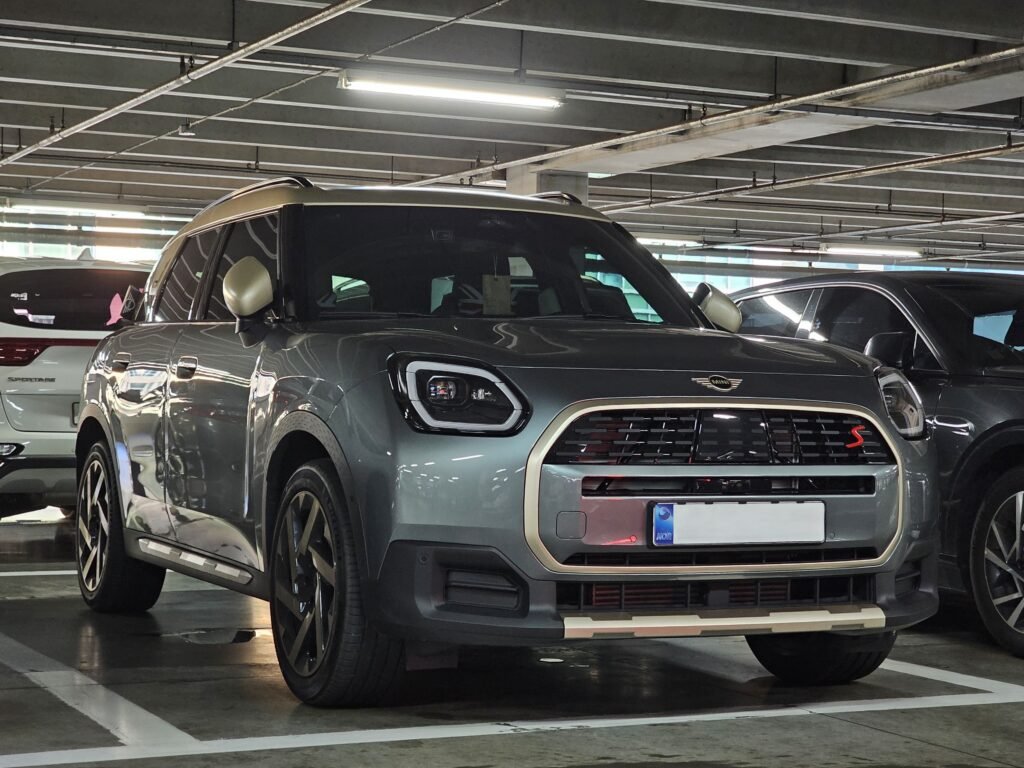
The electric Mini Countryman SE ALL4 is a genuinely enjoyable car to drive, which is the only reason anyone should buy it. It’s not practical. It’s not economical by traditional metrics. And it’s definitely not the rational choice on a spreadsheet. But it’s fun in a way that most modern SUVs have forgotten how to be—and that matters more than the specs sheet wants to admit.
A Cabin That Actually Tries
Here’s what’s wild: Mini managed to design an interior that doesn’t feel like every other crossover on the planet. While the automotive industry collectively decided that minimalism and touch screens equal modernity, the Countryman’s cabin includes actual design theater—circular OLED display in the center, playful fabric accents, vertical air vents, and tactile toggles that mimic turning a key. It’s not retro for retro’s sake; it’s a deliberate callback to what made Mini special when people actually wanted to drive them.
The centerpiece is that circular infotainment screen with software that’s genuinely joyful to interact with. Toggle between the different “Experience Modes” and the display’s colors change, animations play, and the whole cabin responds to your input. The ambient lighting uses tiny projectors in the door panels to display different patterns instead of the standard LED strips every other manufacturer slapped in their vehicles. It sounds gimmicky until you realize that gimmicks are just features that make you smile—and how many modern cars actually do that?
The tactile details continue throughout: multi-colored fabric on the door cards, an intriguing cubby behind the cup holders, and heated seats that actually work. For the base Countryman C, you’re looking at AU$56,700 ($39,700), but the fully electric SE ALL4 model tested starts at AU$80,737 ($56,600), rising to AU$83,862 ($60,600) in the Favored trim. That cabin is honestly worth more than the price difference with competitors, even if no algorithm would ever calculate it that way.
Performance That Shouldn’t Work This Well

The SE ALL4 packs 230 kW (308 hp) and 494 Nm (365 lb-ft) of torque from its dual-motor setup, and that’s enough to turn what looks like a cute little family hauler into something genuinely quick. Mini claims 5.6 seconds to 62 mph, but testing showed 5.3 seconds on multiple runs—which is faster than it feels because the acceleration is so linear and effortless that passengers won’t feel like they’re about to die during spirited driving.
Roll from 37-75 mph and the Countryman manages it in under 5 seconds, which puts it in hot-hatch territory for overtaking real-world scenarios. The “Go Kart Mode” adds even more bite, sharpening throttle response and adding heft to the steering. Pair that with Pirelli P Zero tires and a suspension tuned for grip, and the Mini becomes genuinely planted through mountain roads. One-pedal driving mode works well enough, though adjustments to the regenerative braking system are annoyingly buried in the infotainment menu.
The real kicker: this isn’t a hot hatch in an SUV body that sacrifices handling for size. The Countryman actually feels composed on poorly paved roads despite being slightly firmer than ideal. It’s the kind of car that makes you want to find the next twisty road, which—again—almost no modern SUV achieves.
The Range Problem That Won’t Go Away
Here’s where the fun stops. The Countryman SE ALL4 carries a 64.6 kWh battery pack and Mini claims 268 miles (432 km) of range. Real-world driving with one-pedal mode engaged averaged 17.2 kWh/100 km, which is respectable given the power on offer—but it also means hitting 400 km (248 miles) in actual conditions is a fantasy. This is fine if you have home charging. If you don’t, you’re making weekly trips to a public charger, which immediately destroys the appeal of car ownership for anyone without a driveway.
DC charging speeds of just 130 kW peak mean 29 minutes to go from 10-80 percent, which puts the Countryman behind most competitors. For context, Tesla’s Model 3 Long Range handles similar quick-charge times, but starts at a much lower price point and carries significantly more range. The Countryman’s smaller battery pack is the obvious culprit—it keeps weight down (which helps handling) but absolutely guts practicality.
The real world math is brutal: if you take a road trip longer than 200 miles one way, you’re now planning your life around charging infrastructure. That’s not a feature; that’s a lifestyle change masquerading as progress.
Safety and the Small Stuff
The Countryman includes modern essentials: autonomous emergency braking, active cruise control with lane-centering, and a self-parking feature that actually works—particularly impressive in tight parallel spots. NHTSA crash test ratings for newer compact SUVs show that the segment has genuinely improved in recent years, and the Countryman’s feature set matches that standard. It’s not groundbreaking safety tech, but it’s comprehensive.
Space limitations are typical for the segment: rear legroom is tight for anyone over 6 feet tall, and cargo capacity of 460 liters (16.2 cubic feet) is respectable but not spacious. The firmer suspension that makes it fun to drive means rougher rides on broken pavement. None of this is surprising for an electric crossover, but it’s worth noting because compromises do add up.
The Real Mini Countryman Paradox
The Countryman has been controversial since it launched 16 years ago—purists saw it as evidence that Mini had lost the plot by moving away from three-door hatchbacks. They were wrong. The Countryman proved that people wanted more space without sacrificing the brand’s quirky identity. Three generations later, that formula still works, even wrapped in an electric motor.
But there’s something worth acknowledging here: the electric Countryman SE ALL4 is an objectively bad idea if you actually need to drive more than 200 miles between charges regularly. It’s small, expensive relative to competitors, and limited in range. It makes no rational sense. Yet it’s also one of the few cars in 2026 that understands the difference between features and character—between filling a spreadsheet and creating an experience that makes you want to get behind the wheel.
That’s the Mini paradox, just like it was 16 years ago. You don’t buy a Countryman because it’s the smartest choice. You buy it because it’s the only small SUV that remembers that cars are supposed to be fun. Whether that’s worth the compromises is entirely your call—but at least Mini’s being honest about what this car is.
- 2026 Mini Countryman SE ALL4 delivers 308 hp and hits 62 mph in 5.3 seconds, making it genuinely quick for an electric SUV.
- The cabin is a standout: circular OLED display, tactile toggles, ambient projector lighting, and actual design personality that most competitors abandoned years ago.
- 268-mile claimed range drops below 250 miles in real-world conditions, and 130 kW DC charging takes 29 minutes to reach 80%—major drawbacks for road trips.
- Base pricing starts at AU$56,700 ($39,700) for the gas Countryman C; electric SE ALL4 begins at AU$80,737 ($56,600), rising to AU$83,862 ($60,600) as tested.
- Only buy this if you can charge at home regularly and value fun/character over practicality—it’s a heart purchase, not a head one.