GM’s Energy Pass Just Made EV Charging Actually Convenient. Here’s the Catch.
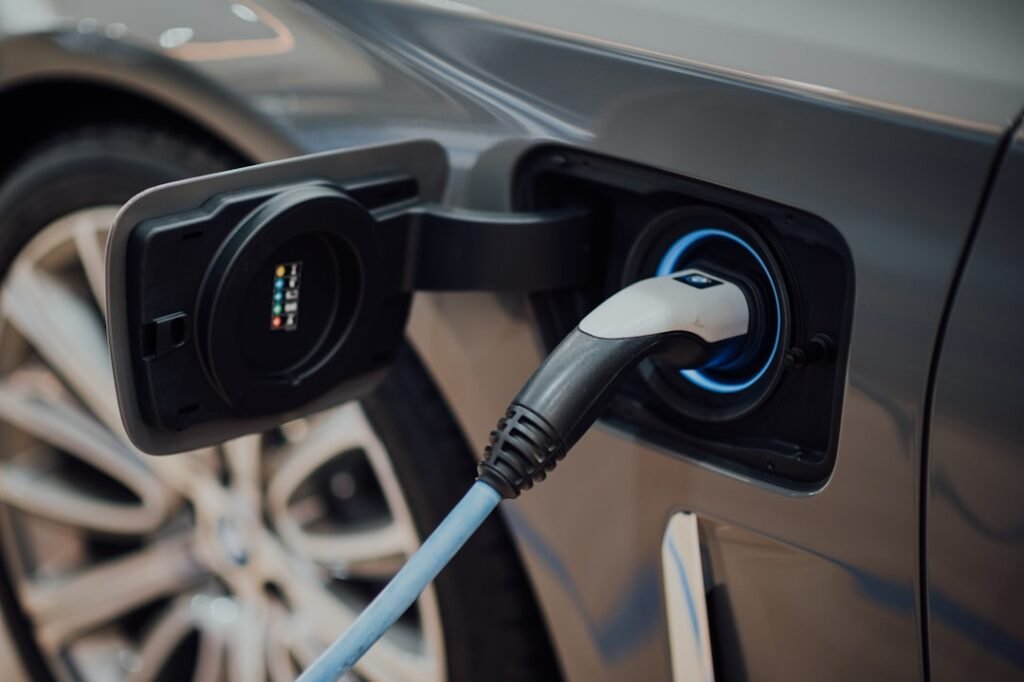
Photo by CHUTTERSNAP on Unsplash
General Motors just handed EV owners something they’ve desperately needed: a single charging account that actually works everywhere. The Energy Pass, rolling out through MyChevrolet, MyGMC, and MyCadillac apps, covers roughly 70 percent of America’s DC fast-charging infrastructure—IONNA, Electrify America, Tesla, EVgo, and Chargepoint—without forcing you to juggle multiple apps, memberships, or payment methods. If you own two different GM EVs, one app handles both. It’s basic UX that should have existed three years ago, but at least it’s here now.
Here’s the actually smart part: GM is using this charging ecosystem as the beachhead for a much bigger play. The company already has 250,000 vehicles on the road capable of Vehicle-to-Home (V2H) functionality, and it’s actively piloting Vehicle-to-Grid (V2G) capabilities—where your EV’s battery becomes a two-way asset that can send power back to the grid during peak demand. That changes everything about how EVs fit into the energy infrastructure.
The Charging Problem That Energy Pass Actually Solves
The fragmentation in EV charging has been a disaster from day one. Tesla has its Supercharger network. Electrify America has its stations. EVgo owns its footprint. Meanwhile, other networks like Chargepoint and IONNA operate independently. An EV owner wanting to road-trip or find convenient DC fast-charging had to download five different apps and maintain accounts at each one—assuming their car was even compatible with all of them. It’s the kind of friction that doesn’t exist with gas cars, and it’s been a genuine adoption barrier for mainstream buyers who don’t want to deal with the logistics.
Energy Pass addresses this head-on. You get one unified payment method, one interface, and one login. GM is even promising that IONNA, Tesla Superchargers (for NACS-native GM vehicles), and other partners will support Plug and Charge functionality—meaning you literally plug in your car and walk away while charging happens automatically. No app tapping required. That’s genuinely table-stakes stuff that should’ve shipped with the first generation of mass-market EVs, but here we are.
The numbers matter here: covering 70 percent of the national DC fast-charging grid gives GM owners realistic access for the kind of road trips that used to be EV-impossible. Tesla was miles ahead on this front just by having the Supercharger network, but now that GM vehicles are NACS-compatible and the charging standard is converging, that advantage collapses. Good.
Why Vehicle-to-Grid Is the Real Story
But Energy Pass is really just the wrapper around what could be genuinely transformative: Vehicle-to-Grid technology. The difference between V2H and V2G matters more than people realize. V2H lets your EV store power at home during off-peak hours (cheaper) and use it during blackouts or peak pricing. That’s convenient for owners. V2G does the same thing but ties your vehicle’s battery into the electrical grid as an active balancing resource.
GM has already got PG&E and DTE Energy running V2G pilot programs with GM employees in California and Detroit. PG&E’s target is wild: 52,000 GM households enrolled in grid-balancing protocols by 2030. At that scale, you’re talking about a meaningful chunk of distributed battery storage that can stabilize the grid without building expensive new power plants.
Here’s the macro view: the International Energy Agency estimates 250 million EVs will be on the road globally by 2030. Right now, those batteries are dead weight most of the time—they sit in parking lots absorbing sunlight and doing nothing. Flipping that equation, where EVs become active grid assets, is potentially one of the biggest infrastructure plays of the decade. It solves the renewables intermittency problem (solar and wind don’t run 24/7, but EV batteries can smooth that out) while giving utilities real-time flexibility instead of forcing them to build peaker plants for an hour a day.
The Realistic Limitations
Let’s be honest about what this isn’t. Energy Pass only covers 70 percent of DC fast-charging, not 100 percent. If you live in a region where one of the remaining networks dominates, you’ll still need another app. The rollout is happening in phases—some networks are getting Plug and Charge now, others “soon.” And Vehicle-to-Grid is still in pilot phase; it won’t be mainstream for years. The infrastructure (inverters, energy hubs, home batteries) costs money and requires installation GM hasn’t made painless yet.
Also, the V2H/V2G equation only works if your utility participates and if you have access to the right hardware. Not everyone wants to spend five figures on home charging infrastructure, and utilities won’t all play ball immediately. GM’s framing makes it sound like this is happening everywhere, when really it’s happening where regulatory conditions and utility partnerships align. California and Michigan are leading, but try doing this in Iowa or Arizona and the story changes.
Why This Matters Beyond GM
Here’s what’s actually significant: GM is using charging convenience—a pain point that has absolutely wasted potential buyers’ time—as the onramp to the much bigger play of grid integration. It’s smart sequencing. The Energy Pass solves an immediate, tangible problem (charging fragmentation). Vehicle-to-Grid addresses the existential problem (what do you do with 250 million distributed batteries on an unstable electrical grid?).
Tesla built the Supercharger network because it had to—it was the only way to make EVs practical. Ford, GM, and others caught up not through brilliance but through standardization (NACS). Energy Pass is GM saying, “OK, we’re caught up on charging. Now let’s solve the next layer.” That’s the actual competitive advantage—not owning the chargers, but orchestrating the ecosystem and monetizing the grid balancing that EVs enable.
The skeptic in me notes that this all depends on utility cooperation, regulatory support, and consumers actually installing V2H/V2G equipment. Those aren’t sure things. But if even half of this execution works as advertised, GM just took a genuine swing at one of the dumber problems in automotive right now: why do EVs have to be parasites on the grid instead of partners? Energy Pass is the front door. V2G is what matters.
- GM Energy Pass covers 70% of U.S. DC fast-charging networks (IONNA, Electrify America, Tesla, EVgo, Chargepoint) with one app and one payment method.
- NACS-native GM vehicles get Plug and Charge on Tesla Superchargers; full rollout across all partners coming soon.
- The real play: 250,000 GM EVs are already V2H-capable, and pilot programs with PG&E and DTE aim to enroll 52,000+ households in Vehicle-to-Grid by 2030.
Sources: Car and Driver