
GM’s Sodium-Ion Battery Play Reveals the Real EV Cost Problem
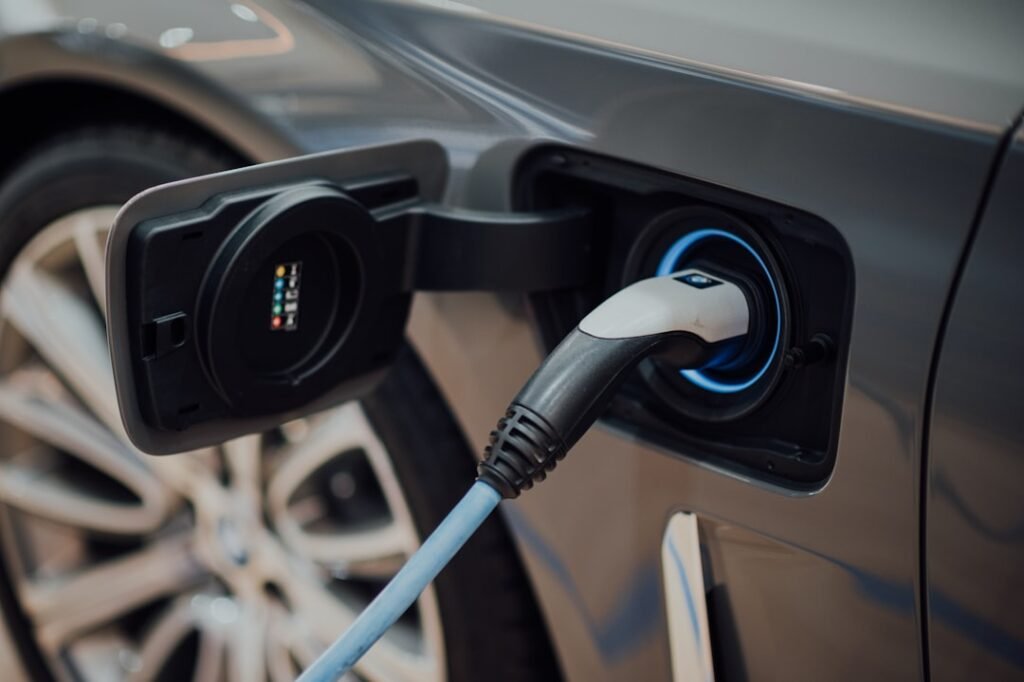
Photo by CHUTTERSNAP on Unsplash
General Motors just announced it’s developing a fourth battery chemistry in partnership with Peak Energy, and the move tells you everything you need to know about where EV costs are actually heading—and why the cheapest electric car you’ll buy in five years might be cheaper than you think.
The catch? These sodium-ion cells aren’t going into Chevrolets or Cadillacs. They’re going into stationary battery energy storage systems (BESS)—the industrial-grade battery bunkers powering data centers and grid-scale renewable energy storage. But before you dismiss this as irrelevant garage talk, understand that GM’s approach here reveals a far smarter strategy than what most of its competitors are doing to crack the EV affordability crisis.
Why Sodium Makes Sense (Just Not Yet for Cars)
Here’s the material science: sodium is stupid cheap and abundant. More importantly, production of sodium precursor materials isn’t controlled by Chinese companies—a fact that matters enormously when you’re trying to build supply chains independent of geopolitical leverage. Sodium cells also laugh at temperature extremes, performing better in cold than lithium-ion and tolerating heat without the liquid cooling systems that add complexity and cost to everything from grid storage to EVs.
The downside is equally real. Sodium-ion cells pack roughly 30 percent less energy density than lithium-iron-phosphate (LFP) cells—which are already the low-density choice in the lithium world. That’s fine for a stationary battery sitting in a bunker for 20 years. It’s a dealbreaker when you’ve got a confined EV footprint and customers demanding 300+ miles of range. For now, anyway.
GM’s current EV lineup runs on three other chemistries: nickel-manganese-cobalt-aluminum (NMCA) cells from its Ultium Cells joint venture with LG Energy Solutions; lithium-iron-phosphate cells sourced from China’s CATL for the redesigned 2027 Chevrolet Bolt; and the forthcoming lithium-manganese-rich (LMR) cells that promise the cost structure of LFP with significantly higher energy density.
The Real Genius: Parallel R&D and Production Scaling
Here’s where GM’s move gets interesting, and why it actually accelerates EV affordability. The company isn’t just pivoting underutilized battery factory capacity toward a new market like Ford did last month. Instead, it’s treating sodium-ion development as a long-term R&D investment that creates organizational momentum across all its battery programs.
Kurt Kelty, GM’s vice president of battery and sustainability and formerly Tesla’s battery czar from 2006 to 2017, explained to Car and Driver that the real upside of sodium chemistry is the headroom for improvement. Traditional NMCA cells improved at roughly 8 percent annually through chemistry tweaks and economies of scale. That rate has cratered to 1 or 2 percent yearly. LFP has hit a similar plateau after 20-plus years of refinement. Sodium, by contrast, is still in its infancy—there’s massive opportunity for cost and performance gains if you’re willing to invest the engineering cycles.
GM’s newly opened Battery Cell Development Center (BCDC) in Warren, Michigan—nearly 800,000 square feet dedicated to optimizing production processes and recipes—is the mechanism that makes this work. The BCDC is positioned as the critical bridge between basic chemistry research (handled by the Wallace Battery Cell Innovation Center opened in 2022) and full-scale manufacturing. Kelty claims this facility can shave up to a year off the development timeline for new chemistries ready to scale.
Translation: GM can experiment with sodium-ion chemistry for energy storage, extract production learnings and improvements, then apply those insights back to LMR development for EVs. The company isn’t running separate programs—it’s running an integrated battery ecosystem where improvements in one chemistry inform breakthroughs in others.
Why This Actually Matters for Your Next EV
The battery business has historically been a game of margin extraction through complexity. More energy density meant more cost. Lower cost meant sacrificing performance. Under CAFE fuel economy standards, every MPG (or kWh) gained matters to the bottom line, and automakers have learned to optimize for the sweet spot between cost and capability.
What GM is signaling here is that the EV cost curve isn’t about choosing one chemistry and riding it down the cost curve. It’s about managing a portfolio of chemistries, each optimized for its specific use case, with shared development infrastructure that compounds improvements across the board. When you’re improving LMR cells for EV range, you’re simultaneously improving sodium cells for grid storage. When you optimize manufacturing processes for sodium, those learnings transfer back to cost reduction on LMR and NMCA cells.
Ford is doing something similar with energy storage, but GM’s approach—combining energy storage with an aggressive parallel development program for next-generation EV batteries—is the more sophisticated play. It’s not either-or; it’s both-and, with the energy storage business subsidizing R&D that ultimately lowers EV battery costs faster than competitors can match.
The Platform Question Nobody’s Answering
Car and Driver pressed Kelty and battery engineer Andy Oury about whether all this new battery development infrastructure suggests GM has a new EV platform in the works—something comparable to Ford’s Universal Electric Vehicle platform, which the company claims will enable a mid-size electric pickup with 300 miles of range starting at $30,000.
Both executives said absolutely nothing about it. Confirmed nothing. Denied nothing. Which in corporate speak means there’s definitely something cooking, and GM isn’t ready to show its hand yet. The company has already committed to rolling out LMR cells from a pilot line next year, with volume production scheduled for 2028. If a new platform is in development, those cheaper, denser cells would be the obvious powertrain foundation.
What’s clear is that GM isn’t treating EV battery development as a check-the-box exercise anymore. With dedicated facilities for chemistry research, production optimization, and now diversified revenue streams from energy storage, the company is building genuine competitive advantage in the one area that actually determines whether EVs stay overpriced or become genuinely affordable.
Sodium-ion cells won’t power your Blazer anytime soon. But the infrastructure GM is building around them might be exactly what makes the next generation of GM EVs cheaper and better than what’s sitting on dealer lots today. That’s worth paying attention to.
- GM is developing sodium-ion battery cells with Peak Energy for stationary energy storage, not EVs—a $30+ billion market driven by data centers and grid storage.
- Sodium cells cost less, handle temperature extremes better, and require no liquid cooling, but their lower energy density makes them unsuitable for vehicles in the near term.
- GM’s new Battery Cell Development Center uses sodium-ion R&D to compound improvements across all its battery chemistries, potentially shaving a year off development timelines for cheaper EV batteries like LMR, arriving in volume production in 2028.
Sources: Car and Driver