This 1963 Pontiac Drilled 130 Holes in Its Frame to Win Drag Races
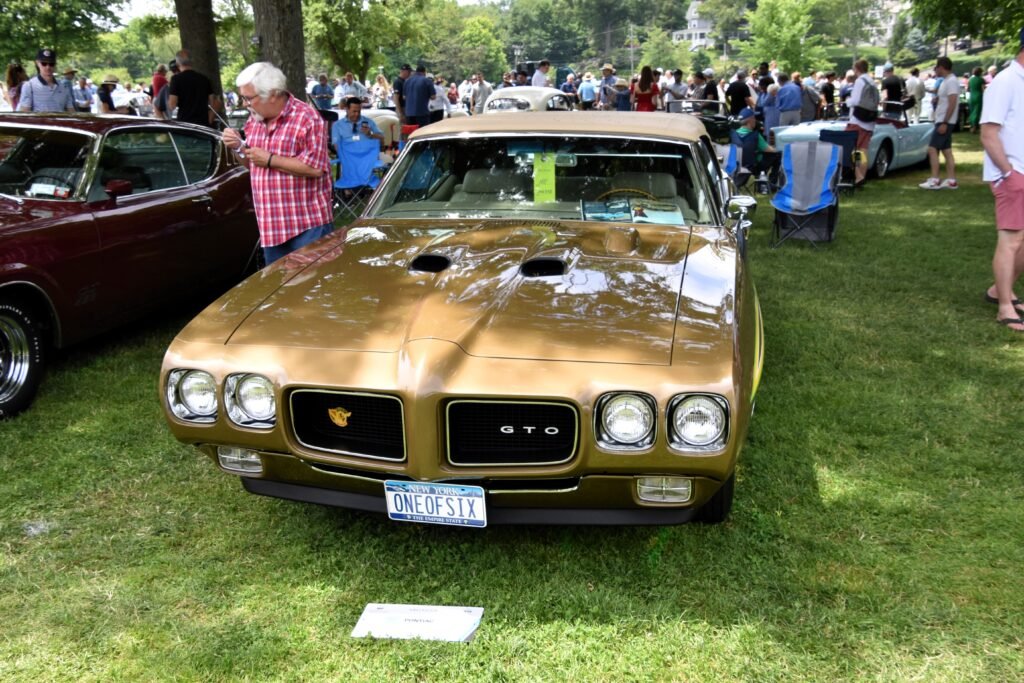
In the early 1960s, when Pontiac needed to homologate a relatively large and heavy Catalina for professional drag racing, the engineering team didn’t mess around. They took a drill and put approximately 120 to 130 large-diameter holes directly into the car’s steel frame. The resulting machine became known as the “Swiss Cheese” Catalina—and it remains one of the most aggressively lightened production-based race cars ever built.
Drilling Holes in the Structural Gospel
The philosophy wasn’t new. Colin Chapman famously taught the automotive world that the path to speed was simple: “simplify, and then add lightness.” Pontiac’s engineers took that gospel seriously—seriously enough to treat their quarter-mile special like a piece of Swiss cheese.
Those weren’t tiny pinpricks, either. Judging by surviving examples, the holes are accurately described as “large-diameter” openings drilled right through the load-bearing structure. This was structural weight reduction at its most blunt and literal. The math was straightforward: shed mass, drop time slips, win races. The tradeoff? A chassis that was fundamentally weakened and prone to cracking under stress.
The weight savings were substantial. Comparing a standard 1963 Catalina at 3,725 pounds against the Swiss Cheese variant at 3,308 pounds, Pontiac shaved off between 270 and 400 pounds depending on your starting baseline. For a quarter-mile machine in the early 1960s, that was the difference between a 12.3-second pass at 115 mph and something considerably slower.
A Comprehensive Diet Beyond Drilling
Frame holes were just the headline. The full weight-reduction program rivaled what you’d see in modern lightweight initiatives like Mazda’s Gram Strategy for minimalism. Pontiac experimented with even thinner-gauge aluminum for the fenders, hood, and inner panels compared to previous lightweight efforts. Radiator supports and splash shields got the same aluminum treatment—exotic materials on a car meant to survive only a few quarter-mile passes.
The exhaust manifolds alone saved 45 pounds by going aluminum instead of cast iron. Yes, aluminum has a frustratingly low melting point and would turn into a liability anywhere beyond the quarter-mile, but that was fine for a purpose-built drag machine. The differential housing and brake drums followed suit, all aluminum in the name of weight.
Then came the deletions. A radio? Gone. Heater? Dumped. Body sealant and insulation were stripped out entirely. Even the front anti-roll bar disappeared—Pontiac engineers correctly figured that a car designed purely for straight-line acceleration had zero use for cornering hardware. This was drag racing efficiency taken to its logical extreme.
A One-Year Wonder That Changed Nothing
The Swiss Cheese Catalina’s reign was brutally short. Only 14 cars received the full treatment in 1963, and that turned out to be the same year GM made the decision to exit factory-backed racing entirely. Corporate pressure and political winds shifted faster than a quarter-mile acceleration, and Pontiac’s drag racing program evaporated overnight.
What should have been the beginning of a lightweight revolution became a footnote. Those 14 cars were it. No 1964 variant, no evolution of the concept, no production lineage. The Catalina went back to being a conventional mid-size cruiser, and the Swiss Cheese lessons were filed away and largely forgotten by the industry.
The Rarity Premium
Nearly six decades later, rarity has made them absurdly valuable. One example crossed the block at Mecum Auctions in 2025 for $742,500—an astronomical sum for a car that never won a championship or set an official record. But that’s the collector’s market for you: experimental, one-off, and era-defining usually means six figures minimum.
The Swiss Cheese Catalina represents a fascinating moment in American automotive engineering when racing necessity drove some genuinely insane solutions. Drilling your frame full of holes to drop weight would never pass a modern safety test or survive a single highway drive. But in 1963, it made perfect sense: a 12.3-second quarter-mile was worth the tradeoffs. It’s a reminder that before computers optimized lightness, engineers just picked up drills and got to work.
- Pontiac drilled 120–130 large holes through the 1963 Catalina’s frame to cut 270–400 pounds for drag racing homologation.
- Only 14 Swiss Cheese Catalinas were built in 1963 before GM axed its factory racing program that same year.
- A 1963 example sold for $742,500 at Mecum Auctions in 2025, making it one of the most expensive experimental Pontiacs ever.
Sources: Jalopnik