California Just Made Buying Your First EV $3500 Cheaper—and It’s Actually a Game-Changer
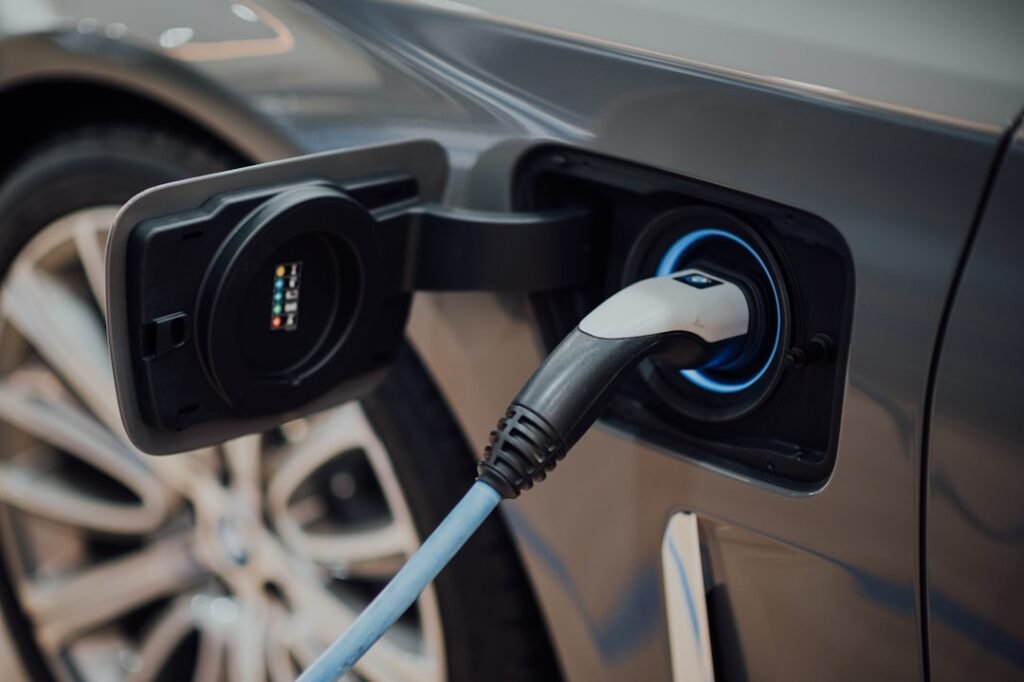
Photo by CHUTTERSNAP on Unsplash
California just yanked the rug out from under the $7,500 federal EV tax credit—but didn’t leave buyers hanging. Governor Gavin Newsom signed a bill this week that hands first-time electric vehicle buyers a $3,500 discount on new EVs priced up to $50,000, applied straight at the dealer with zero paperwork gymnastics. For used EV shoppers, there’s $1,750 off vehicles $25,000 or under. It’s not the federal credit, but it’s a hell of a consolation prize for Californians.
The state has backed this program with $135.5 million from its 2026–2027 budget, and participating automakers are matching dollar-for-dollar to create a $270 million incentive pool. That’s real money with real teeth. The catch? Only “participating automakers” qualify, and that list doesn’t exist yet—the California Air Resources Board (CARB) is supposed to publish it next month. Point-of-sale discounts roll out later this summer.
Which Cars Actually Get the Discount?
Here’s where it gets interesting. The law carves out a loophole for California-based companies: Lucid and Rivian are exempt from the $50,000 price cap. That means you could theoretically grab a base Lucid Air Pure for $68,900 instead of $72,400—still pricey, but less insane. Tesla, despite its Bay Area roots, got booted from the exception because it moved headquarters to Texas, so only Model 3 and Model Y trims under $50K will qualify.
If the usual suspects sign on—and that’s a big “if”—the numbers get wild. The Chevy Bolt EV could drop to $25,495. The Nissan Leaf would land just over $28,000. Ford, Subaru, and Toyota models could suddenly populate a sub-$35K segment that’s been barren as hell. That triple-the-options calculation isn’t hype—it’s math.
The Automaker Participation Question
The elephant in the room is whether Tesla, Ford, GM, Nissan, and others will actually bite. Automakers love subsidies, but they’re wary of state-level price caps and bureaucratic entanglement. There’s no federal requirement here—only California companies are mandated to participate. The rest are “voluntary.” Don’t expect a press conference from Tesla announcing their participation; expect CARB to quietly announce the list next month while everyone’s distracted by something else.
GM signing on is almost certain (the Bolt is too cheap to leave on the table), and Nissan’s Leaf economics probably make it viable too. But whether premium brands and smaller manufacturers jump in is anyone’s guess right now. What we do know: if automakers want access to a $270 million incentive pool and first-time EV buyers in the nation’s largest EV market, they’ll show up.
What This Means for the EV Market
This isn’t just a California story. It’s a warning shot that the EV incentive landscape is fracturing. The federal credit is dead. State-level deals are stepping in to fill the void. Other states have experimented with EV rebates, but California’s scale—and its willingness to tie it to California-based companies—sets a new precedent.
For first-time buyers specifically, this removes a massive psychological hurdle. The entry point to EV ownership just dropped by $3,500. That’s the difference between “maybe someday” and “this summer.” The dealership experience doesn’t change—no rebate forms, no tax credit puzzles, no CPA consultations. Just a lower sticker price.
The timing is also worth noting. California’s clean-air initiative wraps this discount into a broader emissions strategy. It’s not charity—it’s infrastructure policy dressed as incentive. The state wants EVs on roads and gas cars off them, and it’s willing to subsidize the transition for first-time buyers to accelerate adoption.
The Real Game Here
What makes this genuinely clever is the point-of-sale structure. No paperwork, no waiting for tax season, no complex eligibility verification at the dealer level. You walk in, negotiate the price, and the discount is already baked in. It’s the opposite of the federal tax credit headache—and way more effective at moving units. Buyers see the lower price on the Monroney and that’s what sticks in their head.
The $50,000 cap is surprisingly smart too. It excludes most luxury EVs while targeting the mass-market sweet spot where volume lives. A Tesla Model 3, Bolt, Leaf, or Hyundai Ioniq actually compete at this price. That’s where adoption happens, not in the $80K segment. California knows the EV market’s real battle isn’t at the top—it’s at the bottom.
There’s also the small detail that automakers are matching California’s $135.5 million investment. That’s voluntary skin in the game. These companies aren’t being forced—they’re choosing to deploy capital because they see the market opportunity. That’s the part politicians won’t advertise but should: the private sector thinks this works.
Bottom line: If you’re a first-time EV buyer in California and you’re not waiting until summer to see which automakers participate, you’re leaving money on the table. The discount is real, it’s applied at the dealer with no gotchas, and it could drop some legitimately good EVs into impulse-buy territory. The federal credit got axed, but California just proved the state level can move the needle.
- California first-time EV buyers get $3,500 off new vehicles under $50K, $1,750 off used EVs under $25K—applied at the dealer, no rebates.
- Lucid and Rivian exempt from price cap; Tesla’s headquarters move means only Model 3/Y under $50K qualify.
- Automaker participation list coming next month; discounts roll out summer 2024—could drop Chevy Bolt to $25,495, Nissan Leaf to $28K+.
Sources: Car and Driver