Europe’s New Hybrid Tariff Plan Won’t Stop China. It’ll Just Make Them Angrier.
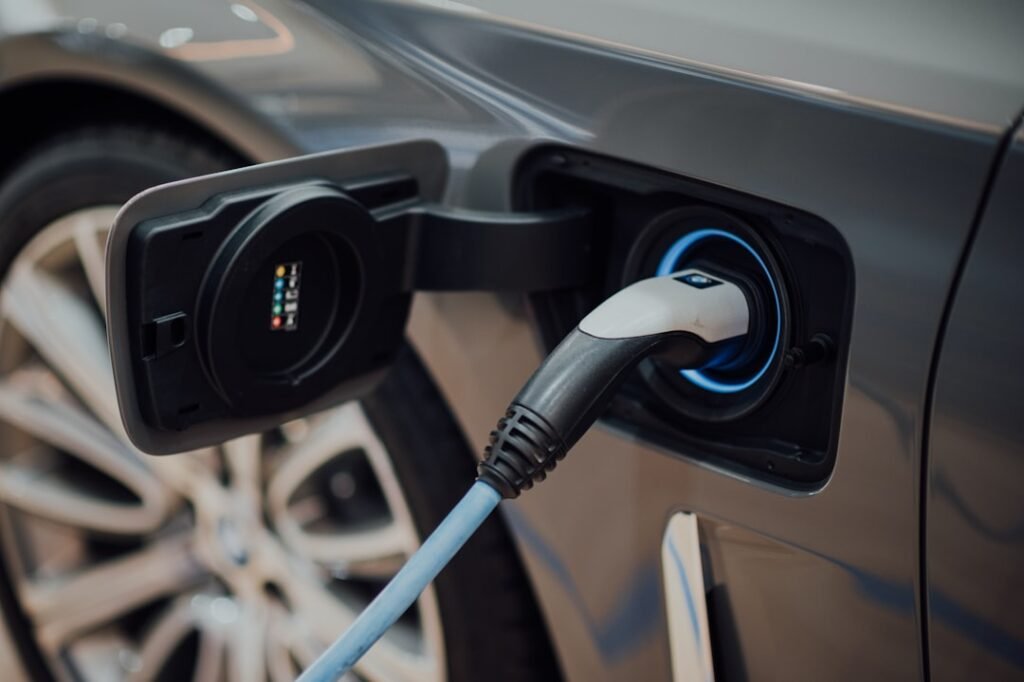
Photo by CHUTTERSNAP on Unsplash
When the European Union hammered Chinese electric vehicles with hefty tariffs in late 2024, Brussels expected to choke off the flood of cheap imports. What actually happened was far more embarrassing: Chinese automakers simply showed up to the tariff fight with a fuel tank strapped to their cars, and nobody in Brussels had a plan for that.
Plug-in hybrid sales from Chinese brands have exploded across Europe since those initial EV tariffs landed. Now, according to reporting from German business newspaper Handelsblatt, the EU is preparing to extend the trade war into hybrid territory. It’s a move that smells less like strategy and more like playing whack-a-mole with a manufacturer base that’s always three steps ahead.
The Hybrid Escape Hatch
Here’s what went down: Europe’s EV tariffs were supposed to protect legacy automakers struggling to compete on cost and scale against Chinese rivals who’ve spent the last decade dominating their home market. The logic was sound in theory. In practice, it was immediately obsolete.
Companies like BYD saw their European plug-in hybrid registrations climb significantly faster than their EV sales, while Chery shipped tens of thousands of PHEVs into the region against only a fraction as many battery electric vehicles. For European manufacturers already watching Chinese brands grab roughly one in every 10 new car registrations across the continent, this wasn’t a setback—it was a betrayal by their own regulators.
One industry executive told Handelsblatt the situation amounted to “an open flank that the EU must close.” Fair enough. But closing flanks in trade disputes rarely works the way policymakers hope it will.
Brussels Is Finally Waking Up (Too Late)
The proposed tariff extension is still in the discussion phase, but reports suggest the European Commission is already preparing an official investigation. If member states sign off, new duties could land within months—theoretically making plug-in hybrids less attractive to price-conscious European buyers and cutting into Chinese profit margins.
The political mood has shifted dramatically since 2024. Governments that previously hesitated to provoke Beijing are now openly receptive to tougher trade measures as industrial competitiveness concerns mount. Even conservative politicians who normally reflexively defend free markets are suddenly interested in protecting local automakers. It’s almost like getting tariffed by an American president changes your perspective on protectionism.
But here’s where Europe’s latest move gets interesting: According to UBS analyst Patrick Hummel, even with new tariffs, profit margins in Europe remain attractive enough that Chinese manufacturers won’t hit the brakes on their expansion plans. They’re already adapting faster than European regulators can legislate.
The Real Problem: China Stopped Playing By Old Rules
Chinese automakers have been quietly executing a strategy that makes Europe’s tariff approach look quaint. Instead of waiting for tariffs to pass, they’re moving production closer to European customers, leasing underutilized plants from legacy players like Nissan, and planning brand new factories to dodge tariff implications entirely. It’s the automotive equivalent of a water droplet finding the crack in a dam.
This is where RevFeed has to call it: The EU’s tariff strategy, however well-intentioned, treats Chinese expansion as a problem that can be solved with taxes. It can’t. China has spent 20 years building manufacturing capability and supply chain dominance that makes competing on equal terms nearly impossible for European legacy makers. A tariff on a plug-in hybrid is just a cost adjustment.
What should worry European policymakers isn’t that Chinese brands are selling hybrids instead of EVs—it’s that plug-in hybrids occupy the perfect market sweet spot. They appeal to risk-averse European consumers who still distrust charging infrastructure, they sidestep the tariff trap by carrying an internal combustion engine, and they deliver the low sticker prices that Chinese manufacturers use to steal market share. Adding a tariff doesn’t change the equation—it just adds a line item to the invoice.
What Happens Next (Spoiler: China Doesn’t Blink)
Consumer acceptance of Chinese brands is accelerating despite decades of skepticism. BYD, Chery, and emerging competitors are no longer viewed as budget alternatives—they’re viewed as credible manufacturers offering legitimate value. A 10% tariff on a plug-in hybrid doesn’t erase that perception.
The harder Brussels leans into protectionism, the more it signals that European automakers can’t win on merit. That message resonates with consumers everywhere except Brussels. Meanwhile, Chinese manufacturers will absorb tariff costs, slightly reduce margins (which remain generous), and keep shipping vehicles. Some will accelerate their local production timelines. Others will adjust their product mix. None of them will U-turn on European expansion.
This is what happens when you try to legislate away a structural competitive disadvantage: You lose credibility with consumers and manufacturers while proving you don’t have a real answer. The EU’s EV tariffs were supposed to buy time for legacy automakers to catch up on electrification and cost structure. Instead, they forced Chinese brands to get smarter about entry strategy. The new hybrid tariffs will probably do the same thing, just more expensively for everyone involved.
- Chinese automakers pivoted from EVs to plug-in hybrids after EU tariffs in 2024, with BYD and Chery flooding Europe with cheaper PHEVs.
- Brussels is preparing new tariffs on Chinese-built hybrids, but analysts say margins are still attractive enough that manufacturers won’t slow expansion.
- Chinese brands are already sidestepping future tariffs by building local factories and leasing existing plants, making trade restrictions increasingly irrelevant.
Sources: Carscoops