Ferrari’s Luce Is Crushing It in China While the Rest of the World Argues About Its Looks
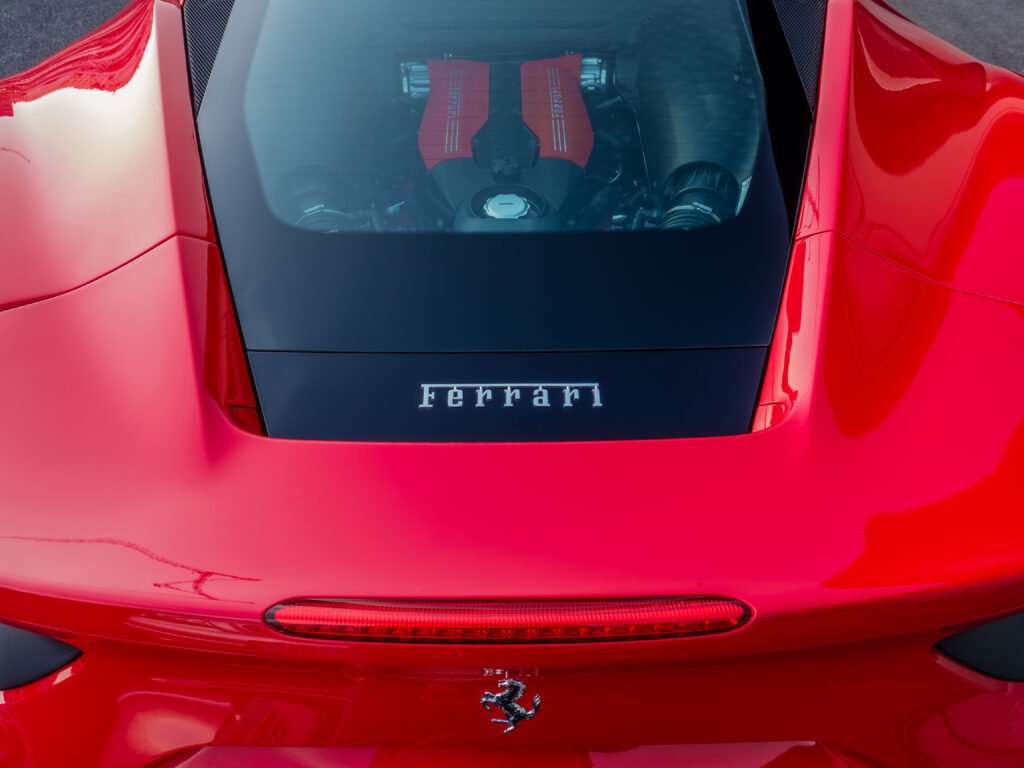
Ferrari‘s first all-electric car might be dividing the internet into two camps—those who think it looks like a depressed jellyfish and those willing to drop nearly $600,000 on one anyway. But in China, that debate doesn’t seem to matter much. The Prancing Horse is watching its EV find genuine traction in its second-biggest market, and the numbers tell a story that contradicts the usual “EVs are killing tradition” narrative.
The Sellout That Wasn’t Quite a Sellout
When Ferrari launched the Luce in China at 3.988 million yuan (around $586,600), initial reports screamed that all 88 cars allocated to the country had sold out immediately. Classic hypercar theater—limited allocation, instant exodus, prestige preserved. Except that story got messier almost as fast as it dropped. Beijing Business Today reported that Ferrari dealers in the capital were still openly accepting orders, contradicting claims that the allocation was exhausted.
What actually happened? Ferrari either has more cars in the pipeline for China than the original “88” suggested, or—more likely—the initial reports simply overstated how final that first batch really was. It’s a reminder that luxury car PR often conflates “sold out” with “generating buzz,” and the truth usually lands somewhere in between. Either way, demand clearly exists, which is what actually matters.
China’s EV Tax Break Is a Game Changer for Ferrari
Here’s the thing that makes the Luce’s China play genuinely smart: it costs $53,000 less there than in the USA, despite being the same car. That’s not a regional pricing strategy—that’s tax policy working in Ferrari’s favor in a way it never could with an internal combustion engine.
Because the Luce is fully electric, buyers in China get two massive breaks. First, it’s exempt from the country’s brutal 40 percent consumption tax on luxury cars with gas engines. Second, and almost more valuable, EV owners get easy access to license plates in major cities, where ICE cars face strict restrictions and lottery systems. That’s not just a convenience—that’s the difference between owning a car and owning a garage decoration.
Ferrari’s traditional combustion engine lineup has been struggling in China for years. The brand’s annual sales in the country have dropped from around 1,500 cars in 2022 to roughly 900 in 2025—a brutal 40 percent collapse. Much of that decline traces directly to those plate acquisition problems and the consumption tax making ICE cars economically irrational for wealthy Chinese buyers. The Luce essentially solves Ferrari’s biggest China problem while letting the brand stay true to its core positioning as an exclusive grand tourer.
Why Chinese Buyers Don’t Care About the Styling Debate
Western car enthusiasts have spent months parsing every pixel of the Luce’s design. Is it a rolling art installation? A failure to replace the 812 SuperFast? A vision of the future or a betrayal of the past? The discourse is exhausting because everyone’s using the same framework: “Does it look like a Ferrari should?”
Chinese luxury buyers apparently aren’t running that same algorithm. They’re looking at the Luce’s 1,036-horsepower output, its grand tourer positioning (five seats, real usability), and most importantly, its economic advantages in their specific market. The Luce isn’t competing with cheaper Chinese EVs on power or performance—some of those will outrun it in a straight line. But it’s competing in the luxury exclusivity game, where production numbers matter more than specs. Industry watchers estimate Ferrari will build fewer than 1,000 Luce EVs annually, possibly closer to 800. That scarcity is the entire play, and it’s working.
The Broader Market Implication
The Luce’s China success is quietly important for Ferrari because it proves that “EV purists” and “tradition defenders” aren’t actually Ferrari’s biggest market concern. What matters is that the brand can still move cars where regulations and incentives align with its positioning. The same buyers who were reluctant to spend on an ICE supercar in Shanghai suddenly make sense as Luce customers.
This also validates something that’s often overlooked in Western EV discourse: adoption isn’t about convincing enthusiasts that electrification is cool. It’s about economic incentives, regulatory pressure, and infrastructure favoring one path over another. The Luce doesn’t have to win hearts in a philosophical debate. It just has to be the rational choice for rich people in cities with the right policy framework. China has that framework, and Ferrari is exploiting it with surgical precision.
At $586,600, the Luce still costs serious money. But compared to the alternatives available to luxury car buyers in major Chinese cities—and compared to what they’d pay for an equally potent ICE Ferrari—the math is getting harder to argue with. That’s not mystique. That’s just economics. And right now, in China, those economics are running firmly in the Luce’s favor.
- Ferrari’s Luce starts at $586,600 in China and is finding genuine buyer interest despite mixed global reactions to its styling.
- The EV costs $53K less in China than in the US thanks to exemptions from a 40% consumption tax and easy license plate access for EVs.
- Ferrari’s traditional ICE sales in China have tanked from 1,500 cars in 2022 to 900 in 2025, making the Luce a strategic necessity in its second-biggest market.
Sources: Carscoops