Maserati’s 2027 Grecale Finally Gives Porsche Macan Hunters a Real Alternative
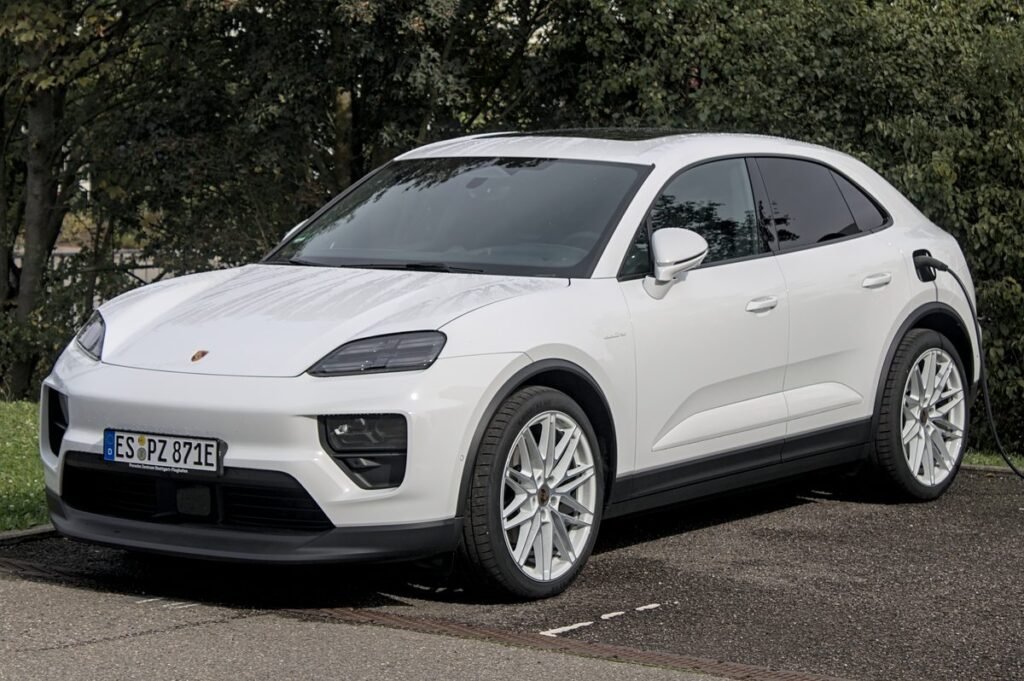
Porsche axed the gas-powered Macan. That’s a problem if you’re an enthusiast who actually enjoys driving a compact luxury SUV rather than just existing in one. Maserati just solved that problem with its 2027 Grecale refresh, a sophisticated Italian alternative that doesn’t just fill the void—it actually makes a credible case for itself as the better choice.
The timing is almost too perfect. Just as Porsche shifts the Macan lineup to electric-only, Maserati is doubling down on the gas-powered performance crossover formula with meaningful updates that increase both the Grecale’s appeal and its value proposition. The result is a vehicle that manages to be both more practical and more engaging than its German predecessor.
The Price Play That Actually Works
Here’s where things get interesting: a new base-model Grecale now starts at just under $80,000, undercutting even the entry Macan by a significant margin. But this isn’t a stripped-down budget play—Maserati’s base model arrives with a stitched faux-leather dashboard, power-adjustable front seats with memory function, 20-inch wheels, and the full twin-turbo V-6 engine across the entire lineup.
The mid-range Modena trim tested here checks in at $86,495, and that’s where the value really shines. You’re getting 21-inch wheels, a 14-speaker Sonus Faber audio system, power-adjustable steering column, heated front seats, blind-spot monitoring, lane-keeping assist, and adaptive cruise control. To reach equivalent equipment levels on a Macan, you’d be looking at the GTS variant—which costs roughly $10,000 more. Compare it against BMW’s X3 M50 or Mercedes-AMG’s GLC53, and the Maserati undercuts both while offering something neither can claim: actual Italian styling and brand distinctiveness.
The top-tier Trofeo variant pushes to $117,495 with maximum firepower and performance tuning, but even that feels reasonably positioned against high-output competitors in the segment.
The Engine That Makes This Work
Maserati killed off the turbocharged four-cylinder option for 2026, committing fully to the Nettuno twin-turbo V-6 across the entire Grecale lineup. This is the right call. The base model produces 385 horsepower and 369 lb-ft of torque—borrowed from the GranTurismo but slightly detuned—while the Modena maintains that same output. The Trofeo unleashes the full 523 hp and 457 lb-ft for those who need the extra aggression.
During testing around the Italian and Slovenian countryside, the Modena felt genuinely quick, especially when Sport mode dialed up the engine’s responsiveness. That throaty V-6 exhaust note isn’t manufactured theater—it’s the real thing, and it transforms what could be a mundane highway drive into something legitimately entertaining. The Grecale shares its underpinnings with the Levante, but the driving experience here suggests Maserati’s engineers spent real time tuning the chassis for nimbleness rather than just comfort.
Handling the Macan Comparison Head-to-Head
The elephant in the room: how does it actually drive compared to what it’s replacing? The Grecale feels light and responsive in the same way the Macan does, with a balanced chassis that rewards an aggressive line through corners. The steering is satisfyingly light and quick, though it doesn’t quite match the Porsche’s feedback—but it’s remarkably close for a vehicle wearing a different badge.
In Sport mode, the Grecale rips through technical sections with genuine enthusiasm. On smoother roads, the well-damped suspension and GT mode shift create a hushed, composed cruising experience that feels genuinely premium. That’s the split-personality aspect Maserati nailed here: it can be a proper driver’s car or a serene grand tourer depending on what the roads demand.
Inside Is Where Maserati Flexes
This is where the Grecale makes a legitimate claim over the Macan, even if the Porsche is gone. The cabin materials are objectively superior—thick leather upholstery, open-pore wood trim, and genuine metal accents create an interior that feels properly expensive. The fit and finish is tight, and the overall design language is more cohesive than many competitors charge significantly more to deliver.
Tech integration is thoughtful rather than overwrought. The high-resolution center display and matching digital gauge cluster feel modern without being gimmicky. Standard wireless Apple CarPlay and Android Auto mean most users will default to their phone’s maps anyway (which is fine—the in-dash navigation had occasional quirks with positioning). The new push-button gear selector and revised steering wheel feel like genuine refinements rather than busywork updates.
One legitimate misstep: the slanted climate-control touch panel isn’t as intuitive to use while driving as traditional buttons or knobs would be. It’s a small thing, but it stands out in an otherwise thoughtfully designed space. The new digital dash clock that can display performance metrics, a compass, and g-meter readings is a nice touch for enthusiasts, though most drivers will probably never activate it.
The Rarity Factor Matters More Than You’d Think
Here’s the intangible that doesn’t show up on spec sheets but matters in the real world: Maserati Grecales are legitimately rare. You could drive through an entire year without seeing another one on your commute. That’s not a trivial thing when you‘re spending $86,000–$117,000 on a vehicle. The BMW X3 M50 and Mercedes-AMG GLC53 both offer similar performance and capability, but they’re also ubiquitous—you’ll see three before you finish your morning coffee.
The 2027 updates sharpen the Grecale‘s visual identity with revised front and rear styling, giving it a more purposeful stance without abandoning its sophisticated proportions. Maserati understands that enthusiasts buying at this price point want to be noticed, but not in an obnoxious way. The Grecale achieves that balance better than most competitors.
The Real Story Here
What Maserati has done with the updated Grecale is genuinely clever: it recognized a specific market gap (gas-powered, driver-focused luxury compact SUVs with actual style) and positioned itself as the answer. It’s not perfect—the nav quirks and climate panel are real issues—but it’s significantly more compelling than it has any right to be.
The performance numbers are strong enough to matter without being absurd. The interior quality genuinely outpaces the competition at this price point. The driving experience actually justifies the performance SUV positioning rather than just borrowing the aesthetic. And the Macan’s absence has created exactly the kind of opening that Maserati is built to exploit: the chance to offer Italian sophistication and exclusivity to buyers who want their crossover to feel like something more than an appliance.
If you were genuinely heartbroken about the gas Macan’s demise, the 2027 Grecale is the obvious next phone call. It won’t feel like a downgrade. It’ll feel like you found something better.
- 2027 Grecale base model starts at $79,895; Modena at $86,495 with premium standard features that would cost thousands more on competitors.
- All models powered by twin-turbo V-6 Nettuno engine: 385 hp base/Modena, 523 hp Trofeo—removed the weaker turbo four entirely.
- Handles like a Macan, costs less, has better interior materials, and arrives with rare Italian styling in a market flooded with German alternatives.
Sources: Car and Driver