Toyota’s New MR2 Is Going AWD, And It’s Racing A GR Yaris To Prove The Physics Works
Toyota just made a decision that would’ve seemed insane five years ago: the all-new MR2 is ditching rear-wheel drive for all-wheel drive. And rather than sort this out in a lab, the company is racing a modified GR Yaris in Japan’s brutally competitive Super Taikyu endurance series to prove the concept actually works on track.
This isn’t corporate theater. This is Toyota saying “we’re not sure how to make a mid-engine car that won’t try to kill you, so we’re going to find out the hard way.” It’s the smartest approach they could’ve taken—and it tells you everything about how seriously they’re taking the MR2’s return.
Why Mid-Engine + AWD Is Actually The Smart Move
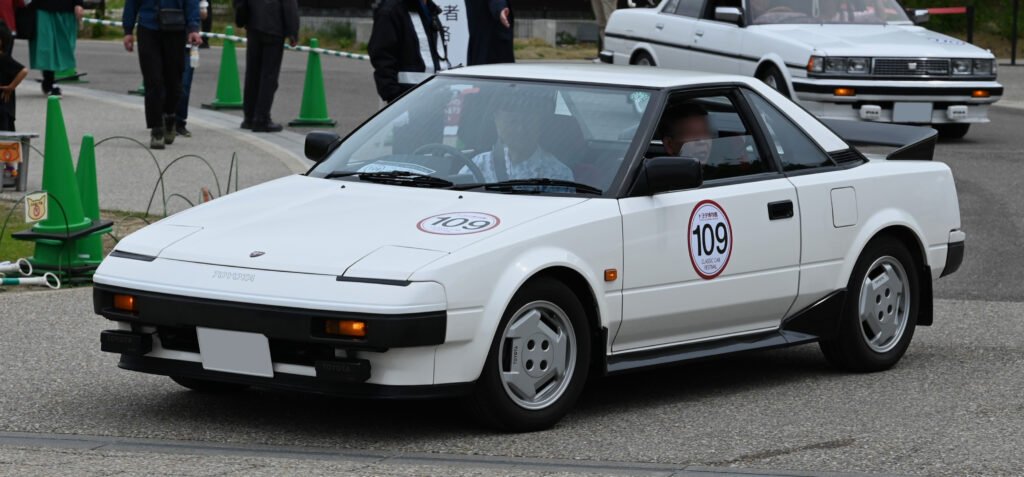
Here’s the elephant in the room: the original MR2 had a reputation for snap oversteer that made it genuinely dangerous if you didn’t know what you were doing. Mid-engine layouts push weight to the rear, which means the back end wants to rotate faster than the front. Get it wrong, and the car bites you without warning. Toyota knows this history, and they’re determined not to repeat it.
According to Naohiko Saito, the engineering boss for Toyota’s GR performance division, the testing has been conclusive: “this layout is new for us, but we have found in our initial testing that the combination of an all-wheel-drive mid-ship layout offers the best layout for high-performance driving.” Translation: after 18 months of development work, they figured out that AWD solves the handling puzzle that plagued its predecessor.
It’s counterintuitive, but it makes sense. AWD transfers some of the rotational forces to the front wheels, which means the rear end can’t step out as aggressively. You get sharp, responsive handling without the lightning-quick snap that made the old MR2 notorious among drivers who weren’t prepared for it. It’s engineering, not compromise.
Racing The GR Yaris Concept M To Prove It
Rather than wait for production prototypes, Toyota built a race car. They took the current GR Yaris platform—a car that’s proven itself in rally—and created what they’re calling the Concept M: a mid-engine, all-wheel-drive test bed that competes in Japan’s grueling endurance racing series.
At a recent event at Fuji Speedway, the Concept M qualified second and completed 473 laps in competition. That’s not a one-off run. The car has been racing for over a year, accumulating real-world data on how the AWD mid-engine layout performs under sustained stress. Every lap tells the engineers something about weight transfer, cooling, drivetrain longevity, and brake performance.
This is how Toyota chairman Akio Toyoda explained the philosophy: “If we don’t challenge [ourselves in motorsport] maybe we don’t fail, but if we challenge, then maybe we fail. If we decided to make such a car in a meeting, it would never exist.” He’s right. You can theorize all you want in CAD files, but racing forces you to solve real problems that simulators can’t always predict.
The Engine That Powers Everything
At the heart of both the Concept M and the production MR2 will be Toyota’s new 2.0-liter turbocharged four-cylinder, designated the G20E. This is a ground-up redesign that replaces the 1.6-liter turbo three-cylinder found in the current GR Yaris and GR Corolla.
In standard trim, expect around 400 hp. In racing configuration, it can be tuned to over 500 hp—which tells you Toyota isn’t treating this engine as just a modest bump. This is a real performance unit. The engine will mount transversely (sideways) in the MR2, paired with the same eight-speed automatic that powers the current GR lineup.
The move to a four-cylinder over the old MR2’s V6 is interesting. It keeps weight down, reduces the rotational mass that can cause mid-engine dynamics issues, and makes the platform more efficient. EPA ratings will matter less for a car like this, but the efficiency gains help with heat management and daily drivability—crucial for a car that, unlike the old MR2, is likely intended to be more than a weekend warrior.
What It’s Actually Going To Look Like
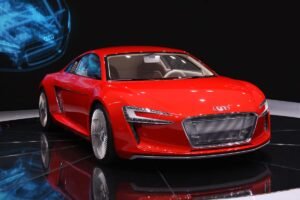
Here’s where we have to hedge a bit: Toyota hasn’t started testing production-bodied prototypes yet, so spy shots are still a ways off. But the prevailing wisdom is that the new MR2 will draw heavily from the FT-Se concept unveiled in 2023. That design suggested a car roughly the size of a Lotus Emira but with angular, aggressive styling and a lower, meaner stance.
Imagine the GR Yaris’s sharp lines stretched into a mid-engine layout, and you’re in the ballpark. The concept showed a car that looked fast standing still—no smooth, flowing forms here. Toyota’s betting that enthusiasts want angular aggression, not beauty pageant curves.
Late 2025 trademark filings for both “GR MR2” and “GR MR-S” (the old MR2’s designator in some markets) suggest the company is dead serious about bringing the nameplate back. They filed in Japan and Australia, which usually means a global launch is in the pipeline.
The Bigger Picture: A Real Sports Car Lineup
The MR2’s return matters not just as a single car, but as part of a strategy. Reports indicate Toyota is also working on an all-new Celica alongside the MR2 revival. Add in the existing Supra and the upcoming GR GT, and Toyota is suddenly building a genuine four-model sports car portfolio—something the brand hasn’t had in decades.
This is the kind of lineup Japanese manufacturers dream about but rarely commit to. Porsche has it. Ferrari has it. For Toyota to attempt this level of performance diversity is bold, especially when electrification is pushing most competitors toward crossovers and SUVs. The company is betting that there’s still a market for cars that exist purely to be driven, not optimized for cargo capacity or family duty.
The fact that they’re using actual racing to develop it—not just signing off on design studies in conference rooms—shows they understand what made the original MR2 special: it was engineered by people who understood how the thing actually behaved, not just what the spec sheet promised.
When the production MR2 finally arrives, it’ll carry the weight of 30 years of history and the credibility of motorsport validation. That’s not guaranteed to make it great, but it’s a hell of a lot better than just announcing a revival and hoping nostalgia carries the day.
- The new MR2 will use AWD mid-engine layout, not RWD—solving the snap-oversteer issues that plagued the original.
- Toyota’s racing a modified GR Yaris called the Concept M in endurance events to validate the platform in real-world conditions.
- The car will feature a new 2.0-liter turbocharged four-cylinder with ~400 hp standard (500+ hp in racing trim).
- Design will be heavily influenced by the 2023 FT-Se concept, with expected launch timing still unconfirmed.
- The MR2’s return is part of a broader sports car revival that includes an all-new Celica, Supra, and GR GT.
Sources: Carscoops