Audi’s New Q7 Will Literally Drive Itself to Safety If You Pass Out
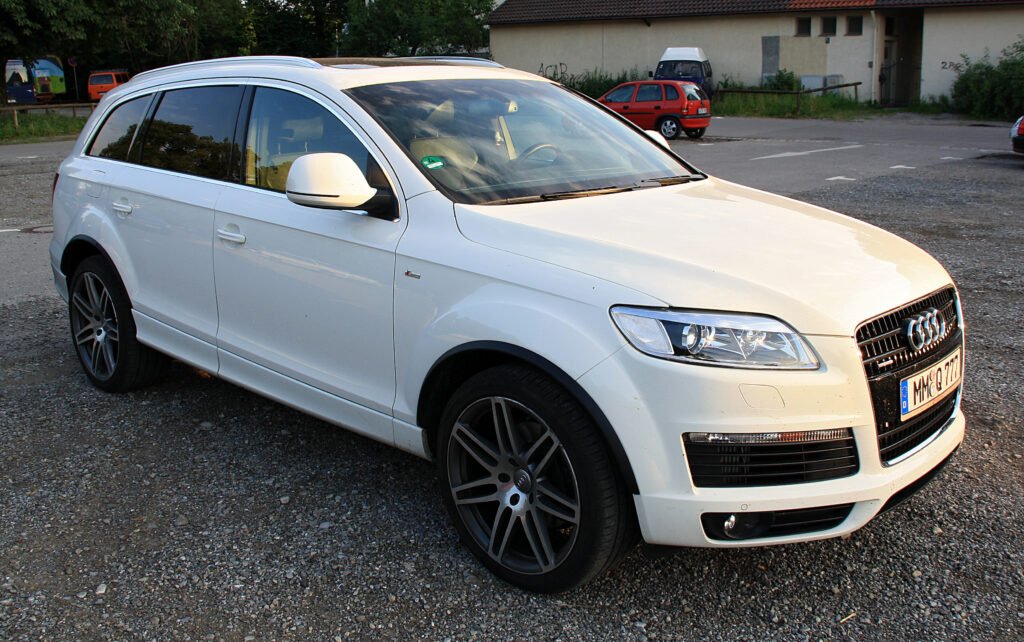
Audi just revealed the third-generation Q7, and it’s not your typical luxury SUV refresh. Yes, the new design is more muscular and assertive than the decade-old model it replaces. But the real story isn’t the looks—it’s that this thing can literally save your life by driving itself to safety if you pass out behind the wheel, all while you’re getting a massage.
The Design Gets a Serious Upgrade
The styling shift is immediate. A taller front end, subtly flared fenders, and massively swollen rear haunches give the new Q7 the kind of tough confidence that luxury SUV buyers are apparently demanding these days. The front grille features an oversized mesh-design center, and dual-deck split headlights now frame the face—a design language Audi is already using on models like the Q6 e-tron. It’s a clean, modern look that makes the previous generation feel genuinely dated.
What’s most interesting is how this Q7 now sits in Audi’s lineup. The brand has finally admitted that luxury buyers want three-row SUVs in two different sizes. Enter the Q9—a long-wheelbase variant that’s essentially a stretched Q7 designed to take on the BMW X7 and Mercedes GLS. Meanwhile, the Q7 maintains its 20-year mission of going after the BMW X5, which itself is getting a major refresh later this year.
The Lighting Tech Is Genuinely Clever
If you think headlights are just headlights, Audi wants you to reconsider. The Q7’s segmented LED DRLs aren’t just for show—they project warnings onto the road itself, alerting other drivers to hazards like icy pavement ahead. Even more useful, the turn signals project onto the ground to warn pedestrians and cyclists what the SUV is about to do. There’s also a projected warning that appears when doors are about to open, keeping careless passengers from stepping into traffic.
The rear lights pull double duty too, warning following cars of accidents or breakdowns ahead, and can even tell tailgaters to back off if they’re getting dangerously close. And in what feels like overdue justice, the US finally gets Matrix adaptive headlights—the intelligent beam-steering tech that Europeans have been enjoying for years. It’s the kind of feature that actually improves safety and visibility, not just the Instagram factor of your SUV.
The Interior Is Basically a Q9 Clone (For Better or Worse)
Inside, you’re looking at shared architecture with the larger Q9. A large curved OLED display handles both instrumentation and infotainment duties, while front passengers get their own dedicated touchscreen. The panoramic glass roof is a nice touch—it can switch from transparent to opaque in sections and actually remembers your preferred setting when you restart the vehicle. Subtle details matter when you’re charging this much for an SUV.
Standard three-row seating comes to the UK market, though the Q7 uses a middle bench in the second row while the Q9 offers individual captain’s chairs. Luggage space is a bit of a bummer: just 581 liters with the rear seats folded, down significantly from the old Q7’s 780 liters. That’s the price of being more compact, though you can stretch things to nearly 2,000 liters depending on seating configuration.
The Tech That Makes This Thing Legitimately Future-Forward
Here’s where things get properly wild. The Q7’s adaptive air suspension doesn’t just smooth out bumps—it can access route data to prepare for upcoming obstacles like train crossings, then actively lower itself to make entry and exit easier for aging joints. It’s the kind of thoughtful engineering that luxury buyers theoretically pay for but rarely actually experience.
But the headline feature is the autonomous emergency response system. The Q7 can memorize up to five separate parking maneuvers, each up to 200 meters long, then execute them again at the push of a button. It can back itself up in 50-meter increments. And if things get really weird—say, you’re so relaxed in the massage seats that you actually lose consciousness—the car will pull itself over to the shoulder and call emergency services on your behalf.
This isn’t just technology for technology’s sake. It’s the kind of feature that could genuinely prevent a catastrophic accident or give first responders critical seconds to save your life. Under current NHTSA safety regulations, passive driver-monitoring tech is becoming table stakes, but active intervention systems like this remain rare.
Engine Options Split by Geography (As Usual)
Europe gets a 3.0-liter turbodiesel V6 producing 295 horsepower and 465 pound-feet of torque, with mild-hybrid assistance kicking in another 24 horses temporarily. The US market will skip diesel entirely and opt for gasoline engines instead—Audi hasn’t detailed those options yet, but expect similar power outputs with less efficiency.
All markets get permanent all-wheel drive, all-wheel steering, and electronically controlled damping. It’s a competent chassis setup that should handle better than the old Q7 ever did, though we’ll reserve final judgment until actual testing happens.
The Timing Is Perfect (And Competitive)
Audi is banking on the fact that the current BMW X5 is now eight years old and feeling pretty dated. That’s a valid bet—but BMW has just announced a new X5 inspired by its Neue Klasse design language arriving later this year. The Q9 will also launch around the same time, potentially cannibalizing Q7 sales. The luxury three-row SUV class is about to get very interesting for the next two years.
Sales start this July. The real question isn’t whether the Q7 is good—it clearly is. It’s whether Audi can sell enough of them when buyers might just wait three more months for the X5 redesign, or stretch their budget for the posher Q9.
- New Q7 ditches its dated look for muscular styling with dual-deck headlights and a modern dashboard shared with the Q9.
- Smart LED lights project warnings onto the road and ground; the US finally gets Matrix adaptive headlights.
- The Q7 can memorize parking maneuvers, back itself up to 50 meters, and autonomously pull over to call emergency services if the driver becomes unresponsive.
- European Q7 gets a 3.0-liter diesel V6 (295 hp); US gets gasoline alternatives. Luggage space drops from 780L to 581L with rear seats folded.
- Sales begin July 2026; BMW’s redesigned X5 launches later the same year, setting up a major luxury SUV battle.
Sources: Carscoops