
Mercedes-AMG Is Going All In: 27 New Cars in 36 Months to Finally Dethrone BMW M
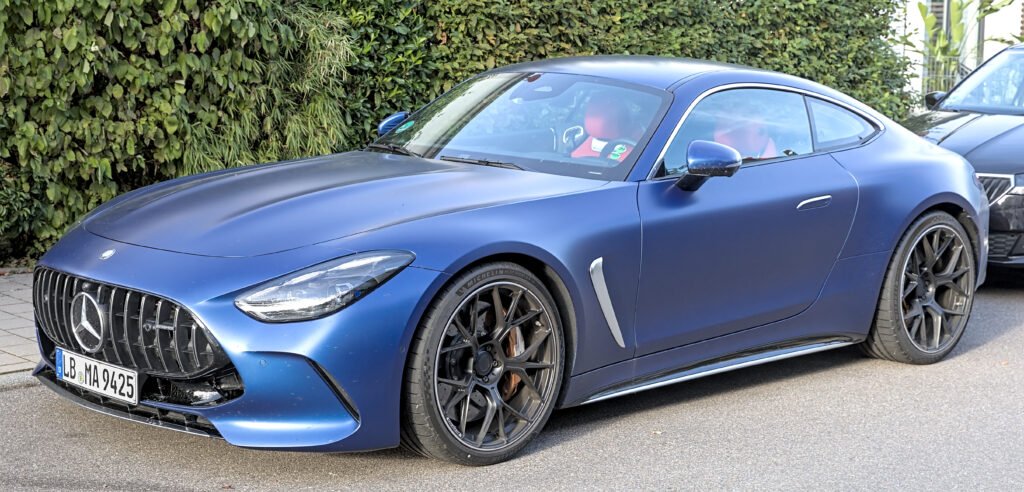
Mercedes-AMG just threw down the gauntlet. The performance division has officially committed to launching more than 27 new models over the next three years—a staggering deployment designed to catapult annual sales from roughly 145,000 units to 200,000 by 2030. For context, that puts them in direct competition with BMW’s M division, which already moves over 213,000 vehicles annually. This isn’t a casual expansion. This is war.
The Numbers Game: Why AMG Needs to Grow Fast
Let’s be clear about what’s happening here: Mercedes-AMG is playing catch-up, and they know it. BMW M’s sales lead isn’t a rounding error—it’s a 68,000-unit cushion. That’s the annual output of a mid-size Chinese automaker. For a brand built on exclusivity and performance heritage, losing this badly to a competitor is unacceptable.
Michael Schiebe, AMG’s chief executive, was blunt in a recent investor presentation in Los Angeles: “Our plan is definitely to grow. We have taken many, many decisions. All the products are now in the making, and you just need to stay tuned because we are going to launch more than 27 cars in the next 36 months only for Mercedes-AMG.” Translation: we’re not messing around. The product pipeline is locked and loaded, and they’re willing to flood the market to reclaim market share.
The strategy makes sense on paper. Mercedes-AMG currently generates more than a third of its sales in the United States, a market that has become increasingly critical for luxury performance brands. By expanding aggressively across North America, Europe, Asia, and the Middle East, AMG can distribute its growth across multiple regions rather than relying on a single geography to carry the load.
The Engine Wars: Flat-Plane V8s and New Six-Cylinder Tech
What makes this expansion actually interesting—beyond the raw sales numbers—is the engineering muscle behind it. AMG isn’t just badge-engineering existing platforms. They’re introducing genuinely new powerplants that should excite anyone who still believes in internal combustion.
The headline act is a 4.0-liter twin-turbocharged V8 with a flat-plane crank, which first appeared in the new Mercedes-Benz S-Class. Flat-plane cranks are a Ferrari and Lamborghini thing—they enable higher RPM limits and a more aggressive exhaust note. Having one in a Mercedes is a big deal. The rumor mill suggests the CLE 63 ‘Mythos’ variant will be the first to receive this engine, with hopes that the C 63 will follow suit. The new track-focused Mercedes-AMG GT Black Series will also run the same unit.
But here’s the kicker: AMG isn’t betting everything on V8 nostalgia. They’re simultaneously developing a fresh six-cylinder engine to cover a broader swath of the lineup. This dual approach is smart—it acknowledges that the V8 era has an expiration date while keeping performance credentials intact. Mercedes-AMG has always been about offering multiple pathways to performance, and this strategy reinforces that philosophy.
The EV Question: Keeping Pace in a Changing Market
No discussion of modern AMG strategy can ignore electrification. The all-electric Mercedes-AMG GT 4-Door is the division’s full-throated answer to the Porsche Taycan and Audi e-tron GT. With three axial-flux motors producing up to 1,163 horsepower, it’s not messing around on the spec sheet.
The problem? Neither the Taycan nor the e-tron GT have exactly set the sales charts on fire. Porsche Taycan sales have been steady but modest, and Audi’s EV GT is even more niche. There’s every reason to expect the new AMG GT 4-Door to follow the same pattern—it’ll be a showcase of technical prowess that relatively few people can actually afford. An all-electric SUV is also on the roadmap, though details remain sparse.
This reveals AMG’s real challenge: launching 27 models won’t matter if a significant portion of them occupy rarefied market segments. Success in hitting that 200,000-unit target will depend heavily on volume models—C-Class, CLA, and GLE variants with AMG badging—not just exotic GT models and EV experiments.
The Bigger Picture: Can AMG Actually Pull This Off?
Here’s where skepticism is warranted. Launching 27 new models in 36 months is an extraordinary undertaking. That’s roughly eight cars every 12 months. While many will be variants and electrified versions of existing platforms rather than entirely new designs, the logistics alone are brutal. Supply chain hiccups, market saturation, and the difficulty of maintaining exclusivity while scaling aggressively are all real obstacles.
BMW M succeeded not just by selling more cars, but by building a cohesive brand identity around performance and desirability. Can Mercedes-AMG flood the market with 27 new models without diluting what makes the badge special? That’s the fundamental question nobody’s asking out loud, but it should be.
That said, AMG’s got resources most brands would kill for, a heritage stretching back decades, and genuine engineering chops. If anyone can pull off an aggressive expansion while maintaining credibility, it’s them. The next three years will be absolutely critical in determining whether Mercedes-AMG’s bet pays off or becomes a cautionary tale about growth at any cost.
- Mercedes-AMG plans to launch 27+ new models in the next 36 months to reach 200,000 annual sales by 2030, closing the gap on BMW M’s 213,000 units.
- A new 4.0L twin-turbocharged flat-plane V8 and fresh six-cylinder engine will anchor the expansion, with the CLE 63 ‘Mythos’ likely first to receive the V8.
- All-electric models like the GT 4-Door (1,163 hp) and an upcoming EV SUV complement traditional powerplants, though EV performance sedan sales remain modest across the industry.
Sources: Carscoops