BMW’s Electric M3 Keeps Its Name. Here’s Why That Actually Matters.
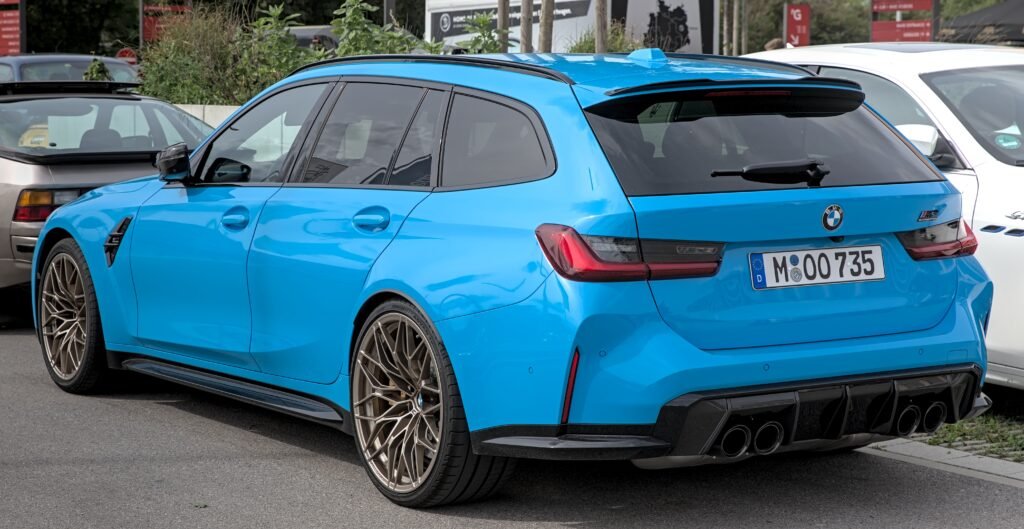
BMW just killed one of the dumbest debates in automotive naming: whether its upcoming electric performance sedan would be called the M3 or iM3. Frank van Meel, the boss of BMW M, confirmed at Goodwood that it’s simply M3. No “i” prefix. No marketing hedging. Just M3.
This sounds like a small thing. It’s not. It’s BMW making a statement that electric performance doesn’t need an asterisk.
Why This Naming Decision Matters More Than You Think
The EV naming convention has become a bit of a corporate crutch. When most manufacturers electrify a traditional nameplate, they slap an “i” or “e” prefix on it to signal “this is different, technically speaking.” BMW’s “i” sub-brand has been doing this since 2011, and it made sense when electric cars were still novelties. But in 2026? The signal now reads differently. It reads like a lack of confidence.
By naming the electric M3 as simply M3, BMW is saying that what matters to M performance—precision, dynamics, responsiveness, the feel of the thing—doesn’t belong to the combustion engine. It belongs to the M badge itself. That’s the real story here.
Christian Karg, BMW’s head of vehicle dynamics, made this explicit: “It’s not about the horsepower. That’s a part of the game, but the preciseness of M cars, that’s what’s unique.” Translation: if you think M is just about making your ears ring and your insurance premium scream, you’re not buying an M3 anyway. The electric version will have those qualities. The gas version will too. They’re both M3s because they’re both precise, obsessive, uncompromising machines.
The Power Thing (Yes, It’s Still Relevant)
Look, we’re not pretending horsepower doesn’t matter. The quad-motor electric M3 will be the most powerful M3 ever made, period. BMW’s new four-motor drivetrain architecture can theoretically support outputs approaching 1,341 hp, though production versions will settle somewhere south of that fantasy number. Even a modest 700 hp base model would obliterate every previous M3 by nearly 200 hp.
But here’s the thing: that’s not why you buy an M3. You buy it because it feels like an extension of your nervous system. The power is just the canvas. BMW knows this. The naming decision proves it.
Styling Will Be Identical (Except It Won’t)
The design team is pulling something clever here. Both the electric M3 and the new inline-six gasoline M3—yes, there’s still a gas M3 coming—will use almost identical styling. Both sit lower than the standard 3-series sedan. Both have aggressively widened fenders. Both are previewed by the M Concept Neue Klasse that debuted at Le Mans this year.
The EV rides on BMW’s Neue Klasse architecture (a bespoke EV platform), while the gas car uses an updated CLAR platform. Different underpinnings, identical visual intent. The point: you won’t need to play “spot the difference” to figure out which M3 is which. Both look like M3s. Both perform like M3s. One just doesn’t need gas.
There are some tells. The concept showed yellow daytime running lights—a potential M signature going forward—and a split rear spoiler with a massive diffuser. The hood vent sketched onto M3 prototypes will likely make the cut. These details matter to the three people worldwide who actually care about the technical execution. Everyone else just sees “fast sedan.”
Here’s What This Signals About the Industry
BMW’s decision to ditch the “i” prefix for the electric M3 is a flex, even if it’s a quiet one. It’s the brand saying: We’re so confident in what electric M means that we don’t need a safety label on it.
Compare this to Mercedes, which still separates its AMG performance EVs with distinct naming. Compare it to Audi, which uses “S” and “RS” prefixes on electrified models but still signals the powertrain type. BMW looked at that playbook and said no.
This confidence might be justified. The quad-motor setup gives BMW engineering options that traditional turbocharged engines can’t touch—independent torque vectoring to each wheel, for instance, means the electric M3 can do things the gas version simply cannot. That’s not a consolation prize for “it’s still fast even though it’s electric.” That’s a legitimate performance advantage.
The Traditionalists Win (For Now)
There’s one more audience here: the people who will cry that the real M3 dies when the last gas engine shuts off. BMW knows this group exists. Which is why the company is building both cars simultaneously. The next-gen M3 will come in gas and electric versions. Same name. Different drivetrains. You can still buy the six-cylinder if you’re willing to wait and pay for increasingly obscene fuel prices.
But BMW isn’t hedging. The electric M3 gets the full M3 name, not a conditional badge, not a “the real one is still coming” footnote. That tells you where BMW thinks the performance car market is headed. And frankly, where it probably should be.
- BMW’s electric M3 will be called M3, not iM3—no “i” prefix, no asterisk.
- The quad-motor EV will be the most powerful M3 ever made, starting around 700 hp base.
- The electric and gas M3s will look nearly identical but use different platforms (Neue Klasse for EV, updated CLAR for the six-cylinder).
- BMW M boss Frank van Meel confirmed the decision at Goodwood, emphasizing that precision and dynamics, not just power, define what M means.
Sources: Carscoops