
Duramax Owners Face a Real Choice: Why Aluminum Heads Aren’t Always Better Than Cast Iron
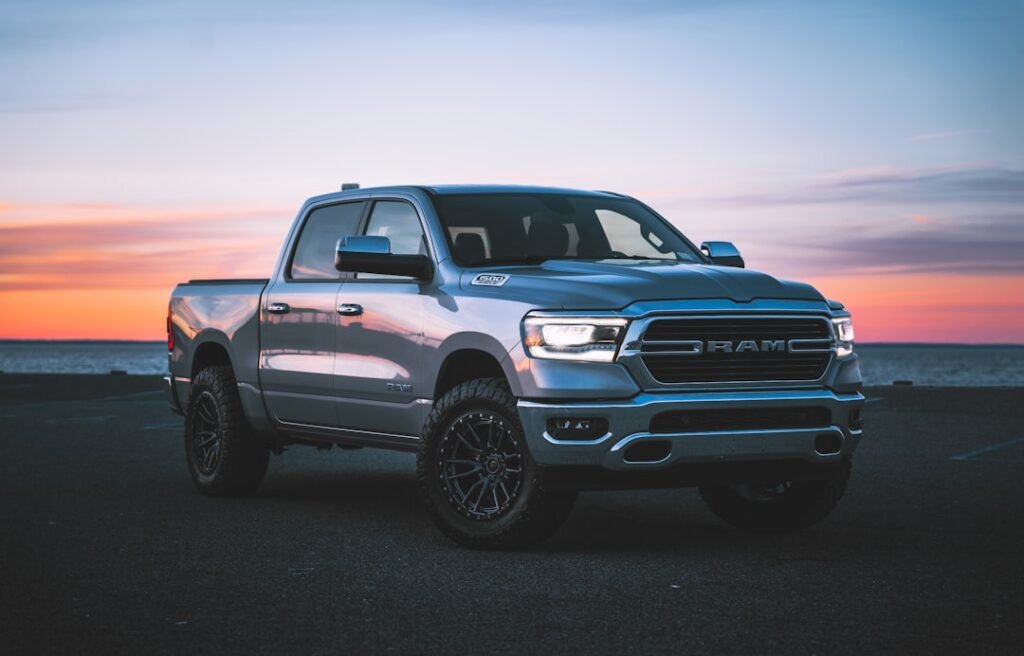
Photo by stevosdisposable on Unsplash
General Motors’ turbocharged 6.6-liter Duramax diesel is a legitimate engineering achievement — a workhorse V-8 that’s been refined and improved since 2000, with over 3.5 million units built and a reputation that actually holds up to scrutiny. But here‘s the thing nobody wants to admit: the factory choice of aluminum cylinder heads, engineered to save weight on heavy-duty trucks, isn’t always the right call for every owner.
The Duramax started its life as a replacement for Detroit Diesel, launching with 300 hp and 520 lb-ft of torque. Today’s iteration, found in the current-generation Silverado HD and GMC Sierra HD, makes 470 hp and 975 lb-ft — a staggering improvement that reflects two decades of continuous development. It was genuinely innovative when it arrived: the first diesel in the U.S. market to use aluminum heads, and the first to bring high-pressure common-rail fuel injection to trucks, allowing better fuel atomization and more efficient combustion.
That aluminum construction matters. Each head weighs roughly 40 pounds, compared to around 100 pounds for cast-iron equivalents. Multiply that across the engine, and you’re looking at meaningful weight savings for a truck that has to haul serious cargo. GM engineered those heads with forged-steel rocker arms for added durability, and the specific aluminum alloy used — A356 — is genuinely strong stuff. The result? Most stock Duramax engines routinely exceed 300,000 to 400,000 miles without major issues.
When Physics Gets in the Way of Factory Engineering
Here’s where the story gets interesting. Aluminum and cast iron expand at wildly different rates when heated — and the Duramax’s aluminum heads expand at more than twice the rate of the cast-iron block below them. In normal operating conditions, this isn’t a problem. The engine is designed with this mismatch in mind, and tolerances are set accordingly.
But push the engine into extreme territory — sustained high temperatures, aggressive tuning, or brutal working conditions — and you create a scenario where the aluminum heads expand so much that the bottom surface begins to scrub against the head gasket. This isn’t theoretical engineering babble; it’s a real failure mode. Once scrubbing starts, it’s progressive. Every cycle of heating and cooling wears the gasket a little more. Eventually, you’re looking at complete gasket failure, coolant mixing with exhaust gases, and a dead engine.
The kicker? You can’t just choose a thicker head gasket and call it solved. The physics don’t work that way. The thermal expansion differential is baked into the material properties themselves.
The Modification Threshold Changes Everything
This is where owner choice comes into play. Stock Duramax owners running factory power outputs? Aluminum heads are fine. GM wouldn’t have put them on trucks sold to contractors and fleet managers if they weren’t. The company has too much reputation at stake.
But the moment you start serious tuning — anything above 500 horsepower at the rear wheels — the calculus shifts entirely. At that power level, you’re generating heat levels the engine wasn’t designed to manage. The thermal expansion problem becomes real, not theoretical. This is why you see experienced Duramax modifiers swapping in cast-iron heads: it’s not because they’re backwards or don’t understand weight savings. It’s because they understand the thermodynamic limits of aluminum under extreme stress.
This creates a genuinely difficult decision for owners caught in the middle. Maybe you’re running a tuned Duramax at 550 hp, towing 20,000 pounds in summer heat. Maybe you’re pushing the engine in off-road conditions with sustained high-RPM runs. The aluminum heads that came from the factory start to look like a liability rather than a feature.
The Broader Engineering Truth
What makes the Duramax story compelling is that it reveals a fundamental truth about modern engine design: there’s rarely a clear winner in material choices. Aluminum heads make sense for factory applications where power outputs are controlled, fuel quality is predictable, and operating temperatures can be managed. They save weight, they improve handling and efficiency, and they’re what modern emissions regulations reward.
But they’re not universally superior. They’re optimized for a specific set of conditions. The moment those conditions change — whether through tuning, climate, or application — cast iron’s lower thermal expansion rate and higher temperature tolerance become genuinely valuable. It’s boring engineering, but it’s the kind of boring that keeps engines from grenading at 80,000 miles.
The fact that some Duramax owners knowingly choose heavier cast-iron heads isn’t a commentary on GM’s engineering. It’s a commentary on the reality of heavy-duty trucks: they get used hard, modified aggressively, and pushed beyond factory specifications. For those owners, the weight penalty is worth the reliability insurance. For everyone else running the engine as intended, aluminum is the right call.
The Duramax’s longevity record speaks for itself. But that record is built on respecting the limits of the design — limits that become very real once you start reaching for every last horsepower.
- GM’s Duramax diesel uses aluminum cylinder heads (40 lbs each) to save weight compared to cast iron (100 lbs), and they’re reliable at factory power outputs (470 hp, 975 lb-ft).
- Aluminum expands more than twice as fast as cast iron when heated, risking head gasket scrubbing and failure under extreme conditions.
- Serious tuning above 500 hp at the rear wheels makes cast-iron heads a smarter choice for durability, even at the cost of added weight.
Sources: Jalopnik