Forza Horizon 6 Proves the Series Still Doesn’t Know How to Make Racing Fun
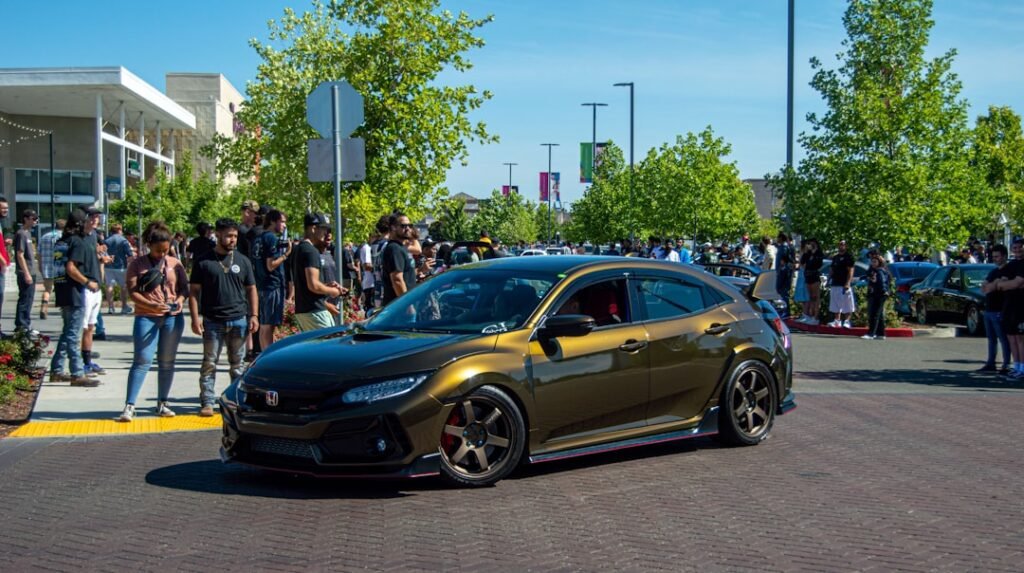
Photo by Nathan Marquardt on Unsplash
Forza Horizon 6 is a game that gets everything right except the one thing it’s supposed to do best: racing.
That’s not hyperbole. After spending time with the newly released open-world racing sandbox—which launches May 19 with early access for Premium Edition buyers starting May 15—the verdict is clear: Playground Games has built an exceptional automotive playground, but the competitive core that drives progression still feels like a chore bolted onto something that works far better as pure exploration and mischief.
The setting is Japan, and it’s the single best decision the franchise has made in years. The map is enormous—a Tokyo that’s five times larger than the previous game’s city center, plus rural touge roads, coastal highways, and mountain passes that actually feel like they belong in a car game. The level of detail is staggering: cherry blossoms line the starting road, bullet trains cross your path at dramatic moments, and the architecture doesn’t feel like a copy-paste job from a tourism website. It lives.
Where Horizon 6 Actually Shines
The genius move this time around is splitting progression into two distinct trees. The traditional Horizon Festival racing ladder still exists, but a parallel “Discover Japan” system unlocks houses, barn find cars, and collectibles based on what you actually do in the world. Want a specific rare car? Don’t grind races—buy property, take scenic photos, or drive a kei truck on a food delivery route. This is where the game’s best moments live, and it’s a direct response to years of complaints that Horizon worlds felt empty and lifeless.
The side missions are genuinely clever. Real-world automotive photographer Larry Chen appears in a photo mission line. There’s a drift club storyline. The Daikoku car meet (which should launch with the full player base) promises to be a living, breathing community space. These aren’t throwaway quests—they’re the reason you’ll want to actually explore this version of Japan rather than just fast-travel between festival checkpoints.
The car roster deserves credit too. 550 vehicles at launch means there’s something ridiculous for every scenario. Want to drift a twin-turbo Cadillac XTS limousine through Tokyo? Go for it. Need a kei truck? Available. The inclusion of both legendary machines (Toyota 2000GT barn finds) and everyday traffic (Honda e, Nissan Skyline taxi variants) creates a living ecosystem that previous entries couldn’t quite nail.
Customization has also expanded meaningfully. The new “Estate” feature gives you a dedicated outdoor space to layout custom race tracks, garages, and displays—it’s essentially Pokémon Pokédex for cars, but for your backyard. For players who care about cosmetics and community sharing, this is genuinely compelling.
The Racing Problem That Won’t Go Away
But here’s where it falls apart: when you’re forced into the actual races, the game’s physics model reveals its fundamental weakness. The handling is tuned for a world where every car wants to slide. On dirt roads in a rally car? Phenomenal. Cruising a sedan down a mountain pass? Perfect. Point a serious machine—a Mercedes-AMG One, a top-tier supercar, anything designed for planted high-speed cornering—at a race course, and suddenly the car feels like it’s missing half its grip.
This isn’t a bug; it’s a design choice. Forza Horizon was built from the ground up as a driving sandbox, not a traditional racing sim. But when progression gates content behind mandatory race events—especially the new Time Attack challenges that demand precision to hundredths of a second—the mismatch becomes painful. You’re being asked to brake-drift a Bugatti through technical corners in a game that fundamentally doesn’t want you to.
The festival ladder itself feels outdated. You start in low-power cars and work toward supercars, which is narratively fine but mechanically dull. The game knows this—hence the abundance of “unsanctioned” street races and touge events that let you bring whatever you want. Those are more fun. The fact that the main campaign isn’t is a problem.
The Details Matter, But Traffic Doesn’t
Immersion breaks appear in unexpected places. The NPC traffic is sparse and janky—cars corner without turning their wheels, moving like carousel horses. In Tokyo, where roads should feel congested with black Toyota Alphard taxis, you’re often alone on the asphalt. That’s a strange oversight for a game so obsessed with environmental detail elsewhere.
The leaderboard integration is clever though—Time Attack results post to in-world billboards instead of UI overlays. Small touches like that show the design team cares about keeping you in the world rather than staring at menus.
The Live Service Question
Unlike Forza Motorsport’s 2025 catastrophe—which launched with a skeleton crew and layoffs at Turn 10 Studios—Horizon 6 feels genuinely complete at launch. The live service elements (new cars, seasonal events, expansion passes) are coming, but you won’t feel like you’re playing a beta on day one. That’s worth acknowledging, because it’s become rare in games like this.
The question is longevity. Will the Discover Japan progression tree hold your attention after 40 hours? Probably. Will you keep coming back when the novelty of the setting wears off? That depends entirely on whether you’re the type who enjoys cruising and collecting or if you need competitive racing to feel engaged. If you’re the latter, Horizon 6 isn’t the game for you—and it never will be.
If you loved previous Horizon games, this is a no-brainer. The Japan setting alone makes it worth your time, and the Discover Japan progression system finally gives the world a sense of purpose beyond “go here and race.” If you’ve bounced off the series before, nothing here will change your mind. This is Horizon doing what Horizon does best—building a gorgeous digital place to mess around in a car. It’s just that the moment it forces you to actually race seriously, you’ll remember why you never liked these games in the first place.
- Forza Horizon 6 launches May 19 (Premium Edition May 15) with 550 cars and an exceptionally detailed recreation of Japan as its playground.
- The new “Discover Japan” progression system finally makes the open world feel lived-in, rewarding exploration and side missions over pure racing.
- Competitive racing remains the franchise’s weak point—the physics model prioritizes drifting over grip, making serious machines feel undergripped in high-speed corners.
- NPC traffic is sparse and poorly animated, a noticeable gap in a game obsessed with environmental detail elsewhere.
- If you want to cruise, customize, and collect cars in a beautiful world, it’s excellent; if you need serious racing, look elsewhere.
Sources: Road & Track · The Drive · Car and Driver