Great Wall Motor’s Ferrari-Hunting V-8 Supercar Is Exactly as Crazy as It Sounds
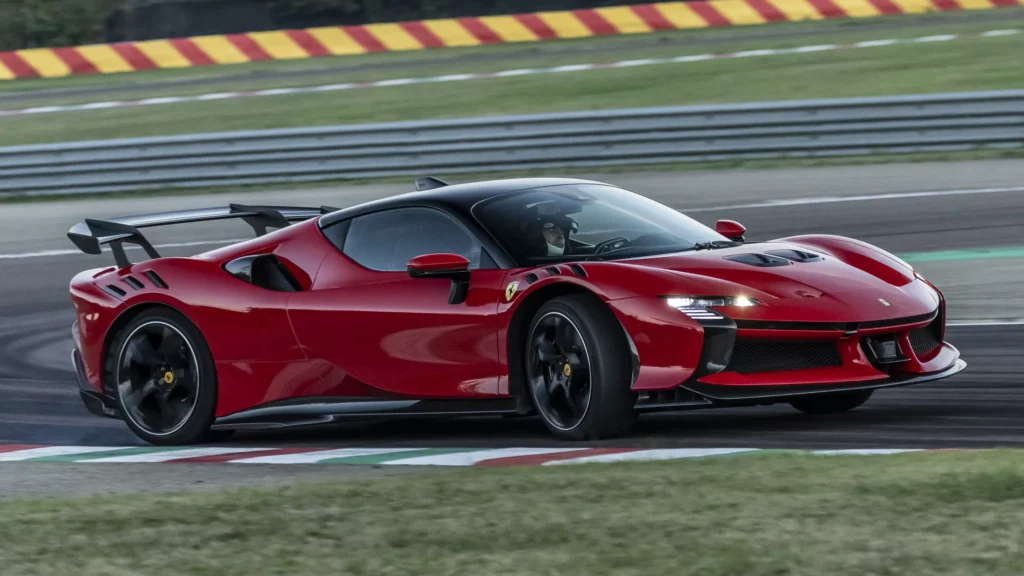
via CarScoops
Great Wall Motor—the Chinese automaker best known for building affordable trucks and SUVs—just walked into the Beijing auto show and casually announced it’s building a Ferrari competitor powered by a turbocharged 4.0-liter V-8. Yeah, you read that right. Not a battery-electric hypercar. Not a plug-in hybrid with 1,000 horses and a TikTok-friendly name. A traditional, displacement-powered, mid-mounted V-8 supercar.
This isn’t a fever dream. This is happening in 2027 under a new subbrand called GWM GF—because apparently “Great Faith” is the energy you need when you’re about to take on Maranello from the other side of the world.
The China Supercar Plot Twist Nobody Expected
When we talk about Chinese performance vehicles, the conversation typically revolves around electric absurdities and plug-in hybrids. There’s the 308-mph Yangwang U9, the Denza Z with over 1,000 horses, the Xiaomi SU7 Ultra lapping Nürburgring. All electrons, all ambition, all designed to prove that China can out-tech the West in the performance space.
GWM just threw that playbook in the recycling bin. Instead of chasing the EV arms race, they’re doubling down on what nobody expected: an actual V-8 engine in a purpose-built supercar. The specs alone justify the audacity: a mid-mounted turbocharged 4.0-liter V-8, carbon-fiber monocoque chassis, and platform ambitions that extend to both a GT3 race car variant and a road-going GT3 version.
Great Wall chairman Jack Wei didn’t dance around the goal either. He told CarSauce that the supercar project is “benchmarking Ferrari.” Translation: we’re not making a Chinese knockoff—we’re building a legitimate competitor aimed at the Prancing Horse. To prove they’re serious, they hired Adam Thomson, the former chief engineer of McLaren GT, to lead platform and vehicle development.
Why a Chinese Truck Company Is Going Full Gasoline
Here’s where it gets interesting. Wei acknowledged that “this V-8 strategy is not aligned with current trends in China,” with the vision squarely aimed at global markets. The decision to stick with displacement came partly from market feedback, specifically from Australia, where GWM has been selling vehicles since 2009. Chief technology officer Nicole Wu explained it plainly: Australians told her “there is no replacement for displacement.”
That’s not just marketing speak—it’s a legitimate bet that there’s still a worldwide appetite for gas-powered performance cars, even as EVs dominate the headlines and regulatory bodies tighten emissions standards. GWM seems to understand what Detroit has known for decades: visceral, naturally aspirated (well, turbocharged) engine experiences still sell, especially at the high end of the market where customers have options and don’t need to be convinced by tax incentives.
The V-8 isn’t limited to the supercar either. GWM confirmed the Tank 700, its off-road-oriented SUV, will also soon pack eight cylinders—though Wei noted it’ll use a different engine variant than the supercar. Don’t be shocked if shared components eventually bridge the gap between these two wildly different applications.
The Hybrid Elephant in the Room
GWM first went public with its V-8 ambitions back at CES in January, showing off a flat-eight motorcycle engine (2.0-liter, 154 horsepower) and the 90-degree 4.0-liter V-8 destined for cars. But here’s the pragmatic twist: the company hasn’t ruled out hybrid configurations for future V-8 applications to meet CO2 emissions requirements.
This is the real story beneath the headline. GWM isn’t trying to build a gas-guzzling dinosaur—they’re placing a strategic bet that displacement-based performance still has a future, even if that future includes hybrid assist. It’s a middle path that Western OEMs have largely abandoned in favor of full electrification, but it’s a path that makes sense if you believe there’s a decade-plus runway for combustion engines in performance niches.
Can They Actually Pull This Off?
Here’s the billion-dollar question: can a Chinese automaker known for affordable SUVs and trucks actually build a credible Ferrari alternative? The hiring of Thomson is a legitimate credential—McLaren GT is serious engineering. The carbon-fiber monocoque and turbocharged V-8 aren’t off-the-shelf parts. And the timeline (2027 reveal) gives them five years to get it right.
But let’s be real: Chinese supercars have tried this before, and most haven’t made the leap from press release to genuine global contender. Building a V-8 is straightforward engineering. Building a V-8 supercar that competes with 70 years of Ferrari tradition—that’s a different beast entirely. You need not just horsepower, but handling sophistication, materials expertise, and a brand heritage that money can’t buy overnight.
That said, GWM’s approach is refreshingly different. Rather than chase specs or EV bragging rights, they’re going after a segment that Western manufacturers have largely ceded or abandoned. If they execute on the engineering and keep the price reasonable, they could genuinely disrupt the supercar market in ways that Chinese EVs simply cannot.
The American Dream (Sort Of)
Here’s a wild thought: GWM showed its V-8 engine at CES in Las Vegas and explicitly stated its focus on global markets. Given America’s enduring love affair with displacement and the fact that homegrown manufacturers have mostly abandoned the traditional supercar space, there’s a sliver of a chance this could eventually reach U.S. shores. Imagine a legitimately engineered, sub-$500K V-8 supercar from China undercutting Ferrari and taking market share. The enthusiast community would implode.
It probably won’t happen—regulatory hurdles, brand perception, and dealer networks make importing Chinese supercars into America a bureaucratic nightmare. But the fact that we’re even discussing this as a possibility shows how completely the global automotive landscape has shifted. The future of supercars might not be decided in Stuttgart or Maranello. It might be decided in China by a company that still believes displacement matters.
- Great Wall Motor announced a mid-mounted turbocharged 4.0-liter V-8 supercar aimed at Ferrari, with a 2027 reveal planned.
- They hired former McLaren GT chief engineer Adam Thomson to lead development and plan a GT3 race variant alongside the road car.
- GWM will also put a V-8 in the Tank 700 SUV, betting that displacement still matters globally despite China’s EV-first strategy.
Sources: Car and Driver