Mazda’s Le Mans Legend Gets a Second Life: Inside the 787B Rebuild
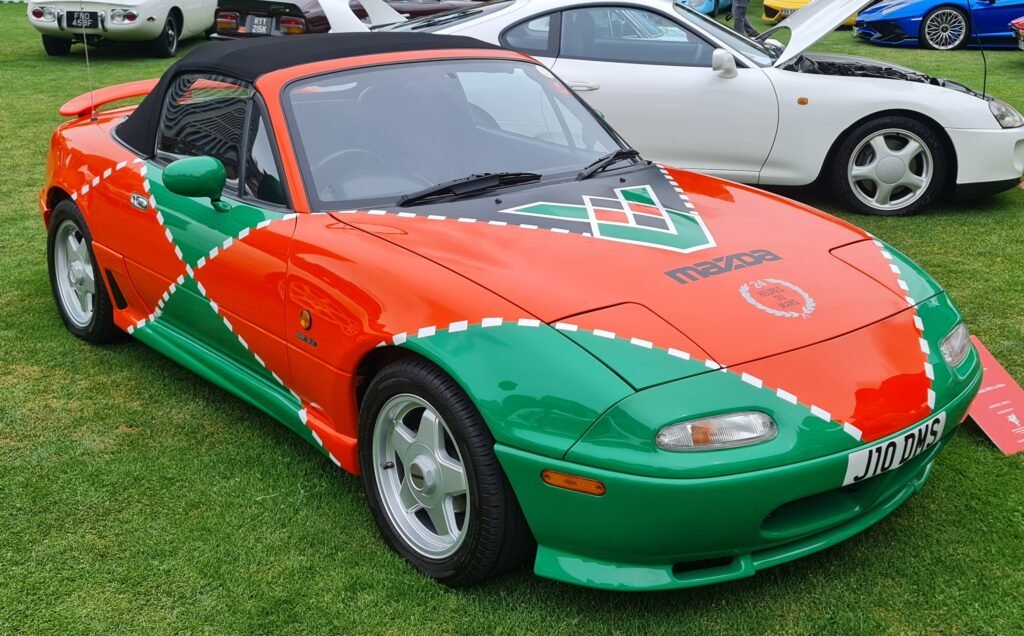
Mazda’s obsession with the rotary engine makes about as much sense as a band built entirely around triangles and discordant noise. While the rest of the automotive world moved on to conventional pistons or battery packs, Hiroshima doubled down on spinning triangular rotors. And the reason they can’t let it go? A 35-year-old race car that pulled off something nobody expected: winning Le Mans.
The 1991 Miracle
Let’s be clear: the 787B didn’t win because rotary engines are inherently superior. It won because Mercedes—which ran a commanding 1-2-3 for most of the race—broke. When the checkered flag dropped on that June night in 1991, Mazda had made history as the first Japanese manufacturer to claim victory at Europe’s most demanding endurance race. The 787B became immortal.
That’s the kind of accomplishment worth protecting. Instead of retiring the car to a climate-controlled museum where it could gather dust like a monument, Mazda keeps these machines alive and racing. Every year, they come out of the shop ready to compete—a reminder that some victories refuse to die quietly.
Keeping a Legend Running
The 787B’s longevity comes down to one Florida shop: Flis Performance. Based out of what would normally be MX-5 Cup race car territory, Flis handles the entire Mazda Motorsports heritage collection, which means getting these vintage rotary monsters ready for events like the Rolex Reunion at Laguna Seca during Monterey car week. It’s not a job for the faint of heart.
The fundamental problem: almost every part in the 787B is a one-off. Engineers didn’t design these cars with future serviceability in mind. When something breaks or warps, you can’t just call a salvage yard and order a replacement from a donor car. That warped rotor housing? It might be the only one ever made. The technicians at Flis Performance have become part historian, part detective, part fabricator—reverse-engineering solutions for problems that haven’t existed for three decades.
Mazda recently released a short documentary pulling back the curtain on this process. Watching engineers methodically disassemble the four-rotor R26B engine reveals just how alien the rotary truly is. This isn’t a conventional block with pistons stacked in rows. It’s a multilayer aluminum sandwich, each chamber holding a three-pointed rotor with slightly curved surfaces spinning inside a peanut-shaped housing. Ceramic tips at each of the three points handle the extreme forces and temperatures. It’s elegant. It’s completely bonkers. It’s unmistakably Mazda.
The Anatomy of Controlled Chaos
The R26B produces 700 horsepower at 9,000 rpm in Le Mans trim—a figure achieved partly through the sheer frequency of combustion events. Because each rotor chamber fires separately, you’re essentially running three mini-combustion cycles per revolution. To maximize burn efficiency, Mazda stuffed three spark plugs into each rotor housing. The result is a power plant that, at its core, violently compresses and ignites fuel three times per revolution.
On the dyno, the engine could safely handle 10,000 rpm and produce even more power. But in 1991, Mazda made a strategic decision: turn down the boost. Not because they lacked confidence in the engine, but because winning a 24-hour race is about finishing, not peak output. A conservative tune kept that engine singing for all 24 hours.
That singing, however, is absolutely unhinged. The 787B’s engine note doesn’t just assault your hearing—it rewires your nervous system. Drivers in 1991 needed serious ear protection because the sound literally threatens neurological damage. It’s a piercing, relentless wail that sounds less like an engine and more like industrial machinery designed to breach a bunker. Modern race cars are muffled by comparison. The 787B sounds like controlled chaos wrapped in carbon fiber.
Why Mazda Still Matters
Here’s what separates Mazda from every other manufacturer: they didn’t build the 787B to sit on a pedestal. They built it to race, and it still does. That commitment to keeping history alive—not as a museum piece, but as an active competitor—explains why Mazda loyalists are willing to defend the rotary engine against any rational argument.
In a world where manufacturers pivot strategies every fiscal quarter, chasing whatever the market demands, Mazda remains stubbornly attached to its identity. The rotary didn’t make business sense in 2024. It barely made sense in 1991. But it made one unforgettable moment at Le Mans, and Mazda refuses to let that moment die.
Every time Flis Performance tears down a 787B and carefully reconstructs each component—splitting that four-rotor sandwich, inspecting rotor housings, confirming spark plug timing—they’re preserving more than just a race car. They’re keeping alive the audacity of engineering for the sake of engineering. In an era of downsizing, electrification, and algorithmic optimization, that’s genuinely radical.
Sources: Car and Driver
- Mazda’s 787B won the 1991 24 Hours of Le Mans — the first Japanese manufacturer to ever claim the title.
- The car still races today, maintained by Florida-based Flis Performance, which handles Mazda’s historic motorsports collection.
- The four-rotor R26B engine produces 700 hp at Le Mans specs and sounds like a neurosurgeon’s drill — in the best way possible.