The 1991–94 Nissan 240SX Was Peak Balanced Sports Car. Then Nissan Ruined It.
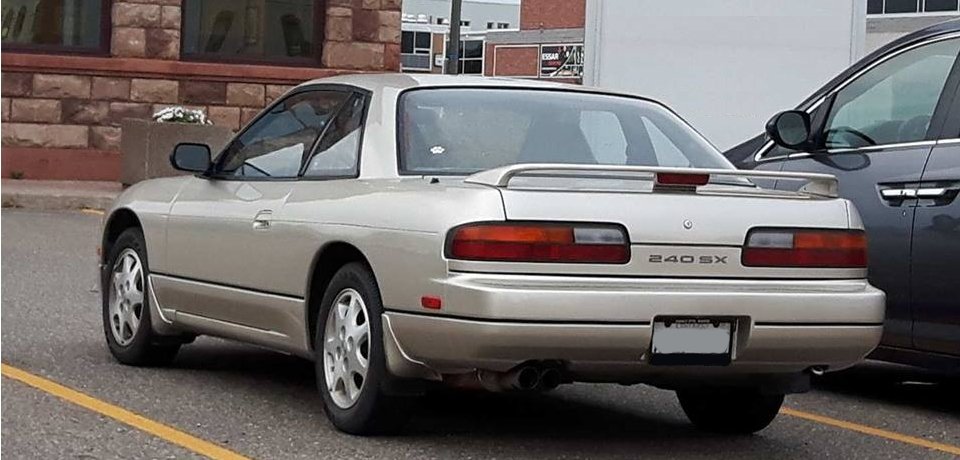
There’s a three-act structure to the Nissan 240SX’s life, and the middle chapter is where Nissan accidentally built something transcendent.
The first generation 240SX, introduced in 1988, was cute but underbaked—a wobbly toddler of a sports car with anemic power and too much thrash. Then, in 1991, Nissan swapped in a proper cylinder head: dual overhead cams replaced a single, and four valves per cylinder beat three. Suddenly, that 2.4-liter four-cylinder was making 155 horsepower, and more importantly, it made that power feel alive. Not quick, mind you. But responsive. Eager. Like Nissan had finally tuned the thing to actually want to accelerate.
That’s when the magic happened.
The Goldilocks Chassis That Changed Everything
The 1991–94 240SX was engineered with a clarity of purpose that modern sports cars seem to have forgotten. Power went to the rear wheels through a five-speed manual that was actually gratifying to use—a trait shared only with the Honda Prelude among its peers. But the real star was the chassis.
A multilink suspension and optional four-wheel steering gave the 240SX a 53.0/47.0 percent front-to-rear weight distribution that bordered on perfect. The car displayed 0.85 g of grip in Car and Driver’s 1992 comparison test—the best in that test—and stopped from 70 mph in just 164 feet. To put that in perspective, those were Porsche numbers in the early ’90s. The 240SX’s geometry didn’t fight you; it invited abuse with the grace of a jai alai ball. Toss it, pitch it, fling it—the car responded with poise, not protest.
Styling didn’t hurt, either. With a drag coefficient as low as 0.31, the body looked the part of a lightweight sports car and cut through air like it meant business. By the time Japanese drifting culture infiltrated California in the late ’90s, the 240SX’s reputation had metastasized from “competent coupe” to “mandatory platform for tire smoke.” Enthusiasts bolted on lampshade-size turbos, hacked open hoods to mount them like periscopes, and suddenly the horsepower question solved itself.
The Power Problem That Didn’t Have to Be
Here’s where the caveat stomps in: zero to 60 took 7.9 seconds, and that buzzed along at 5,600 rpm like an angry hive of bees. A 2.4-liter four-cylinder was never going to shake the earth. The engine felt thin at the top end, vibrating the whole car like a lopsided cement mixer. A balance shaft would have smoothed things considerably. But Nissan chose not to go there.
Yet that wasn’t the real tragedy. The 240SX handled well enough that the modest power output became almost irrelevant. It was the anti-horsepower argument personified: a car that proved balance beats brute force in the real world. Among sports coupes of the era—the Celica, Prelude, Eclipse, Talon, Probe, and VW Corrado—only the 240SX and Prelude were genuinely livable as long-distance tourers. The 240SX’s firm “monoform” seats (which resembled police Crown Vic buckets, if you can believe that) and composed suspension made highway miles tolerable. Most lightweight sports cars felt like penance.
When Nissan Blinked
Then 1995 arrived, and Nissan panicked.
The market was turning away from small coupes. SUVs were coming. American drivers wanted size and safety theater, not flat handling and razor-sharp inputs. So Nissan did what panicked executives do: they pivoted. The new 240SX was restyled to mirror the Japan-market Silvia coupe, and with that redesign came a heavier, softer, more cushioned experience. The balance that had made the second-generation car special vanished. By 1998, sales had collapsed, and Nissan quietly discontinued the model in the U.S., letting it drip away like a Popsicle on July Fourth.
It was, in the words of one observer, like watching a star marathon runner detour into a bar 100 yards from the finish line. Almost, but not quite.
Why This Matters Now
Three decades later, the 1991–94 240SX commands glassy eyes and six-figure prices among collectors. But the reverence misses the actual point. The 240SX wasn’t great because it was rare or became a drifting meme. It was great because Nissan—accidentally or otherwise—nailed the fundamental equation: geometry, balance, and usability matter more than raw numbers. It proved that a 155-horsepower four-cylinder could be more fun than a 250-horse V6 if the chassis underneath did the thinking.
That philosophy has largely disappeared from the sports car market. Everything now is either a six-figure exotic or a 300-plus horsepower mass-market coupe that trades balance for straight-line bragging rights. The idea of building something deliberately modest but mechanically brilliant feels quaint. The 240SX was the apricot jam in the Sacher torte of Nissan’s lineup—a perfect middle chapter between a failed debut and a misguided redesign. It’s the car that should have defined an era but instead became a footnote, remembered fondly by people who actually drove them rather than celebrated by an industry that killed it.
- The 1991–94 Nissan 240SX had near-perfect 53/47 weight distribution and posted 0.85 g of grip in testing—among the best of its era.
- Despite only 155 horsepower, its multilink suspension, four-wheel steering, and flat handling made it a genuine sports car, not a toy.
- By 1995, Nissan redesigned it into irrelevance to chase SUV trends; it was discontinued in the U.S. by 1998.
Sources: Car and Driver