BMW’s Armored 7-Series and X5 Can Laugh Off Explosives—and 67 Rich Europeans Just Proved It
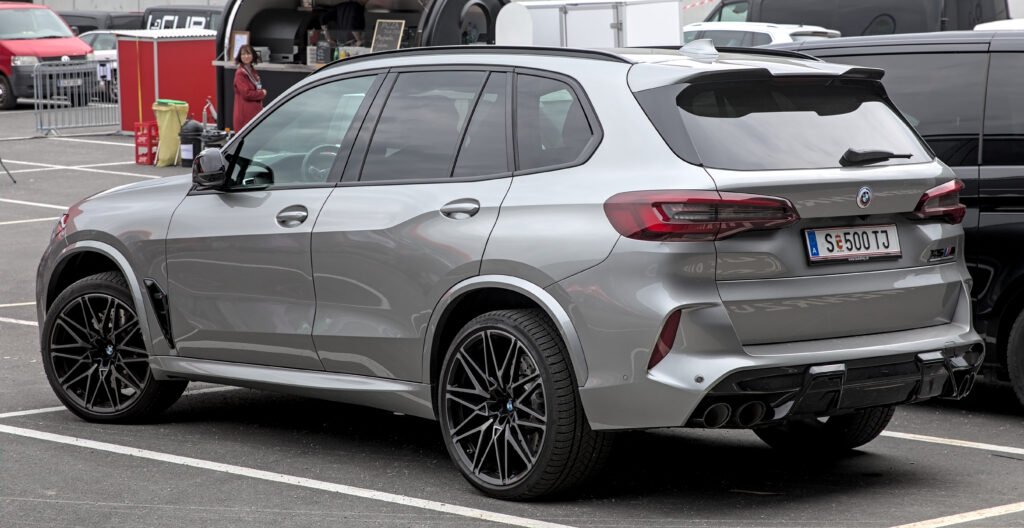
While most luxury automakers outsource their armor to specialists, BMW builds its own bulletproof machines—and last month proved it’s not just marketing nonsense. The German brand invited 67 high-net-worth clients from eight European countries to its development center in Sokolov to put the 7-Series Protection and X5 Protection through their paces. These weren’t journalists or YouTube influencers. These were actual buyers, ready to drop serious money on cars that can withstand sustained firearms fire and explosive attacks.
That’s not hyperbole. We’re talking about real armor plating, reinforced glass, and engineering that turns a luxury sedan into a mobile fortress. And BMW’s been at this for over four decades, building the kind of niche product that most people didn’t even know existed until they had a reason to care.
When a Sedan Needs to Stop Bullets
The 7-Series Protection achieves a VR9 ballistic rating, which means it can handle sustained attacks from rifles and explosives. That’s not entry-level armor—that’s “keep the client alive during an active threat” territory. The X5 Protection steps down to VR6 protection, still impressive but less fortress-like. Both models launched in 2023 and are based on BMW’s latest generation platforms, which means buyers get modern tech alongside medieval-level defensibility.
Under the hood, the 7-Series packs a mild-hybrid 4.4-liter twin-turbo V8 producing 523 horsepower and 553 lb-ft of torque. There’s also an i7 xDrive variant for clients who want electric powertrain bragging rights to go with their ballistic protection. That’s the kind of client BMW attracts here—people for whom “electric luxury sedan” and “stops armor-piercing rounds” occupy the same shopping list.
The Test: Armored vs. Reality
Here’s where BMW got clever with the demonstration. They didn’t just let buyers sit in the armored cars and nod approvingly. Instead, participants drove the Protection variants back-to-back with standard models—a 740d, 750e, and X5 variants including the 50e, 40d, and M performance version. The idea: show that adding armor doesn’t turn a BMW into a slow, numb tank.
The event included emergency braking tests in corners, which is where added weight typically reveals itself as a handling liability. Dedicated off-road sections pushed the X5 models to their limits. Trained instructors from Germany and the Czech Republic guided participants through everything, turning what could have been a sales pitch into something closer to actual performance evaluation. That matters—buyers spending six figures on an armored car want proof that security doesn’t mean sacrificing driving dynamics entirely.
The Real Story: Niche Within a Niche
BMW’s armored division operates in a world most people never see. Armored vehicles have existed since the early 1900s, but the idea of a factory-built BMW Protection model is surprisingly exclusive. Most armored cars come from third-party specialists who strip down a standard vehicle and rebuild it—a clumsy, expensive process that usually compromises the original engineering.
BMW took a different approach. By integrating armor into the design from the concept stage, the company built vehicles that feel like BMWs first and armored cars second. That’s a distinction that matters to ultra-high-net-worth individuals who need protection but refuse to give up luxury.
The fact that BMW flew in clients from eight countries and staged this entire demonstration at a proper test facility says something about the market. These aren’t vanity purchases or security theater. Someone is spending real money—likely six figures per vehicle—and BMW needs to justify that investment with real-world testing. The company wouldn’t roll out this kind of event if demand wasn’t there.
The Elephant in the Room: Who Actually Buys This?
BMW keeps details about the Protection lineup intentionally vague, probably because the client base includes people who value privacy. We’re talking about Middle Eastern royal families, Russian oligarchs (though fewer of those these days), African business leaders, and European executives living under genuine security threats. Not many, but enough to sustain a product line that costs more than a house.
That exclusivity is exactly why BMW doesn’t mass-produce these things. The standard X5 sells in hundreds of thousands annually. The X5 Protection? Likely in the hundreds, globally. The 7-Series Protection is probably even rarer. It’s a product that makes more sense when you understand the client’s actual threat level and budget constraints.
The Verdict
What BMW pulled off in Sokolov wasn’t revolutionary—it was just competent at an extreme level. Take a great car, add armor that’s integrated thoughtfully rather than bolted on afterward, and you end up with something that can legitimately do the job it was built for. The fact that 67 ultra-wealthy Europeans traveled to test these vehicles suggests the company nailed the balance between luxury and security.
For the rest of us, the takeaway is simpler: if you’ve ever wondered what happens when German engineering meets security specifications that would make intelligence agencies jealous, the answer is in those two models. They prove that sometimes the best niche products aren’t marketed to the masses—they’re quietly reserved for people who actually need them to survive.
- BMW hosted 67 wealthy Europeans to test the 7-Series Protection (VR9 ballistic rating) and X5 Protection (VR6 rating) at its Sokolov development center.
- The 7-Series Protection runs a 4.4L twin-turbo V8 with 523 hp, plus an electric i7 xDrive variant—proving armor doesn’t kill performance.
- These vehicles handle explosives and sustained rifle fire while maintaining luxury sedan dynamics, making them the ultimate six-figure security statement.
Sources: Carscoops