Rivian Lays Off Hundreds Right After the R2 Launch. Classic Silicon Valley Math.
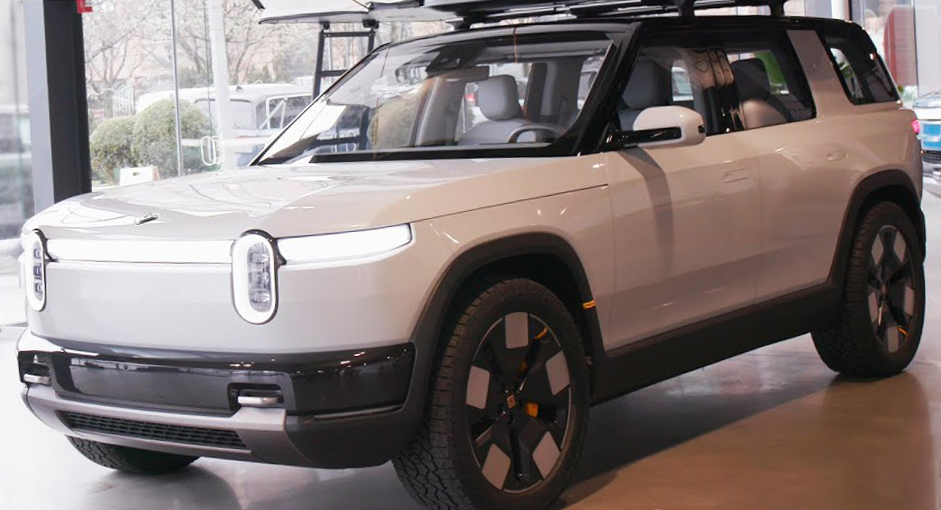
Rivian just executed one of the most Silicon Valley moves imaginable: launch your make-or-break product, then immediately cut hundreds of jobs. On Tuesday, the EV maker laid off roughly 300 employees across sales, service, and marketing—less than 2 percent of its roughly 15,200-person workforce—just days after the R2 began deliveries. If that timing feels backwards, congratulations: you understand how real business works versus how venture-backed startups actually operate.
The R2 was supposed to be Rivian’s salvation. After years burning cash on the R1T and R1S (both brilliant trucks that cost a fortune and sold in limited volumes), the company finally shipped a mass-market vehicle with a starting price under $35,000. The leasing frenzy has already begun—roughly half of early R2 customers are leasing rather than buying, which tells you everything about pricing psychology and Rivian’s desperation to move units. But none of that matters if the company bleeds cash in the process.
Here’s the brutal reality: Rivian has never posted an annual profit. Not once since its 2009 founding. Last year, it hauled in roughly $5.4 billion in revenue while selling about 42,000 vehicles—solid numbers on the surface—and still couldn’t turn a profit. That’s the math that forces your hand. When you’re bleeding that much red ink, you don’t hire more salespeople when demand for a new product is artificially high. You cut costs.
The Timing Is Brutal, But the Logic Is Sound
Cutting sales and marketing staff right after a product launch sounds insane until you remember that the R2 launch itself generated all the demand oxygen Rivian needs. Rivian’s reputation in the EV space is strong enough that the configurator going live created instant buzz. Buyers desperate to secure an early build slot aren’t going anywhere because the sales team got smaller. In fact, fewer distractions in those departments might mean faster order processing and delivery.
The real target here appears to be structural fat. Rivian spent the last few years building out premium service networks and customer-facing infrastructure designed for a company making money on high-margin trucks. The R2 changes that equation entirely. It’s a volume play. You don’t need the same support structure, and you definitely don’t need redundant layers of marketing when your product is the headline.
This is the calculation every EV startup eventually faces: spend what you need to survive another quarter, or invest in the infrastructure that never pays off. Tesla went through this same crucible in 2008 and 2010—cuts that felt premature until they proved essential. Rivian is just doing it faster and more publicly.
The Real Question: Will the R2 Actually Deliver?
The R2’s success will determine whether this layoff was ruthless efficiency or delayed disaster. Rivian’s been promising a sub-$35K EV for years, and the market is genuinely starved for a reasonably priced, reasonably designed EV that isn’t a Tesla or Chevy Bolt. If the R2 can actually move 100K+ units per year with acceptable margins, these cuts today start looking like exactly the kind of surgical decision that separates winners from also-rans.
But there’s a massive asterisk: Rivian still has to execute manufacturing at scale, maintain quality control, and convince people that Rivian ownership experience justifies a $35K price tag in a market increasingly crowded with cheaper alternatives. The Ford Maverick proved there‘s hunger for affordable EVs, but Rivian has to prove it can actually compete on price without sacrificing the premium positioning that’s defined the brand.
The employees affected were told they could apply for other open positions within Rivian, which is corporate-speak for “we’d rehire you if you’re skilled enough and our cash doesn’t run out first.” That’s the other dark side of this moment: Rivian is gambling that it won’t need those people back.
The Bigger Picture: Silicon Valley’s Old Playbook
What we’re watching is a company executing the only playbook it knows: cut costs ruthlessly to extend runway, hope the new product becomes a blockbuster, and engineer profitability through scale rather than discipline. It’s the strategy that worked for Tesla, barely worked for Lucid, and completely failed for Fisker.
Rivian’s advantage is that the R2 isn’t some aspirational fantasy—it’s a real car arriving at a real price point with real demand. The disadvantage is that Rivian needs to hit profitability faster than any EV startup in history, and laying off hundreds of people right after your biggest launch is a signal that margins are thinner than anyone publicly admits.
The company isn’t collapsing. The R2 launch is real. Demand is real. But the cost structure still isn’t where it needs to be, and Rivian just admitted that by cutting payroll before the R2 even reached significant volume. That’s not confidence. That’s triage.
- Rivian laid off roughly 300 employees (under 2% of workforce) across sales, service, and marketing just days after R2 launch.
- Company has never posted a profit since 2009, despite $5.4B revenue and 42K vehicles sold last year.
- R2 is Rivian’s best shot at volume-based profitability, but the timing of these cuts suggests margins are tighter than the hype suggests.
Sources: Carscoops