
Subaru’s New Sambar Van Costs $7,200 and Still Comes With a Manual
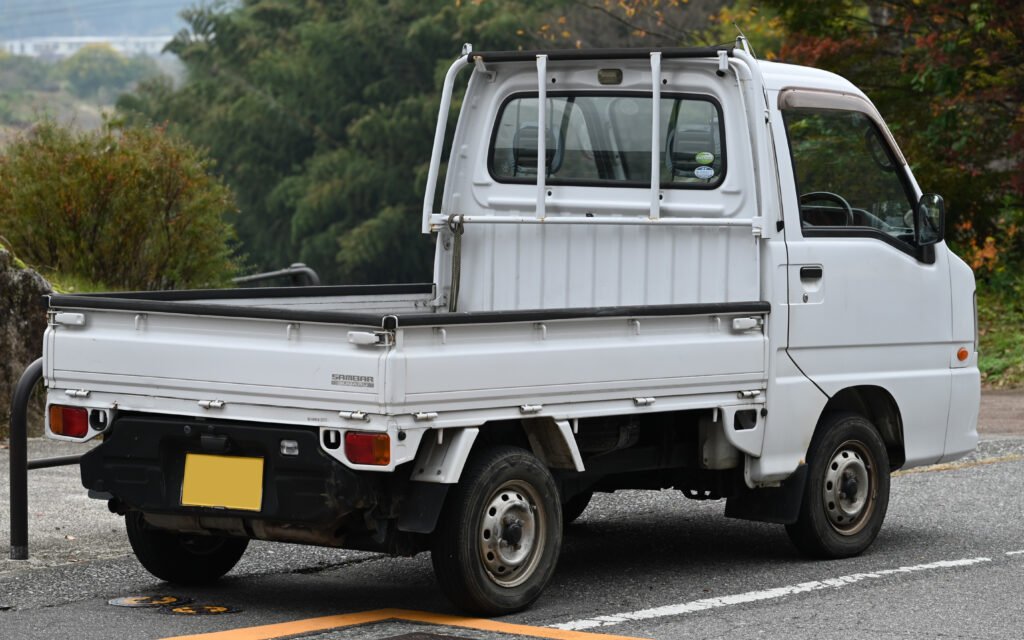
In a world where car companies are frantically electrifying everything and slapping 10-inch screens on vehicles that don’t need them, Subaru just did something refreshingly weird: it updated its cheapest vehicle in Japan, kept the manual transmission, and charged barely more than a used Honda Civic’s down payment.
Meet the 2026 Subaru Sambar Van, a kei-class workhorse that starts at ¥1,155,000 (roughly $7,200) and asks absolutely nothing from you except the ability to operate three pedals. In an era when “affordable” cars cost $25,000 and ownership requires a smartphone, this is genuinely radical.
The Practical Stuff Actually Matters Here
Let’s be clear about what the Sambar is: it’s a utilitarian van designed to haul stuff, not feelings. The 2026 refresh doesn’t pretend otherwise. Subaru kept the upright, boxy shape entirely intact—there’s zero attempt to make it look “modern” or “sleek,” because that would be stupid. What it did add is the stuff that actually makes a difference, especially for commercial operators who clock serious miles: upgraded collision detection, pedestrian recognition, and oncoming-vehicle awareness via an improved stereo camera system.
The safety gains matter more than you might think. NHTSA safety standards are tightening worldwide, and kei vans are used as daily work vehicles for thousands of small business owners across Japan. Better accident prevention translates directly to money saved on repairs and downtime.
The base VB trim keeps things brutally honest: tiny steel wheels, unpainted bumpers, no frills. Climb the ladder to the top-tier Dias, and you get body-colored bumpers, LED headlights, alloy wheels, and a chrome-accented grille that’s almost civilized. Even the Dias won’t win beauty contests, but it looks intentionally professional rather than accidentally cheap.
The Tech You Might Actually Want (Or Skip)
Here’s where Subaru got interesting. Instead of force-feeding a bloated infotainment system to every trim, the automaker made the new 9-inch touchscreen with navigation an optional factory install on select models. Translation: if you want it, you can get it. If you don’t, no one’s holding a gun to your head.
The Dias trim also gets a new digital instrument cluster—Subaru calls it the “Active Multi-Information Meter”—which replaces the traditional analog gauges. Again, it’s logical: digital clusters are cheaper to manufacture at scale and provide more info at a glance. But it’s not mandatory on every trim, which is how restraint should work.
The Engine That Time Forgot (In the Best Way)
The Sambar Van keeps its mid-mounted 660cc three-cylinder engine, unchanged in philosophy but available in two flavors: naturally aspirated (46 hp) or turbocharged (63 hp). Those numbers sound pathetic until you remember this thing weighs about as much as a lightly loaded pickup truck bed and is designed to maximize cargo capacity, not 0-60 times.
Power delivery is paired with either a five-speed manual gearbox or a CVT, and buyers can opt for rear-wheel drive or electronically controlled all-wheel drive. For a commercial operator in rural Japan or someone hauling equipment on rough terrain, 4WD with a manual is actually the perfect formula: simple, reliable, and easy to fix with basic tools.
The whole powertrain lineup is deliberately non-electrified. No hybrid assist, no plug-in complexity, no battery management software to confuse a mechanic at a small garage. Kei cars have thrived for decades by keeping engineering transparent and ownership straightforward, and the Sambar isn’t about to break that tradition.
The Pricing Reality Check
Here’s where the Sambar wins on pure economics. The base manual RWD model jumped ¥55,000 ($300) year-over-year—a price increase that barely registers as inflation. The range tops out at ¥2,068,000 ($12,900) for the fully loaded 4WD CVT Dias variant.
For context, that’s cheaper than a Ford Maverick’s starting price, and the Maverick is supposed to be the affordable truck revolution. Meanwhile, Subaru is over here selling a legitimate commercial vehicle with a warranty and factory support for less than half that. Subaru’s targeting 230 units per month in Japan, which is a reasonable volume for a specialty vehicle in a shrinking market.
The Bigger Picture: Manual Transmissions Still Exist (Somewhere)
The Sambar Van update is a quiet statement about what “value” actually means. While the automotive industry obsesses over cutting manual transmissions entirely—even Porsche and BMW are phasing them out—Subaru’s budget offering says: people still want direct control, vehicles still need to be simple, and not every car needs a touchscreen.
It’s also worth noting that the Sambar isn’t alone in this market. Daihatsu’s mechanically identical Hijet Cargo and Atrai just received similar updates, and the field includes the Suzuki Every, Nissan Clipper Van, Mitsubishi Minicab Van, and Mazda Scrum Van. This is a thriving segment in Japan where practicality beats luxury, and manuals aren’t a nostalgic gimmick—they’re the working standard.
For American readers, this is almost science fiction. We don’t get kei vans, we don’t get affordable base-model vehicles anymore, and we certainly don’t get $7,200 new cars with a standard manual transmission. The Sambar Van is proof that the formula still works somewhere. Subaru knows its audience, respects their needs, and isn’t trying to oversell them on features they’ll never use. That’s not just good product design—it’s honest.
- The 2026 Subaru Sambar Van manual RWD starts at ¥1,155,000 ($7,200), up only $300 from last year.
- New safety features include improved pedestrian detection, oncoming-vehicle awareness, and bicycle recognition via stereo camera.
- Optional 9-inch touchscreen with navigation available; digital instrument cluster standard on Dias trim only.
- Mid-mounted 660cc three-cylinder available naturally aspirated (46 hp) or turbocharged (63 hp), paired with manual or CVT.
- Top-spec 4WD CVT Dias variant costs ¥2,068,000 ($12,900); Subaru targeting 230 units per month in Japan.
Sources: Carscoops