Stellantis Just Put a Solid-State Battery in a Dodge Charger. Don’t Get Too Excited Yet.
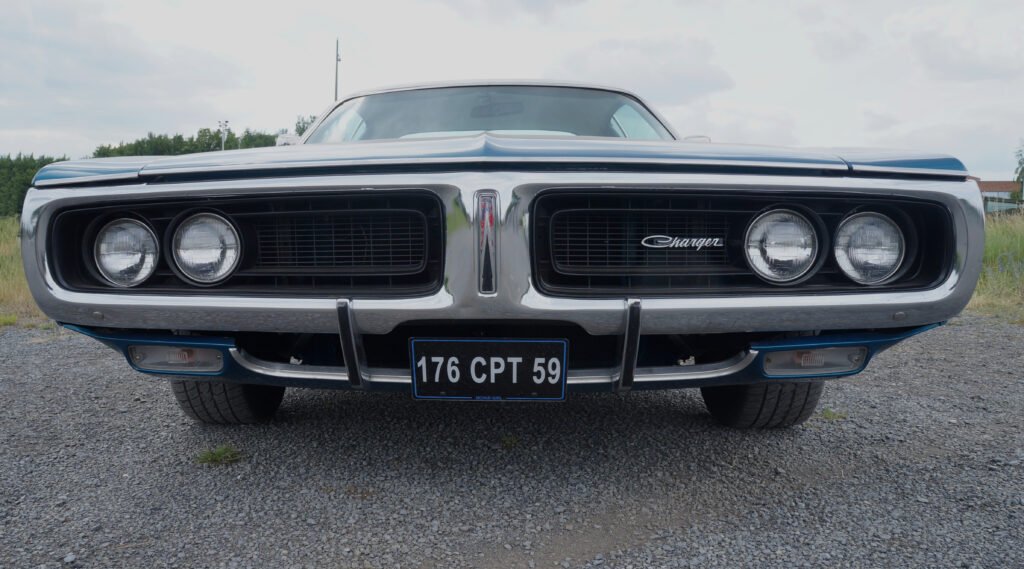
Stellantis just fired up a Dodge Charger Daytona with a solid-state battery pack, and before you start planning your next EV purchase around it, let’s pump the brakes and talk about what’s actually happening here.
The automaker has partnered with American battery maker Factorial to equip a test vehicle with cutting-edge solid-state cells that can supposedly recharge from 15 percent to 90 percent in just 18 minutes. That’s genuinely impressive on paper. But this is a prototype. A single test car. And Stellantis still won’t commit to when—or even if—you’ll see this tech in showrooms.
The Battery That Has Everyone Chasing Their Tails
Solid-state batteries have been the automotive industry’s holy grail for nearly a decade. They pack more energy into less space, charge faster, and theoretically last longer than the lithium-ion cells that power today’s EVs. Every major automaker has a team working on them. Nearly all of them claim they’re “coming soon.” Almost none of them actually have them in production cars yet.
Factorial’s FEST (Factorial Electrolyte System Technology) cells boast an energy density of 375 watt-hours per kilogram—that’s legitimately competitive with what lab tests have promised. They work reliably from -22°F to 113°F, which matters for actual real-world driving. Mercedes already proved the concept wasn’t pure fantasy when a prototype EQS covered nearly 750 miles on a Factorial solid-state pack, suggesting the technology isn’t vaporware.
So why are we treating this Dodge Charger like it’s a one-off curiosity? Because it is.
The Dodge Charger Question Nobody’s Asking
Here’s the thing that jumped out immediately: Stellantis chose the Dodge Charger Daytona for this test. That’s not random. The Charger Daytona is Dodge’s attempt to resurrect an iconic nameplate as an affordable, mass-market EV. It’s a competent car, sure, but it’s not Stellantis’s flagship electric vehicle—that distinction belongs to the Chrysler Airflow or the higher-end platforms across the group.
Picking the Charger Daytona for solid-state testing signals one thing clearly: Stellantis isn’t planning to put these cells into six-figure hypercars. They’re building batteries for cars regular people might actually buy. That’s the vision that makes sense for scaling production, even if it’s less headline-grabbing than Mercedes slapping them into an EQS.
The prototype uses a custom mechanical architecture and reworked control systems designed specifically for solid-state integration. Translation: you can’t just drop these cells into existing battery trays. Every car needs tuning. Every model needs engineering. That’s why we’re not seeing 50 different solid-state test vehicles right now.
So When Do We Actually Get One?
Stellantis still hasn’t committed to a timeline. The company is being cagey—it says the road-testing program has begun, but won’t specify how long it’ll run or when production might start. Siyu Huang, Factorial’s CEO, mentioned the collaboration represents “exactly the kind of deep, full-stack collaboration that solid-state has always required,” which is corporate-speak for “this took way longer than we wanted and will take even longer than anyone’s betting on.”
Industry speculation suggests solid-state batteries could hit production vehicles by 2030 at the earliest. That’s an optimistic guess from companies with obvious incentive to overpromise. Current EPA fuel economy data shows lithium-ion is still improving incrementally, which means Stellantis has no urgent need to rush solid-state to market before it’s absolutely bulletproof.
And here’s what nobody talks about: solid-state cells are expensive. Massively expensive. Until they’re manufactured at scale—which Factorial hasn’t achieved and Stellantis hasn’t committed to—these batteries will command premium pricing. Early adopters will pay dearly. The masses will wait.
The Actual Significance Hiding in the Hype
What matters here isn’t the 18-minute charge time. It’s that a major volume automaker is running real-world road tests with actual hardware, not just lab benches and press releases. Stellantis owns Jeep, Ram, Chrysler, Dodge, Fiat, and a dozen other brands—it’s not a startup burning venture capital on moonshots. When Stellantis tests something, it’s usually because they think they can actually build it.
The company also secured backing from Hyundai, Kia, and Mercedes, all of whom are betting on Factorial’s chemistry. That kind of multi-manufacturer confidence is rare. It suggests the technology is past the “maybe it works” phase and entering the “how do we manufacture it” phase.
But let’s be honest about the timeline: if we’re seeing a single Charger Daytona test car in 2026, don’t expect to walk into a dealership and buy a solid-state Dodge before 2030 at minimum. Probably later. These things always slip. Development is messy. Scaling is harder than prototyping. Anyone who’s been following EV batteries for the past five years knows that every company overpromises on timing by about 18 months.
The Dodge Charger Daytona with Factorial’s solid-state pack is a legitimate step forward for EV technology. It’s just not the beginning of the end for lithium-ion—it’s still somewhere in the middle of the beginning. Stay skeptical, stay informed, and don’t trade in your current EV waiting for this thing.
- Stellantis has begun road-testing Factorial solid-state batteries in a Dodge Charger Daytona prototype with 375 Wh/kg energy density and 18-minute 15-90% charging.
- The company hasn’t committed to a production timeline; industry estimates suggest solid-state EVs won’t hit dealerships until 2030 at the earliest.
- This is real hardware testing from a major automaker with backing from Mercedes, Hyundai, and Kia—not hype, but don’t expect widespread availability anytime soon.
Sources: Carscoops · Car and Driver