Genesis Just Showed Off Its GT3 Racer at Le Mans. It’s Basically Ready to Go.
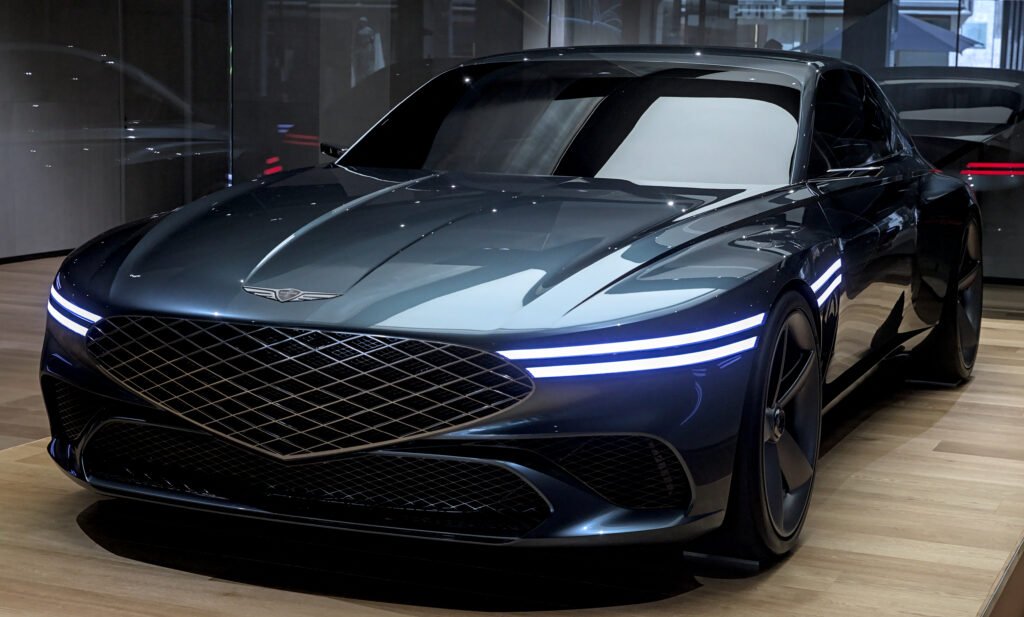
Genesis didn’t come to Le Mans just to watch. The luxury brand showed up with a fully formed GT3 race car concept that makes most “concepts” look like fever dreams sketched on a napkin during a marketing meeting. The Magma GT3, revealed at Circuit de la Sarthe this week, is so close to production-ready that it’s hard to see how the real thing changes much when it hits the track.
This matters because Genesis is getting genuinely serious about racing. The brand already debuted its GMR-001 Hypercar in the FIA World Endurance Championship this season, and now it’s signaling that GT3 competition is next on the agenda. That’s not some vague, five-year plan either—chief creative officer Luc Donckerwolke said both the road car and race car will enter production “very soon.”
Built for Racing From Day One
Here’s what separates the Magma GT3 from the endless parade of show-car theater: Genesis designed the road car and race car in parallel, not one after the other. That’s the way legendary racing programs work. It means the road car gets genuine racing DNA baked in from the start, not bolted on as an afterthought. The GT3 rules over at the FIA World Endurance Championship’s GT3 category are strict and specific, so homologation doesn’t leave much room for styling fantasy—but that’s exactly the point. Genesis had to make both cars work within tight technical constraints, which is the opposite of how most brands build race cars.
Developed by Genesis Magma Racing alongside Hyundai Motorsport, the GT3 concept meets those regulations with a wider track width, center-lock wheels, and race-focused bodywork that actually looks aggressive instead of plasticky. The hood gets serious center vents and louvers over the front wheels. There’s a carbon-fiber fin welded to the front doors. Twin canards on the bumper, a bigger intake, and a massive swan-neck rear wing that means business. This isn’t a road car pretending to be a racer—it’s a racer that shares a bloodline with a road car.
Under the skin, the company is keeping details close, but it’s mentioned “advanced thermal management strategies” and a “race-focused rear structure” built for endurance racing durability. The engine is almost certainly the same twin-turbo V8 that powers the GMR-001—basically two of Hyundai’s turbo four-cylinder rally engines welded together. That’s the kind of detail that matters to people who understand what they’re looking at.
Why GT3 Matters for Genesis

The timing here is strategic as hell. Genesis is still building out its Magma performance sub-brand, which means it needs credibility fast. LMDh Hypercar racing is impressive, but GT3 racing is where most enthusiasts actually pay attention—it’s the class with the most variety, the most customer teams, and the most dealers-to-racetrack pipeline. A Genesis GT3 race car gives the brand a way to connect its road cars directly to competition in a way that matters to buyers who actually care about performance.
This is the opposite of the usual corporate racing theater. Most brands spend millions on Hypercar programs that have nothing to do with anything you can buy. Genesis is doing both, and it’s making sure the lessons flow both ways. According to the company, what gets learned building and running the GT3 racer will influence the DNA of future Genesis performance models. That’s not marketing speak—that’s the only reason to bother with GT3 in the first place.
The Road Car Gets Its Moment Too
Genesis also finally showed the interior of the production Magma GT road car at Le Mans—which, yes, is an actual car with an actual interior you can sit in, not just a styling exercise on a show stand. The road car looks like what happens when you actually let designers and engineers talk to each other instead of fighting in separate buildings. It’s a mid-engine supercar from a luxury brand that’s only been racing seriously for about five minutes, and it doesn’t look like it’s apologizing for existing.
The GT3 race car interior, by comparison, is stripped to racing essentials: plexiglass windows, a safety net, racing bucket seat. The kind of stuff that tells you this thing isn’t a test bed—it’s ready to race. The fact that both cars were revealed at Le Mans, during the brand’s first 24-hour endurance race appearance, was a power move. Genesis didn’t just show up. It showed up with a plan.
What Happens Next
Genesis is being careful with language—calling the GT3 a “potential future vision” and saying components and architecture are “still under exploration.” That’s normal corporate hedging before something becomes real. But between Luc Donckerwolke saying both cars go into production “very soon,” and the sheer level of detail already engineered into this concept, it’s clear we’re not looking at speculative design here. This is a race car that’s already mostly finished.
The brand is also expanding aggressively into Europe—adding France, Italy, Spain, and the Netherlands to its market reach, with Austria, Denmark, Poland, and Portugal coming next. That’s not unrelated to the GT3 announcement. You don’t push into European markets without a European racing presence. Genesis is playing chess while most other luxury brands are still figuring out checkers.
The Magma GT3 represents something rare in modern motorsports: a brand that actually intends to do this, not just say it. Genesis has already proven it can build a competitive Hypercar. Now it’s showing it understands what GT3 racing demands—and that it’s willing to design road cars and race cars together instead of treating them as separate problems. That’s the kind of commitment that builds real racing programs, not marketing slides.
- Genesis revealed the Magma GT3 concept at Le Mans, built in parallel with the production Magma GT road car using GT3 technical regulations from the start.
- The brand says both cars go into production “very soon”—this isn’t vaporware, it’s an imminent reality.
- Genesis is using its Hypercar program plus GT3 racing to build credibility for its new Magma performance sub-brand while expanding into Europe.
Sources: Jalopnik · Car and Driver