BMW’s Next M3 Is Keeping Its Six-Cylinder—And Maybe Its Manual Too
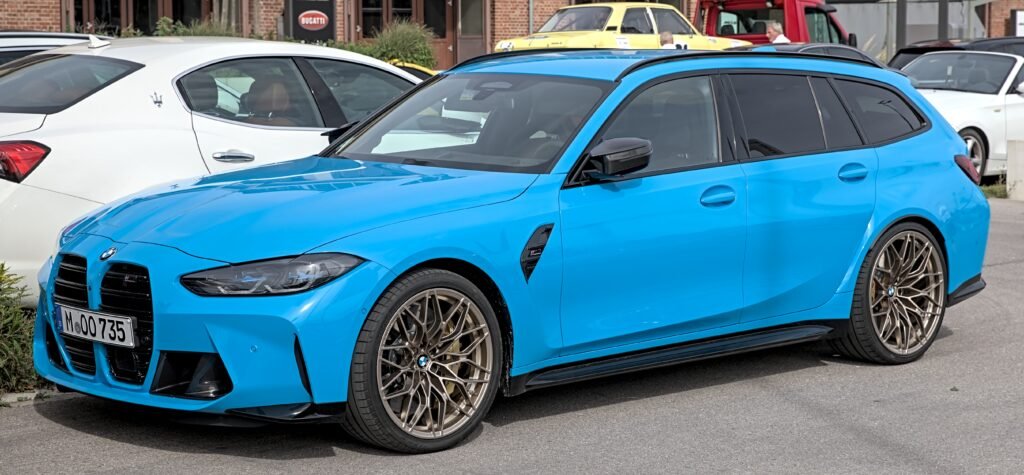
BMW is doubling down on the internal combustion engine. While the brand races toward electrification with concepts like the electric i3 Neue Klasse sedan, the next-generation M3 will still pack a proper turbocharged straight-six—and there’s a real chance it’ll come with three pedals.
This isn’t theoretical anymore. Spy photographers caught a gas-powered M3 prototype hammering around the Nürburgring in Germany, marking the first time BMW’s performance division has let the combustion-engine version loose in public testing. The car wears the sharp, angular Neue Klasse design language that’s spreading across BMW’s lineup, but with a longer hood and more aggressive stance that clearly separates it from its electric M3 sibling—which will arrive first, likely in 2027.
The Engine: Familiar But Sharper
Under the hood sits a familiar friend with fresh upgrades. The next M3 will use a reworked version of the current twin-turbocharged 3.0-liter inline-six, the same S58 that powers today’s M3 and M4. But here’s the kicker: BMW is adding a mild-hybrid system for the first time, which should squeeze out more performance and efficiency without fundamentally changing what makes this engine special.
The output figures should remain in the neighborhood of the current generation—473 hp in base form, climbing to 523 hp in the most aggressive tune. That’s not earth-shattering, but it’s honest power from a naturally charismatic engine that’ll actually sound like something. In a world where turbos have become invisible and hybrids feel like corporate compromises, BMW M is choosing to stay loud and linear.
Under Euro 7 emissions standards, BMW is using something called M Ignite technology to help the engine burn cleaner. This tech debuted on the refreshed current M3 and M4 in 2024, before trickling down to the M2. Translation: the engineering is already battle-tested. BMW isn’t gambling here; it’s refining.
The Manual Question: BMW’s Last Stand
This is where it gets interesting. BMW M CEO Frank van Meel recently told Autocar that the division wants to keep the manual transmission around “for as long as possible”—which is marketing-speak for “we know what you want, but it’s getting really hard to engineer.” The supplier base is shrinking. Modern driver-assist systems and mild-hybrid powertrains complicate disconnecting the drivetrain from all those electronic nannies. But van Meel was blunt about the ambition: they’re not giving up yet.
Whether that actually translates to a production manual is another question. BMW’s been hedging on this for years, and the engineering headaches are real. Still, for a brand that once stood for driver engagement, holding out longer than most is a statement. If the next M3 keeps the clutch, it’ll be a rare bright spot in a segment rapidly surrendering to automatics and electric powertrains.
All-wheel drive will almost certainly be standard. The rear-wheel-drive base model, which was a charming hold-over in the current generation, is likely headed to the chopping block—a casualty of complexity and profit margins.
The Look: Neue Klasse Sharpness Meets M Aggression
Stylistically, the next M3 borrows heavily from the i3’s modern design direction, but punches harder. The front end features connected headlights and kidney grilles split by an indent in the bodywork—clean and contemporary. The real aggression comes in those massive L-shaped air intakes flanking triangular vents in the center bumper, plus wide wheel arches that bulge outward like the car’s ready for combat.
The rear is where the gas engine reveals itself. Four large exhaust tips—a traditional M3 calling card—announce that this isn’t an EV. A small rear spoiler sits cleanly above, and the taillights are mounted high, echoing the i3. It’s evolutionary enough that it won’t look like a bargain-bin design refresh, but aggressive enough to matter.
Staggered wheels in 19 and 20 inches sit behind what appear to be beefy brakes with bronze calipers—performance hardware that’s genuine, not decorative. Flush-mounted door handles keep the lines clean. Inside, the next M3 will get the newest version of BMW’s iDrive system, including a panoramic display that stretches across the dashboard and likely a massive infotainment screen on the passenger side.
The Elephant in the Room: Why Gas Still Matters
Here’s the thing that corporate press releases won’t admit: BMW’s betting that enthusiasts will still want gas M cars, even as the brand commits billions to electrification. The electric M3—branded simply as the M3, without an “i” prefix—will arrive first and might cannibalize some sales. But the gas version signals that BMW knows its audience. The people buying an M3 aren’t necessarily looking for zero-emission virtue signaling. They want power that feels immediate, an engine that rewards revs, and the possibility of actually operating the transmission themselves.
This coexistence strategy is smart. It hedges the bet. If the electric M3 disappoints or turns out to be too expensive, the gas version is BMW’s safety net. If customers actually want EVs, great—the brand has that covered. It’s less about nostalgia and more about market realism: the automotive transition is happening, but it’s messier and slower than anyone predicted.
Expect the 2028 BMW M3 to launch sometime after the electric variant, likely arriving in late 2027 or early 2028. Pricing should sit near current M3 territory—call it $75,000 to $80,000 for a gas base model—though the mild-hybrid tech and fresh design might justify a bump. If BMW keeps the manual alive, enthusiasts should budget extra to make sure they snag one before they’re gone.
The next M3 isn’t revolutionary. It’s a deliberate choice to keep doing what M has always done: make a properly quick sedan that actually feels like it was engineered for a track, not just marketed as one. In 2028, that’s becoming rarer than it should be.
- The 2028 BMW M3 gas model will use a refreshed twin-turbo 3.0-liter six-cylinder with mild-hybrid assist, hitting 473–523 hp depending on tune.
- BMW M’s boss confirmed the division wants to keep the manual transmission alive “for as long as possible,” though engineering challenges make it uncertain.
- Styling adopts Neue Klasse design language with aggressive intakes and four exhaust tips; arrival expected late 2027 or early 2028, alongside the electric M3.
Sources: Car and Driver · Carscoops