Prius Still Wins the MPG Battle, But the 2026 Camry Hybrid Is Closer Than You’d Think
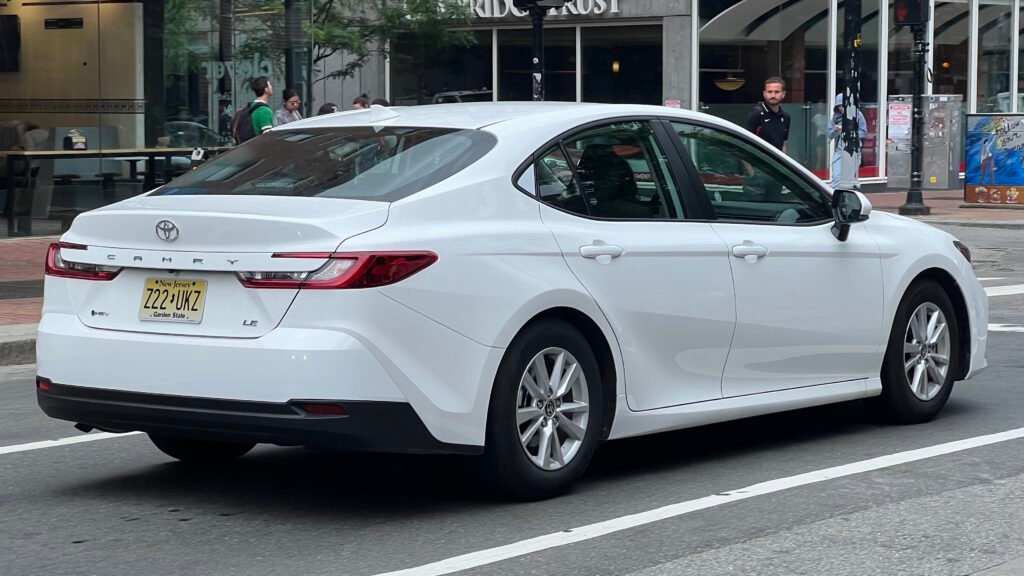
Toyota just made a bold move: the 2026 Camry is now hybrid-only, meaning the company’s best-selling sedan has officially ditched the traditional gas engine. That alone is newsworthy. But here‘s what actually matters—when you stack the new Camry Hybrid next to the Prius, the gap in fuel economy isn’t nearly as dramatic as Toyota’s marketing probably wants you to think.
Let’s start with the headlines. The 2026 Camry Hybrid delivers 51 mpg combined, while the 2026 Prius hits 57 mpg combined. That’s a six-mpg advantage for the Prius—respectable, but not apocalyptic. And when you factor in trim level, drivetrain, and real-world testing, the story gets more interesting.
The Raw Numbers: Where Each Hybrid Stands
Base models matter here. The Camry LE and Prius LE are separated by just $750 in starting price—$32,120 and $29,845 respectively—so they’re actually competing for the same buyer. Both hit that magical 50-mpg threshold in their base front-wheel-drive configuration. The Camry LE achieves 51 mpg combined; the Prius LE manages 57 mpg combined. Add all-wheel drive, and the gap stays roughly the same: Camry drops to 50 mpg, Prius to 54 mpg.
Where things get murkier is the mid-range. Step up to a Camry SE, Nightshade, XSE, or XLE with front-wheel drive, and combined economy drops to 47 mpg—still respectable, but now you’re no longer crossing that psychological 50-mpg line. Slap AWD on most of those trims and you lose another 1 mpg. The Prius, meanwhile, stays above 50 mpg across most of its lineup. Even the Prius XLE and Limited trims hold steady at 52 mpg combined with front-wheel drive, and only dip to 49 mpg when you go all-wheel drive on non-base models.
But here’s where it gets real: Consumer Reports’ testing found that real-world Camry Hybrid mileage actually exceeded EPA estimates. Their FWD Camry SE test yielded 48 mpg overall and an impressive 54 mpg on the highway—better than the EPA’s highway estimate of 47 mpg. The Prius also beat expectations in CR’s test, hitting 51 mpg overall and 59 mpg highway in a FWD XLE, compared to EPA ratings of 52 and 52 respectively. Translation: EPA fuel economy numbers tend to underestimate highway performance, which matters if you actually drive on interstates.
Why the Prius Still Wins—and Why It Might Not Matter
The Prius owns the efficiency crown, and there’s no getting around it. Smaller size, lighter curb weight, and 194 horsepower versus the Camry’s 225 hp mean the hatchback simply needs less energy to move down the road. Even the Prius’s history as a fuel-economy icon means Toyota has had three decades to perfect the platform. That six-mpg gap translates to real money: at current gas prices, an owner driving 13,476 miles annually would spend roughly $125 more per year in the Camry over the Prius. Over five years, that’s $625. Over the life of a 10-year ownership, roughly $1,250. Meaningful, yes. Life-changing, no.
What’s interesting is that Toyota chose to make the Camry hybrid-only starting this generation, signaling that the company believes the sedan’s other attributes—space, power, and traditional sedan identity—are valuable enough to justify living with slightly worse fuel economy. The Camry produces 225 total horsepower compared to the Prius’s 194 hp, and Car and Driver clocked both at roughly 7.0 seconds for 0-to-60 mph, despite the Camry’s weight penalty. That’s honestly impressive engineering.
The Case for the Camry: It’s Not All About MPG
Body style is the real divider here. The Camry is a traditional four-door sedan. The Prius is a five-door hatchback. That matters if you actually haul cargo regularly. The Camry offers 42.1 inches of front legroom and 38.0 inches of rear legroom, versus 43.2 inches front and 34.8 inches rear in the Prius. Passenger volume tips toward the Camry at 99.9 cubic feet versus 91.2 cubic feet in the Prius. If you need to fit three adults in the back seat comfortably or want a trunk instead of a hatch, the Camry wins on practicality.
Pricing also matters. A loaded Camry XSE with all-wheel drive costs $42,230. The equivalent Prius Limited AWD runs $40,370—a $1,860 difference. But that’s not comparing apples to apples because the Camry’s higher trims come with more features. For most buyers, the real choice is between a base Camry LE (51 mpg, $32,120) and a base Prius LE (57 mpg, $29,845). That’s a $2,275 price gap. At $4.23 per gallon and 13,476 annual miles, that extra $2,275 takes about 18 years of fuel savings to recover. If you keep the car for five years, the Prius doesn’t pay for itself on gas alone.
The Bigger Picture: Why Toyota’s Hybrid Strategy Is Working
Hybrid sales spiked 37% in just two months following geopolitical tensions that drove oil prices higher, and Toyota owns nearly half of America’s hybrid market. Making the Camry hybrid-only is a bet that buyers no longer need a choice—they want the efficiency gains of hybrid technology without the complexity or cost of a plug-in or full EV. The Camry Hybrid’s 51 mpg combined is light-years ahead of what a traditional gas Camry would have achieved, and it costs less than a plug-in hybrid alternative while offering more range and faster refueling than most EVs.
The Prius remains the efficiency obsessive’s choice. If maximizing every mile per gallon is your primary concern and you don’t need sedan space, there’s no argument—57 mpg is objectively better than 51 mpg. But the Camry Hybrid’s real achievement isn’t beating the Prius. It’s being close enough that the car’s other strengths—traditional sedan packaging, more power, better rear-seat room—become legitimate deciding factors. Toyota has narrowed the gap enough that fuel economy is no longer the only conversation.
For most buyers, this comes down to use case. Long daily commutes on open highways? Prius. Urban driving with occasional family hauling? Camry. Either way, you’re getting a genuinely efficient hybrid from a company that’s spent decades perfecting the formula. The six-mpg difference is real, but it’s not a reason to ignore a car that might actually fit your life better.
- 2026 Camry Hybrid hits 51 mpg combined; 2026 Prius manages 57 mpg—a six-mpg gap that costs roughly $125 annually in extra fuel.
- Base models are separated by just $750 in price, making them direct competitors despite the efficiency difference.
- Real-world testing from Consumer Reports exceeded EPA estimates on both, suggesting highway driving narrows the gap further.
- The Camry offers more rear legroom (38 inches vs. 34.8), larger cargo space, and traditional sedan practicality—practical advantages the Prius can’t match.
- Toyota made the Camry hybrid-only to prove buyers value sedan space and conventional packaging enough to accept slightly worse fuel economy.
Sources: Jalopnik