How a 1900 Mercedes Accidentally Invented the Modern Car
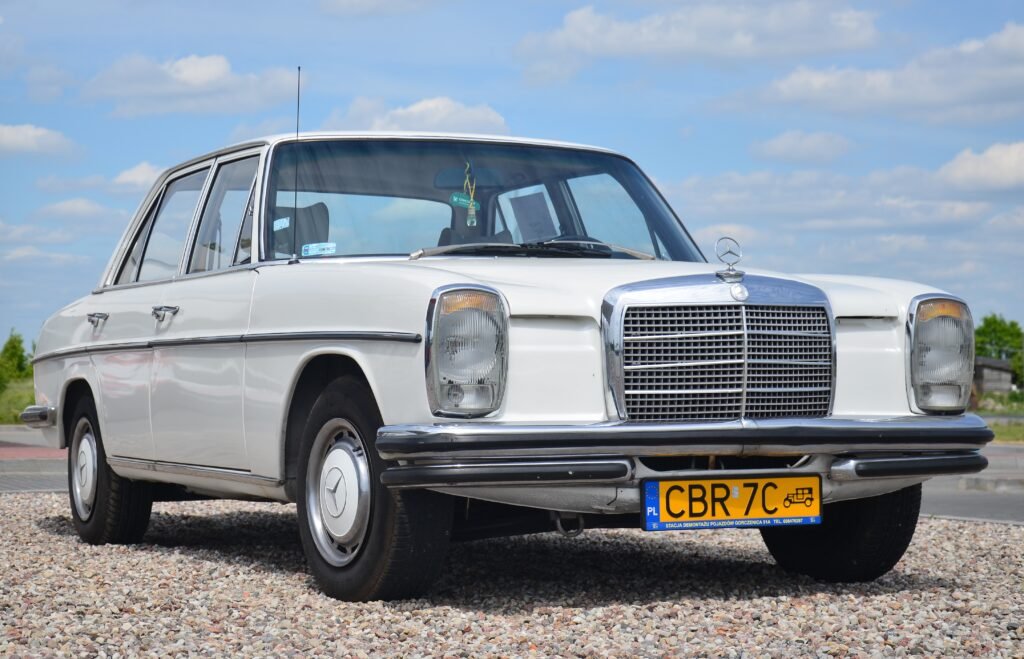
The year was 1900. Most automobiles were still basically motorized carriages—ungainly contraptions that jostled passengers around unpredictably and broke down constantly. Then Mercedes showed up with the 35 PS, and everything changed. Not because it was flashy or famous (though it would become both), but because it solved problems that nobody else even knew how to approach yet. This wasn’t the first car ever made—that honor belongs to Carl Benz and Gottlieb Daimler’s inventions back in 1886—but it was the first car designed from the ground up as an actual car, not as a carriage someone had bolted an engine to.
What makes this story genuinely wild is that the 35 PS exists because a wealthy businessman complained to the right engineer. Emil Jellinek, a successful entrepreneur, wanted something powerful and genuinely safe for road use. His motivation came from tragedy: Wilhelm Bauer had died in a crash during the 1900 Nice Race Week, and Jellinek decided that shouldn’t be the only outcome when you pushed a vehicle hard. He brought his demands to Wilhelm Maybach and his team at Daimler, essentially demanding that they invent the future of the automobile right now. They did.
The Radical Rethink
The 35 PS broke nearly every design convention of its era. Where competitors were still thinking “carriage,” Mercedes thought “purpose-built machine.” The drivetrain was the star attraction: a 5.9-liter inline-four designed by Josef Brauner that produced 34 horsepower (35 PS in the German metric) and delivered all that power at a miserly 950 rpm. For context, that’s an engine that made power where you could actually use it, not some screaming, unreliable monster that demanded you thrash it to pieces.
But here’s where Maybach’s genius really showed. Raw power means nothing if your engine explodes from overheating after 20 miles, which is exactly what happened to most cars back then. Maybach’s answer was the honeycomb radiator—a radical departure from the primitive cooling systems everyone else was slapping onto their vehicles. The efficiency gain wasn’t subtle: the 35 PS needed just 7 to 9 liters of coolant versus the industry standard of 18 liters. That cooling innovation would eventually become so synonymous with Mercedes that modern Mercedes models still feature prominent honeycomb grille designs, even when they’re purely aesthetic. The basic engineering principle—directing airflow efficiently—remains baked into automotive design more than 120 years later.
Everything Else Was Innovation Too
The brilliance of the 35 PS wasn’t isolated to the engine bay. Look at the chassis, and you’ll see architecture that reads almost like a blueprint for every car that followed: a low center of gravity, a wider track, and a longer wheelbase than competitors. Sounds obvious now, right? In 1900, this was revolutionary thinking. These choices weren’t arbitrary—they were solving actual problems. A low center of gravity meant better handling and less rollover risk on tight corners. A longer wheelbase improved stability on rough roads. A wider track reduced the tendency to tip.
Then there were the ergonomic details that seem trivial today but were shockingly progressive then: an angled steering column and a foot-operated clutch. These weren’t style points; they were about letting a human being actually operate the thing comfortably and intuitively. Before the 35 PS, driving was a feat of strength and coordination, something between wrestling a bull and solving a mechanical puzzle. Mercedes made it simply a matter of knowing which pedal did what.
The 35 PS’s chassis represented a total abandonment of the motorized carriage formula that had enslaved earlier designers. It wasn’t a carriage with an engine bolted on—it was a car. It was built low, wide, and stable because that’s what a fast vehicle needed to be. The fundamental principles Maybach’s team established with the 35 PS remain the foundation of automotive engineering today.
The Proof Was on the Road
None of this mattered if the thing didn’t actually work, and that’s where the 35 PS put up or shut up. Jellinek’s car was delivered later in 1900, and Jellinek himself drove it to victory at the 1901 Nice Race Week, winning both the Nice-Salon-Nice race and the Nice-La Turbie hill climb. These weren’t gentle tours around a track—they were brutal endurance tests on bad roads against other cutting-edge vehicles. The 35 PS didn’t just compete; it dominated. That wasn’t luck. It was the result of solving cooling, power delivery, handling, and reliability problems that everyone else was either ignoring or failing at.
Why This Still Matters
Here’s the uncomfortable truth for everyone who came after: in 1900, Mercedes figured out how cars should actually work, and 124 years later, we’re still following their playbook. Modern sports cars obsess over low center of gravity, long wheelbase, and wide stance—all 35 PS principles. Modern cooling systems might use aluminum and complex electronics, but the fundamental idea of a radiator designed for efficiency traces directly back to Maybach’s honeycomb. Every angled steering column and every foot pedal cluster owes something to 35 PS ergonomics.
Even the grille aesthetic—that honeycomb pattern you see on modern Mercedes, from the contemporary GLC to flagship S-Class models—is a direct callback to a cooling innovation from 1900. It’s not retro styling for its own sake; it’s a visual reminder of the moment Mercedes stopped copying carriages and started inventing the future.
The 35 PS proved that thinking differently about a problem—really understanding what a machine needed to be rather than what tradition said it should be—could reshape an entire industry. Every car that followed, from the Model T to the current BMW M, builds on foundations Maybach and his team poured in 1900. That’s not hyperbole; that’s just automotive history.
- The 1900 Mercedes 35 PS was the first car designed as an actual car, not a motorized carriage—built in response to a wealthy businessman’s demands for power and safety.
- Wilhelm Maybach’s honeycomb radiator was so efficient it needed just 7–9 liters of coolant versus competitors’ 18 liters, and the design principle survives in modern Mercedes grilles today.
- The 35 PS introduced the low center of gravity, long wheelbase, wide track, angled steering column, and foot-operated clutch—a blueprint modern cars still follow 120+ years later.
Sources: Jalopnik