Nissan’s Hybrid Kicks Japan Gets a Rock Creek Adventure Trim. America Gets Left Out.
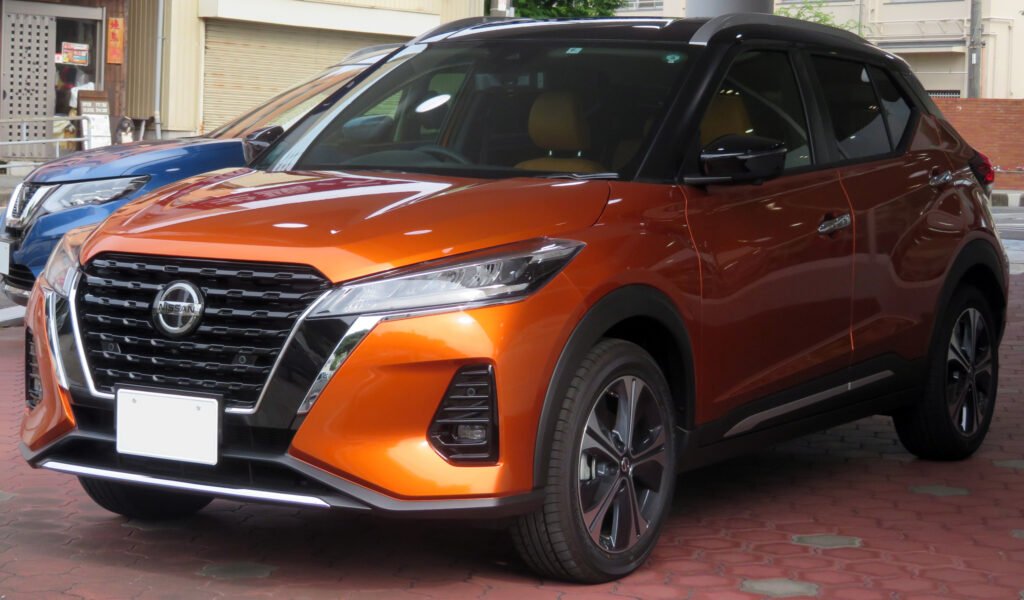
Nissan just dropped the second-generation Kicks in Japan with two moves that make you wonder why the U.S. market can’t have nice things: a hybrid-only powertrain that actually improves efficiency by over 10%, and a Rock Creek adventure trim that looks purposeful enough to make you believe a city hatchback is ready for the outdoors. Meanwhile, American buyers are still getting the non-electrified version that arrived in 2024. The gap between what Nissan thinks Japan wants and what it ships to the States is widening.
The Hybrid Powertrain That Should Be Here
The Japanese Kicks runs on e-Power, Nissan’s self-charging hybrid system that ditches the conventional transmission entirely. A 1.4-liter three-cylinder engine acts purely as a generator—it never directly powers the wheels. Instead, it charges a lithium-ion battery that feeds power to electric motors doing all the actual work. The front motor produces 141 hp, and if you spring for the dual-motor e-4ORCE all-wheel-drive setup, you add another 67 hp from a rear-mounted motor. The engine itself maxes out at 97 hp.
This architecture is nothing new—Toyota has been running variations of this game with the Prius for years—but it’s proven efficient. Nissan claims the new hybrid setup improves fuel economy by over 10% versus the previous generation. That’s not earth-shattering, but it’s legitimate progress on a vehicle designed to be affordable, not boundary-pushing. The e-4ORCE system also brings advanced electric AWD capability that theoretically gives you better traction than a traditional all-wheel-drive system in slippery conditions.
For context, Nissan’s e-Power lineup has expanded rapidly in Asia and Europe, with the system proving popular in markets where fuel costs and efficiency matter more than raw power. The fact that Japan gets this tech while the U.S. Kicks remains gasoline-only tells you everything about regional priorities.
Meet the Rock Creek: An Adventure Trim That Actually Looks the Part
The real story here is the Kicks Rock Creek, developed by Nissan Motorsports & Customize (NMC). This isn’t just a trim level with a new name—it’s a genuine attempt to make the Kicks feel rugged. It gets triple silver slots on the grille, black bumper inserts, Lava Red accents throughout the bodywork, aluminum-style skid plates, and dedicated five-spoke alloy wheels that actually look like they belong on something adventurous.
Inside, Nissan added waterproof seat upholstery and Lava Red stitching. This is the kind of detail-oriented work that suggests someone at Nissan actually thought about the lifestyle these owners claim to want. The Rock Creek arrives both as FWD and AWD with the standard hybrid powertrain, so you’re not sacrificing efficiency for the styling package.
A camouflaged prototype was already spotted testing on U.S. roads earlier this year—complete with covered bumpers and a custom roof rack—which hints that Nissan might be considering bringing the Rock Creek stateside for the 2027 model year. But “considering” is doing a lot of work in that sentence. Even if it comes here, expect region-specific changes that water down whatever makes it compelling in Japan.
The Pricing Gap That Reveals Everything
Here’s where the comparison gets uncomfortable for American buyers. The Japanese Kicks hybrid starts at ¥2,999,700 (roughly $18,700) for the base FWD model and climbs to ¥4,248,200 ($26,500) for the fully loaded G trim with AWD. The Rock Creek variant is estimated to land between ¥4,000,000–¥4,300,000 ($25,000–$26,800) when deliveries begin this winter.
The U.S. Kicks, which still runs on conventional gasoline, currently starts at $22,730 and tops out at $27,565. So Japan’s getting a more efficient hybrid powertrain, more advanced features (like the comprehensive ProPilot ADAS suite and dual 12.3-inch displays), and an adventure-focused variant—all for less money at the entry level. That’s not a coincidence. It’s a calculation about what different markets value.
Why America Can’t Have This (And What It Means)
The real issue isn’t that Nissan is being cruel to the U.S. market. It’s that American truck culture and SUV obsession have convinced buyers that a small, efficient hatchback is inherently uncool. Nissan likely looked at U.S. Kicks sales data and realized that adding a hybrid powertrain wouldn’t move the needle enough to justify the engineering and certification costs. Americans shopping for a $20K vehicle are often looking at the Ford Maverick, which starts at $23,000 and offers truck vibes with hybrid efficiency. Or they’re stretching for a used crossover.
Meanwhile, in Japan, where fuel costs are higher and parking is tighter, the Kicks hybrid makes obvious sense. The Rock Creek variant appeals to a growing lifestyle segment—people who want adventure-ready styling without the size and cost of an actual SUV. This is the formula Toyota has perfected with models like the RAV4, and Nissan is finally admitting it works.
The problem for American consumers is that Nissan’s regional strategy reveals a harsh truth: manufacturers optimize products for the markets where they’ll sell the most units at the highest margins. If you’re not in Japan, you don’t get the efficiency. If you’re not in Japan, you don’t get the adventure trim. You get what the accountants decided was sufficient.
The camouflaged Rock Creek prototype spotted on U.S. roads is a tease—maybe even false hope. By the time (or if) it arrives here, it’ll probably be de-contented enough to qualify as a different vehicle. That’s the American tax: we get the good designs, but only after they’ve been fitted for the broadest possible appeal. And sometimes, we don’t get them at all.
- Japan’s 2026 Kicks goes hybrid-only with e-Power; U.S. still gets gas engines.
- Rock Creek adventure trim includes waterproof seats, skid plates, and rugged styling—developed by Nissan Motorsports & Customize.
- Japanese hybrid Kicks starts at $18,700, undercutting the U.S. gasoline model’s $22,730 base price.
- A camouflaged Rock Creek prototype was spotted testing in the U.S., hinting at possible 2027 arrival—but expect changes.
Sources: Carscoops