BMW’s iX1 Production Hit By The Most Boring Supply Crisis Ever
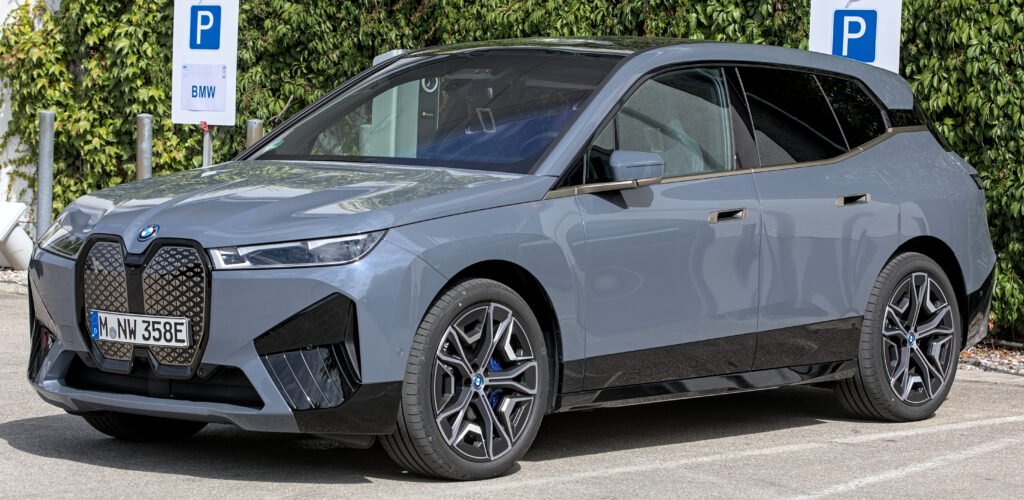
Leave it to BMW to create a production crisis over something as thrilling as standard wheel sizes. The German automaker has been forced to pause manufacturing of its iX1 electric SUV at its European plants because suppliers have apparently run dry on 17- and 18-inch rims—the exact wheels customers choose specifically because they’re not exciting.
According to internal communications seen by German automotive publication Automobilwoche, BMW’s production team admitted that while May builds are still covered, June capacity will simply evaporate. A BMW production manager’s letter to dealers was refreshingly blunt: “There are still enough wheels for production in May, but already in June the capacities will not be sufficient.” The company claims it’s working with the supplier, but also warned that resolving this bottleneck “will probably take some time.”
Customers caught in the crossfire are being offered two equally frustrating options: wait until October for their standard-wheeled iX1, or fork over roughly €1,900 (about $2,100) to upgrade to 19-inch rims and move into pricier trim packages. Neither option is particularly appealing when you ordered a car that’s supposed to be available now with the spec you wanted.
When Standard Equipment Becomes A Luxury Problem
Here’s where this gets genuinely absurd. The 17-inch wheels aren’t some optional fancy upgrade—they’re the base choice, selected by customers specifically because they deliver better ride quality and maximum electric range. A bone-stock iX1 riding on 17s claims 320 miles (515 km) of EPA-equivalent range, but bump up to 19s and that drops to 316 miles, then falls further to 305 miles on 20-inch wheels.
The economics are equally brutal. These aren’t carbon-fiber center-locks or bespoke forged pieces—they’re the kind of sensible, affordable wheels that real people actually buy on economy cars. By forcing customers into larger rims, BMW isn‘t just adding cost; it’s actually making the vehicle slightly less efficient and less comfortable. It’s the automotive equivalent of running out of regular coffee and telling customers they have to buy the espresso machine.
Some dealers have reportedly delayed deliveries by three months, stranding customers without transportation while they wait for parts that should be utterly interchangeable between supply chains. For anyone on an expiring lease or counting on a specific trade-in timeline, this is a genuine logistical nightmare—not a minor inconvenience.
This Matters More Than You’d Think
The reason BMW is treating this like a five-alarm fire isn’t hard to understand: the iX1 has become critical to BMW’s European EV sales strategy. The iX1 is positioned as BMW’s accessible entry point to electric vehicles, and one dealer bluntly told Automobilwoche that it’s “become our bread and butter vehicle.” Electric sales are still booming across Europe, and BMW can’t afford to lose market share by sitting on inventory.
What’s particularly galling is that this isn’t a chip shortage, a semiconductor crisis, or some unavoidable geopolitical disruption. It’s wheels—the one component of a car that hasn’t fundamentally changed in over a century. If there was ever a supply chain that should be bulletproof and redundant, it’s tires and rims. That BMW and its supplier(s) found themselves unable to source basic 17- and 18-inch wheels in sufficient quantities suggests either catastrophic planning failures, or a supplier collapse nobody saw coming.
Under CAFE regulations and EU emissions standards, every MPG—or in this case, every kilometer of range—matters when competing in the EV segment. Forcing customers into larger wheels that reduce efficiency while simultaneously delaying delivery is a textbook own-goal when the market is this competitive. The Audi Q4 e-tron, Mercedes EQA, and a dozen other compact electric SUVs aren’t sitting in production purgatory over rim shortages.
The Ripple Effect Gets Uglier
Production pauses don’t exist in a vacuum. Every month of delayed iX1 builds means missed quarterly sales targets, potential revenue misses, and customers who might just walk over to a competitor with actual inventory. The iX1, which launched as BMW’s more affordable electric SUV alternative, was supposed to be a volume play. Volume players can’t afford to be out of stock on base models.
What’s also worth noting: this kind of supply chain failure typically doesn’t surface publicly unless it’s severe. BMW’s internal communication getting leaked suggests the problem is significant enough that dealers needed to be read in immediately—not something to quietly absorb over a couple of weeks. The fact that they’re explicitly telling customers to either wait four months or pay a premium upgrade speaks to how constrained the wheel supply actually is.
The industry should be paying attention here. If a massive, vertically-integrated German automaker with established supplier relationships can get blindsided by standard wheel availability, what does that say about the broader supply chain? BMW has the scale, the relationships, and the logistics expertise to prevent this kind of disruption. If it happens to them, it can happen to anyone.
- BMW has halted iX1 production in Europe due to inadequate supply of standard 17- and 18-inch wheels starting in June.
- Customers face either a four-month delay until October or a €1,900 upgrade to 19-inch rims with slightly reduced range.
- The iX1 is BMW’s volume EV play in Europe—a supply crisis on base-model components suggests either major supplier failure or catastrophic planning.
Sources: Carscoops