Hyundai’s Hybrid Sales Just Hit Warp Speed. Here’s Why Gas Prices Work Better Than Any Marketing Budget.
When gas prices spike, people don’t buy based on manufacturer press releases—they buy based on math. And right now, the math is screaming hybrid, which is exactly why Hyundai’s hybrid sales exploded 90% in May while the national average price of regular unleaded climbed to $4.29 per gallon, with some states like California pushing past $6.
This isn’t a coincidence. It’s the market doing what the market does best: punishing poor fuel economy with indifference and rewarding efficiency with cash. And Hyundai is positioned perfectly to cash that check.
The Numbers Tell a Story Corporate Marketing Can’t Manufacture
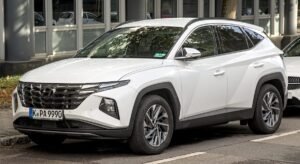
Let’s start with the wild one: the Sonata Hybrid saw sales jump 250% year-over-year. Two hundred and fifty percent. That’s not a successful product launch—that’s a fire alarm going off in dealerships because people are actually choosing it. The Santa Fe Hybrid was up 30%, the Elantra Hybrid gained 29%, and even the Tucson Hybrid managed a 10% increase despite already being a strong performer.
Overall, Hyundai moved 87,468 units in May, a 3% climb from the prior year. The Tucson led the charge with 20,581 sales, followed by the Elantra at 16,819 units (up 7%) and the Palisade at 13,089 units. But here’s the thing—those aren’t shocking numbers on their own. The hybrid uptick is the real story, and it’s one that carries implications far beyond Hyundai’s quarterly earnings report.
EVs Are Waking Up, But Don’t Get Too Excited Yet
Electric vehicles also bounced back in May, which is genuinely interesting given that federal EV tax credits disappeared last year. The Ioniq 5 posted its best May ever with 5,002 units sold, a 28% jump year-over-year. Year-to-date, it’s moved 18,395 units and is up 16%, which suggests the electric hatchback is finding real momentum in the market.
The Ioniq 9, Hyundai’s three-row electric SUV, sold 1,145 units last month—hardly a barn-burner, but it’s a 279% increase from May of the prior year. For a new model still ramping production and building awareness, that’s respectable. The problem is that without the federal tax credit as a lever, EV adoption relies entirely on the economics and desirability of the product itself. High gas prices help that case, but they help hybrids even more because hybrids don’t require the infrastructure anxiety or price premium that still haunts EV purchases.
The Real Lesson: Price Signals Beat Every Ad Campaign
Here’s what corporate America still doesn’t fully grasp: consumers respond to pressure faster than they respond to messaging. When your monthly fuel bill jumps $100 or $200, suddenly that hybrid becomes less of a nice-to-have and more of basic math. When you’re staring at $6-per-gallon gas in California, a vehicle that can stretch 50-plus miles per gallon starts looking a lot less like a lifestyle choice and a lot more like a financial decision.
Hyundai benefits from having built a genuinely competitive hybrid lineup across multiple segments. The Sonata, Elantra, Santa Fe, and Tucson all offer hybrid versions at reasonable price points, which means when the market shifts, Hyundai has products ready to capture it. Toyota has done this for years, but the broader industry spent decades pretending hybrids were a niche play. Now, when gas prices surge, everyone else is scrambling to catch up.
The Casualties: Old Playbooks Are Dead
Not everything is winning. The Ioniq 6 sedan got absolutely demolished with an 85% sales drop to just 176 units. That’s what happens when you discontinue a model and replace it with only high-performance N variants that aren’t available in the U.S. yet—you create a void customers fill with something else. The Santa Cruz unibody truck plunged 41%, and the Venue subcompact SUV fell 27%.
The Venue especially feels like a relic from a different era of the market. At a time when crossovers dominate and customers are hunting fuel efficiency, a traditional subcompact doesn’t move the needle. The Santa Cruz, meanwhile, is basically on borrowed time as Hyundai redirects resources toward electrification and more profitable segments.
What Happens When Gas Prices Fall Again?
Here’s the trillion-dollar question nobody wants to address: What happens in six months or a year if gas prices moderate? Hybrid demand will almost certainly cool. That’s not a knock on hybrids—it’s just how human purchasing behavior works. When the pain point (fuel costs) lessens, the urgency to pay extra for efficiency decreases, at least for price-sensitive buyers.
But the silver lining is that Hyundai is using this window to build market share and brand loyalty in the hybrid space. Every customer who buys a Sonata Hybrid or Santa Fe Hybrid today and has a great experience is more likely to stay hybrid next time, even if gas prices normalize. That’s how Toyota built its hybrid dominance—not through a single spike, but by being consistently available and reliable when people got serious about fuel economy.
The real takeaway here is that price signals are more powerful than corporate strategy. Hyundai’s 90% hybrid sales jump isn’t a triumph of product development or marketing genius—it’s basic supply and demand responding to a customer’s wallet. That’s not a knock on Hyundai; it’s actually a compliment. They built the products, priced them competitively, and when the moment arrived, they were ready. In an industry obsessed with electrification and autonomous driving and 27 different subscription services, sometimes the most elegant solution is just being the brand with the best hybrid lineup when people suddenly care about hybrids again.
- Hyundai’s hybrid sales surged 90% in May 2026 as gas prices hit $4.29 nationally and exceeded $6 in California.
- The Sonata Hybrid alone jumped 250%, while the Elantra and Santa Fe hybrids also posted strong double-digit gains.
- EVs bounced back too, with the Ioniq 5 posting its best May ever at 5,002 units, though hybrids remain the real winner when fuel prices spike.
Sources: Carscoops