The 2003 Mazda Protege5 Manual Proves Some Cars Age Better Than Their Specs
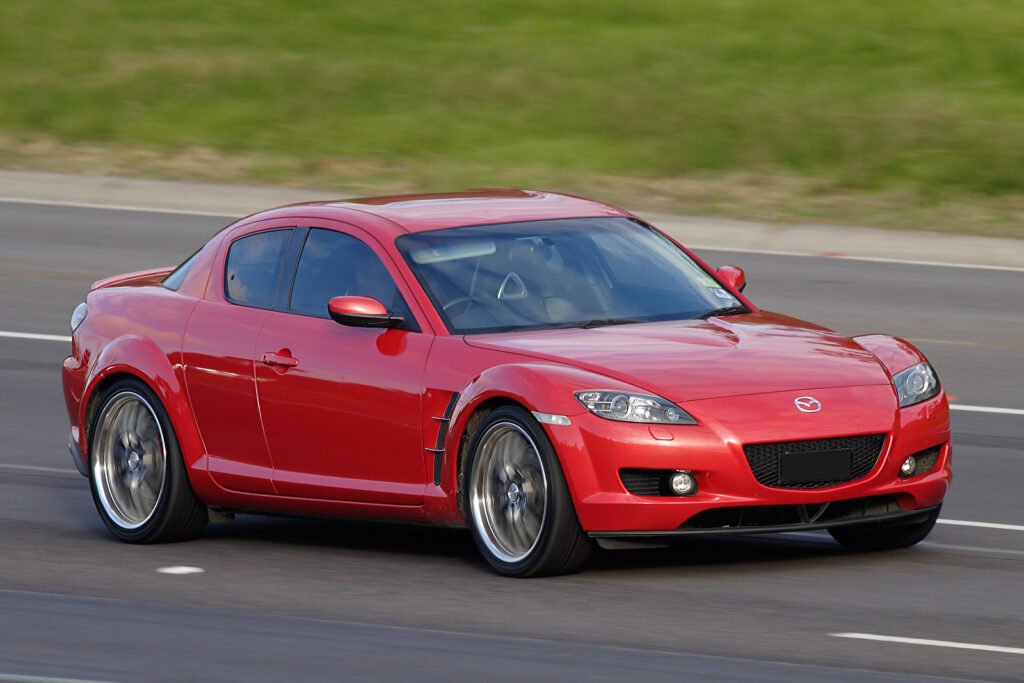
Mazda spent the 2000s chasing two contradictory dreams: building affordable, honest driver’s cars and then getting seduced by the tuner market with overambitious power figures that destroyed warranties faster than you could say “MazdaSpeed6.” The company eventually chose the profitable path—crossovers with leather interiors and infotainment systems that’ll be obsolete in five years. But there’s a weird grace to the cars Mazda built before that calculation took over, and the 2003 Mazda Protege5 might be the clearest proof that sometimes simplicity just works.
A listing on Cars & Bids recently surfaced a particularly beaten example of this generation’s hatchback, and it’s become a reminder of what made Mazda fun before fun required a 300-horsepower turbo and a payment that’d make you reconsider your life choices.
The Case for Boring Specs
Let’s be brutally honest: the Protege5’s numbers were never impressive. That 2.0-liter naturally aspirated four-cylinder made 130 horsepower and 135 pound-feet of torque—figures that were already feeling modest in 2003 and feel downright quaint today. Pair that with a five-speed manual transmission, and you’re looking at a car that wouldn’t embarrass a Prius in a stoplight grand prix.
The real killer? EPA fuel economy was rated at 24 mpg combined, with a highway rating of 28 mpg. Even by early 2000s standards, that’s not particularly stellar for a 2.0-liter. Modern turbocharged compacts are pulling 30+ mpg while making 200+ horsepower—a gap that’s only widened with time. If you’re going to live with a slow car in 2024, the reasoning goes, it should at least sip fuel like it’s rationing gas.
But here’s where the narrative gets interesting: the Protege5 was slow not because of engineering incompetence, but because it was built during an era when efficiency and power were genuinely at odds. A turbo would’ve added cost and complexity. A six-speed manual didn’t exist yet in Mazda’s playbook for this platform. The Protege line was meant to be cheap, cheerful, and practical—not a performance car pretending to be a bargain.
Where the Magic Actually Lives
Here’s what those spec sheets miss: the Protege5 was genuinely fun to drive. The five-speed manual was legitimately excellent—the kind of transmission that made you want to keep the engine spinning and milk every bit of entertainment from those 130 horses. In tight, winding mountain roads, power matters far less than you’d think, and Mazda had already figured this out in the days of the first-gen Miata.
The design language still holds up surprisingly well. There’s nothing about the Protege5 trying too hard or screaming for attention. It’s handsome in the way that honest design tends to age better than flash. No aggressive body kit, no fake vents, no compensatory styling. Two decades later, it still reads as purposeful and clean—which is more than you can say for a lot of 2003 vehicles.
This particular example has some baggage: a previous wreck, a repaint that doesn’t quite match OEM spec, and it’s heading to auction with an exhaust leak noted in the listing. But with over 200,000 miles on the odometer and that damage history, it’s exactly the kind of car that could fetch cheap-motorcycle-money at sale.
The Real Problem: Context
The Protege5 illustrates something important about how we’ve engineered ourselves into a corner. A slow car was acceptable in 2003 partly because all cars felt slower then. Modern acceleration has become the baseline expectation, not the luxury. Drive a 2003 Protege today, and the lethargy is genuinely shocking if you’ve spent the last five years in anything newer. Even entering sea level, the lack of forced induction becomes a noticeable constraint—head to the mountains, and you’re basically a passenger accepting your car’s limitations.
But that constraint was also part of the equation. You couldn’t buy turbo power at this price point in 2003. Mazda gave you what you could afford and made it feel good. Now? A Ford Maverick starts at under $23,000 and comes with available EcoBoost power and much better fuel economy. The Protege5 didn’t fail—the entire cost structure of automotive engineering moved past it.
This is where the Protege5’s longevity becomes almost poignant. It’s a car designed before engineers obsessed over every EPA fuel economy point and before turbos became standard equipment on economy hatchbacks. It’s slow and thirsty by modern standards, yes. But it’s also a complete vehicle that does exactly what it’s supposed to do—get you somewhere with a smile and a mechanical connection to the road.
Why This Actually Matters
The Protege5 represents something we’re losing: the ability to build a competent, affordable hatchback that’s genuinely fun without either turbo technology or pretense. Mazda built it because efficiency requirements and power outputs weren’t yet locked in a tug-of-war. You got one carefully optimized thing: a car that was light, simple, and honest about what it was.
Will someone get a bargain buying this particular car? Probably. Will they regret the 24-mpg fuel economy at $4.50 a gallon? Likely. But will they have one of the last true driver’s cars from an era when “practical” and “fun” could coexist without requiring a six-figure engineering budget? Absolutely. And if the bidding stays low because of the damage history and age, that’s actually a win—because cheap plus mechanical equals the definition of permission to enjoy something without spreadsheets.
Mazda’s moved on to crossovers and luxury turbocharging. The Protege5 era is over. But every one of these that stays on the road is a small rebellion against the idea that driving requires newness, power, or screens. Sometimes the best car is just the one that feels right—even if the numbers say it shouldn’t.
- A 2003 Mazda Protege5 manual with 200K+ miles is hitting auction—cheap hatchback with legit driving appeal despite 130 hp and 24 mpg combined.
- That five-speed manual transmission was genuinely excellent, and the styling hasn’t really aged badly for a 20-year-old car.
- Modern turbocharged compacts make twice the power with better fuel economy, but the Protege5 proves you don’t always need specs to have fun.
Sources: Jalopnik