Porsche’s New Track School at Laguna Seca Nails the 911 S as the Perfect Teaching Tool
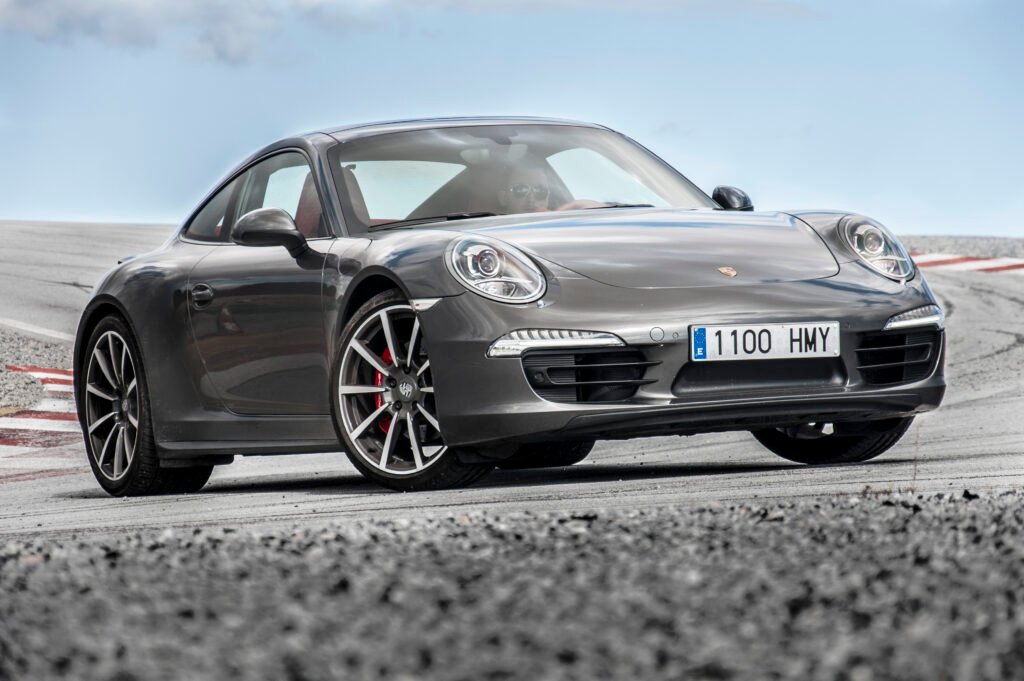
Porsche just opened a track school at one of the West Coast’s most storied racing venues, and they got the car selection exactly right. The Porsche Track Experience (PTX) at Laguna Seca launches with a fleet of 911 S models—not the sharper GT3, not the entry-level Carrera, but the sensible middle child that actually represents how most 911 owners drive. That’s the genius of it. The 911 S makes up roughly a third of all 911 sales in the U.S., and on a tight, technical track like Laguna Seca, its balanced nature and predictable handling make it the perfect learning platform.
Why the 911 S, Not the Flashier Options
The track program offers five courses, ranging from intro-level all the way up to advanced days featuring time in a current 911 GT3. But for most attendees, the core experience revolves around the S—and that’s a deliberate choice. The S lacks the absurd front-end grip and naturally-aspirated punch of the GT3, but that’s exactly why it works as a teaching tool. It’s forgiving without being boring, responsive without being punishing. The car sits in that sweet spot where you can learn inputs without the machine masking your mistakes or overwhelming your confidence on the first lap.
The PTX fleet at Laguna Seca consists of identical 911 S models in four colors—including Cartagena Yellow Metallic—outfitted with heated and ventilated seats but notably without the Sport Chrono package. That means no in-car hand timing, but the cars carry data loggers capturing video and telemetry with live G-force overlays that drivers review after sessions. It’s a smart trade: you lose lap timers but gain a teaching tool that shows you exactly what the car is doing through each corner.
The Classroom Gets You Started, the Track Does the Real Work
The day began in a classroom—the unglamorous but essential part of any serious track program. Instructors focused on two fundamentals: weight transfer and tire contact patches. They showed diagrammed sequences of when and where to balance steering, braking, and acceleration inputs, illustrating how a measured approach maximizes lap time while over-aggression invites disaster. It sounds textbook, but these principles become visceral once you’re actually driving at speed.
Unlike some track schools that spend time with autocross or skid pad setups, the condensed PTX program at Laguna Seca skipped those auxiliary exercises—the circuit was still busy with IMSA race traffic the day after competition. All instruction happened on-track, which is both efficient and appropriately high-stakes. The session started with extensive lead-follow exercises behind instructors, running the 2.238-mile circuit at escalating speeds until the entire group was pushing full throttle for complete laps.
Laguna’s Peculiarities Reveal Themselves at Speed
Here’s what surprised most: Turn 1, the kink in the front straight that barely registers on broadcast footage. It’s easy to ignore at low speeds but becomes genuinely treacherous at 130 mph as the front end lightens over the crest and the track dips toward the famous Andretti Hairpin. The instructors’ guidance on maintaining throttle and line into Turn 2 transformed it from a throwaway corner into a critical setup move—the kind of detail that separates knowing a track from actually driving it well.
The Andretti Hairpin itself requires an unconventional entry: stay off the first apex, wait patiently, then feed throttle back in before attacking the second apex with aggression. It’s the kind of corner that game simulators like Forza Motorsport 2 have been teaching for years, but the muscle memory translates surprisingly well once you’re actually experiencing the downhill weight transfer and the G-forces in a real car. By the end of the day, the line became second nature—though the instructors had to remind you of missed apexes more than a few times.
The legendary Corkscrew—that left-right downhill plunge—demands respect, but the PTX instructors’ systematic approach to its entry and exit lines demystifies what could feel chaotic. Turns 3 through 5 build speed progressively, with Turn 5 feeling massively quick as it heads uphill toward the Corkscrew. Turn 9 is the real gem: a massive downhill corner where you can carry speed on minimal braking and use the full width of the track on exit. Turn 11, where Dries Vanthoor famously lost it in the 2025 IMSA race while fighting for position, becomes manageable once you’ve practiced the entry sequence that sets up maximum exit speed onto the main straight.
Three Hours Transforms You Into a Track-Competent Driver
The actual track time amounts to roughly three hours split across two sessions—not the all-day marathon some programs offer, but enough to transition from tentative newcomer to genuinely competent. You could theoretically get the same seat time at any number of track days, but what you won’t get elsewhere is the level of instruction embedded throughout. Your instructor is radio-coaching from the lead car, correcting lines in real time, pushing you to use more of the track on exits, and catching the subtle mistakes that video review later confirms.
The data-logging system deserves mention here. After each session, you can watch your laps with onboard and exterior camera angles plus live telemetry showing G-forces, speed traces, and steering inputs. It’s not a substitute for an instructor’s eye, but it’s indispensable for reinforcing lessons and showing you exactly where smooth inputs matter most.
The Real Value Proposition
PTX single-day events at Laguna Seca start at $3,500, and the fact that many are already fully booked tells you something about demand. That price point feels steep until you factor in the logistics: fleet maintenance, instructor pay, insurance, and facility rental at an iconic circuit. More importantly, you’re not just buying seat time—you’re buying expertise from people who’ve driven thousands of laps here and know exactly where and why amateurs go wrong.
This isn’t a typical driving experience where you pay to go fast in someone else’s car for 10 minutes and pretend you learned something. PTX is structured, progressive, and focused on skill development. You leave the day objectively better at driving than you arrived, with the 911 S proving that you don’t need an exotic supercar or a $200K GT3 to have that experience. Sometimes the perfect tool is the one that stays out of your way and lets you focus on the fundamentals. Porsche figured that out, and it shows.
Sources: Road & Track