
The 1993 Nissan Sentra GXE Proved Budget Cars Could Actually Be Well-Designed
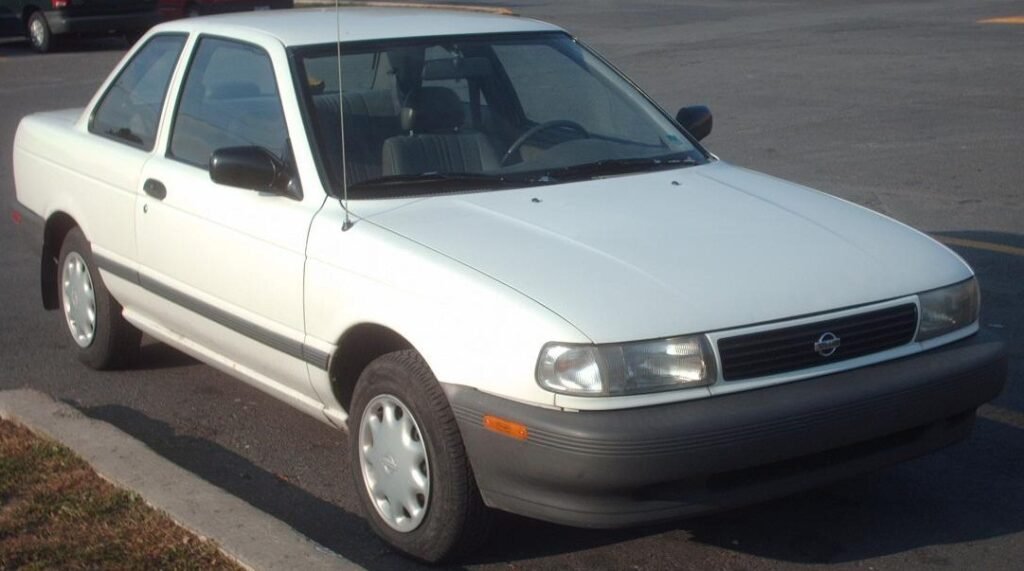
In February 1993, budget sedans were supposed to feel like punishment for being poor. They had hard plastics, cost-cut engineering, and the kind of ride that made you question every financial decision leading to the purchase. Then Nissan dropped the Sentra GXE, and Car and Driver’s test proved something radical: a $14,495 four-door could actually be nice.
The Sentra GXE wasn’t revolutionary. It was something more important—it was thoughtful. This wasn’t a car designed by a committee trying to hit a price point and call it a day. Every detail, from the five-speed manual’s light and accurate throws to the uncommonly effective door handles, suggested Nissan had spent time asking “how do we make this better?” instead of just “how do we make it cheaper?”
The Neighborhood’s Nicest Car
The compact sedan segment in the early 1990s was a graveyard of identical-looking boxes. Competitors measured within a thumb’s width of the Sentra’s 170.3-inch length, offered comparable interior room, and stuffed the same 1.6-liter four-cylinder under the hood. The market was brutal and undifferentiated—which made the Sentra’s design philosophy stand out like a tailored suit at a thrift store.
At $14,495 (including destination), the GXE was positioned as what the second-generation Sentra lineup called the “nicest” entry-level option. But “nice” turned out to be code for “actually giving a damn.” The test car came loaded: power windows, locks, and mirrors; air conditioning; cruise control; tilt steering; a four-speaker AM/FM/cassette with optional CD player; dual anti-roll bars; and a driver’s-side airbag. That spec sheet alone would’ve been impressive for the money. What came after—the actual execution—is what made this car notable.
Design That Actually Worked
Nissan had just redesigned the entire Sentra lineup for 1991, and while the sporty SE-R grabbed headlines (it made Car and Driver’s Ten Best list), the GXE proved the whole platform was fundamentally sound. The 110-horsepower 1.6-liter four-cylinder featured technology—twin overhead cams, four valves per cylinder, sequential port fuel injection—that had recently filtered down from performance models. It wasn’t fast, but it made competent power at 6000 rpm and moved the car to 60 mph in 9.7 seconds, with a quarter-mile time of 17.4 seconds at 79 mph.
But the real story was in the details. The GXE’s exterior wore alloy wheels, body-colored bumpers, and herringbone cloth trim that felt more upscale than the segment’s typical hard-plastic despair. Step inside, and you found an instrument panel and door cards with actual sculptural flow—the kind of interior harmony you’d expect to find two segments up in price. The front bucket seats had exceptional lateral support. The window controls included a dedicated express-down button on the driver’s side. The trunk cut flush to the bumper height for easy loading and folded flat with no intrusions.
That may sound like a list of minor conveniences. It wasn’t. Each choice represented a decision to treat the owner’s experience seriously. A six-footer had genuine headroom in the back seat. The back seat folded forward—partly or entirely, your choice—extending cargo space into the cabin. The five-speed shifter felt precise. The dead pedal for the driver’s left foot existed because someone thought drivers deserved it. These weren’t luxury features; they were human features.
A Ride That Didn’t Punish
One of the Sentra GXE’s most impressive tricks was how it rode. Budget cars were notorious for being harsh—stiff springs, thin dampers, and the bone-rattling sensation that cheap equals uncomfortable. The Sentra’s suspension was different. Yes, it exhibited pitch (inevitable in a short-wheelbase sedan), but it didn’t pound. The 175/70-13 Dunlop tires were described as “cushy good-ride tires,” and they gave enough feedback at the limits (0.76 g on the skidpad) to tell you when to stop pushing without making regular driving feel like a kidney punch.
The car observed 32 mpg in testing, while EPA ratings pegged city mileage at 29 mpg, decent for a naturally-aspirated 1.6L in 1993. Braking from 70 mph took 205 feet—competent, safe, nothing flashy. The overall package was fundamentally honest: a car that did normal things normally, without drama or compromise.
Why This Mattered Then (And Now)
The 1993 Sentra GXE’s real achievement wasn’t winning any performance benchmarks. It was proving that nice and affordable weren’t contradictory. In an era when budget cars were expected to feel like budget cars, Nissan demonstrated that good design—thoughtful, human-centered design—didn’t cost extra. It just required someone to care.
The automotive industry has learned that lesson, for better and worse. Today’s budget sedans feature better materials, more safety tech, and smoother operations than this 1993 Sentra. But somewhere along the way, the obsession with cutting costs reappeared, just at higher price points. The 2024 market is drowning in vehicles where the design language is safe, the interior plastics are recycled sadness, and the fundamental attitude is “good enough for the price.” The Sentra GXE said something different. It said: your money deserves respect, your experience deserves attention, and a four-door sedan at fourteen grand can still be nice by design.
That’s not just a test report from 1993. That’s a challenge that still stands.
- The 1993 Sentra GXE proved budget sedans could be thoughtfully designed, not just cost-cut
- At $14,495, it delivered power windows/locks, air conditioning, airbag, alloy wheels, and a sculpted interior that felt upscale
- The 110-hp 1.6L four hit 60 mph in 9.7 seconds and returned 32 mpg observed, with a suspension that rode smoothly without harshness
- Every detail—from the express-down window button to the flush-loading trunk—reflected genuine care for the owner’s experience
Sources: Car and Driver