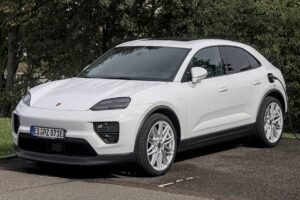
The 2026 Porsche Cayenne Coupe Electric Proves Sacrifice Doesn’t Have to Feel Like One
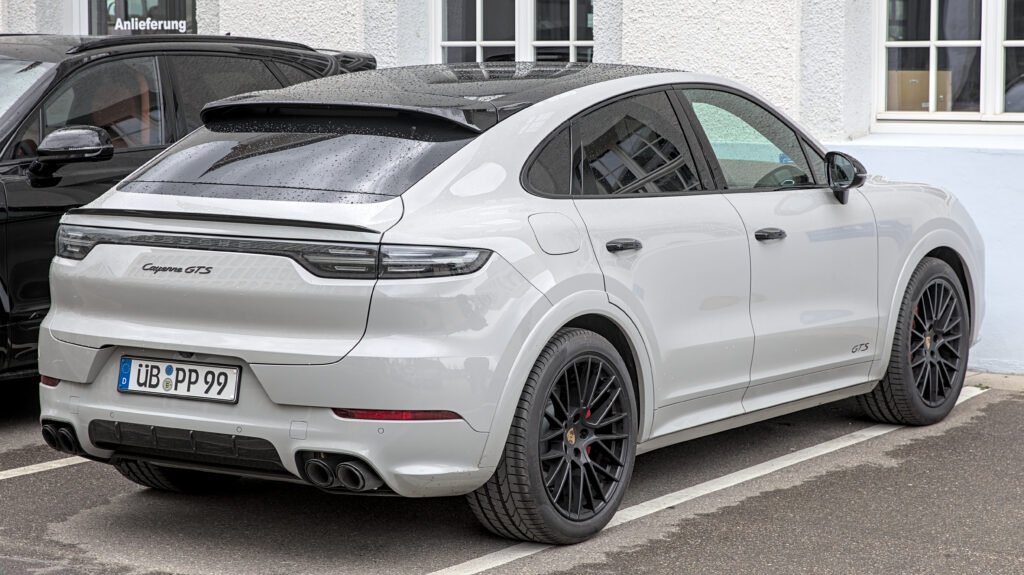
Porsche doesn’t build cars for people who need them. It builds them for people who want them, and it knows the difference better than anyone else in the industry. Case in point: the 2026 Cayenne Coupe Electric, a vehicle that deliberately abandons useful rear headroom and cargo space in pursuit of a swoopier roofline and a more aggressive stance. And somehow, after driving one near Munich, it’s hard to argue the company made the wrong call.
The numbers alone reveal Porsche’s calculation: 40 percent of North American Cayenne buyers choose the Coupe variant, a ratio that climbs to a wild 83 percent in Italy. That’s not a rounding error—that’s market demand Porsche knows how to read. The automaker’s historical mastery of customer psychology extends here too: they understand that 90 percent of EV owners slow-charge at home, so the loss of a few cubic feet of cargo space matters far less than the ability to turn heads on the school run.
A Heavier SUV That Moves Like It Shouldn’t
At 78 inches wide and pushing three tons, the Cayenne Coupe Electric is an imposing thing to encounter in traffic. Despite that bulk, the mid-tier 657-hp S Coupe Electric we sampled (without even the optional Active Ride suspension) kept its mass utterly flat through tight mountain roads. This isn’t theoretical performance—it’s the kind of handling that makes you question why anyone bothers with a sports car when this exists.
The acceleration is where things get genuinely absurd. The base model hits 143 mph; the Turbo variant maxes out at 162 mph, with the Turbo Electric demolishing 60 mph in under 2.3 seconds and clearing the quarter-mile in roughly 9.7 seconds. To put that in perspective, that’s quicker than many standalone sports cars and close enough to embarrass a Ferrari F80 in a straight line. The fact that the rear motor produces nearly as much horsepower as a Ferrari almost makes you forgive the synthetic engine noise piped through the speakers—almost.
Highway visibility from the driver’s seat is excellent, but that sloping roofline creates a trade-off: the rearview mirror view tightens considerably, with the inboard-curved rear glass frame forced to accommodate the third brake light. The Coupe is still easier to see out of than a 911 GT3, though that’s a low bar when the Turbo model will likely eat a GT3’s lunch in a quarter-mile sprint.
Style Over Space—the Honest Trade
The interior reveals how little Porsche cares about pretending this is a practical choice. Aside from a tiny representation of the Coupe’s shape on the 12.3-inch curved OLED touchscreen, you’d struggle to notice you’re in the Coupe over the standard SUV while sitting up front. Drop into the back row, and reality hits: roughly one inch less headroom than the SUV, which becomes a genuine annoyance for rear passengers approaching six feet tall. The standard panoramic glass roof looks magnificent but doesn’t help the cause.
Porsche ditched the sliding rear seats to maintain rear headroom that barely exists anyway, and nearly 10 cubic feet of cargo space vanished. The Coupe loses access to roof storage entirely if you opt for the exclusive Lightweight Sport package, which swaps the glass roof for carbon fiber and shaves roughly 40 pounds from the EV. That’s not a game-changer for efficiency, but it’s an honest representation of what Porsche values: appearance over utility.
Efficiency Gains Through Aerodynamics Alone
Here’s where Porsche’s engineering chops shine through: by reshaping the roof and rear end, the automaker improved the drag coefficient from 0.25 to 0.23. That seemingly minor shift translates to roughly 11 additional miles of range, pushing estimates to somewhere in the 340-to-350-mile ballpark. The Coupe’s 108-kWh battery pack is identical to the SUV’s, meaning every mile gained here came from aerodynamics, not brute-force battery capacity. That’s impressive efficiency engineering, even if it’s dwarfed by the price premium.
Speaking of which: the pricing structure reveals Porsche’s confidence in the design. Base model Coupe Electric starts at $116,150, with the S at $133,550 and the Turbo at $170,350. That’s up to a $5,000 premium over the equivalent SUV—roughly the price of those fancy 22-inch SportTechno wheels in Satin Pyro Red that looked stunning on the Turbo test vehicle. The automaker even offers a $490 “PORSCHE” badge option for your door panels, because apparently there’s a market for people who want to yell their car’s brand at Pomeranians.
The Real Story: Porsche Knows What It‘s Doing
This is where the analysis matters. Porsche doesn’t design vehicles through democratic process or spreadsheet optimization. It designs them for people who value style, performance, and exclusivity above practicality. The Cayenne Coupe Electric is proof that strategy still works. The platform is shared with the standard SUV—same motors, same battery, same drive modes, same powertrain options—yet the Coupe costs more and does less. And Porsche knows exactly how many people will choose it anyway.
The optional Active Ride suspension (a $7,790 add-on) and ceramic-composite brakes ($10,900 on the Turbo we drove) transformed an already impressive EV into something genuinely special in corners. That’s the secret: Porsche makes performance tangible, whether through handling prowess or straight-line acceleration. The Coupe’s diminished practicality becomes almost irrelevant when you’re managing 1,139 horsepower and 1,106 lb-ft of torque in Turbo trim.
Customer deliveries begin this fall. Porsche estimates plenty of its buyers—especially those torn between a Cayenne Coupe and a Panamera GTS—will pay the premium. They’re probably right. Because at the end of the day, an EV that fast and that beautiful doesn’t need to apologize for being less practical. It just needs to be worth wanting.
- 2026 Porsche Cayenne Coupe Electric starts at $116,150 and hits 162 mph in Turbo trim with sub-10-second quarter-mile times.
- It loses roughly 10 cubic feet of cargo space and one inch of rear headroom compared to the standard SUV—a deliberate choice Porsche isn’t hiding.
- Aerodynamic improvements drop the drag coefficient from 0.25 to 0.23, netting roughly 11 extra miles of range on the 108-kWh battery pack.
- Porsche knows 40 percent of North American Cayenne buyers (and 83 percent in Italy) prefer the Coupe style—and prices the premium accordingly.
Sources: Car and Driver