Ferrari’s Luce EV Just Cost the Company $2 Billion in Market Value. Here’s Why.
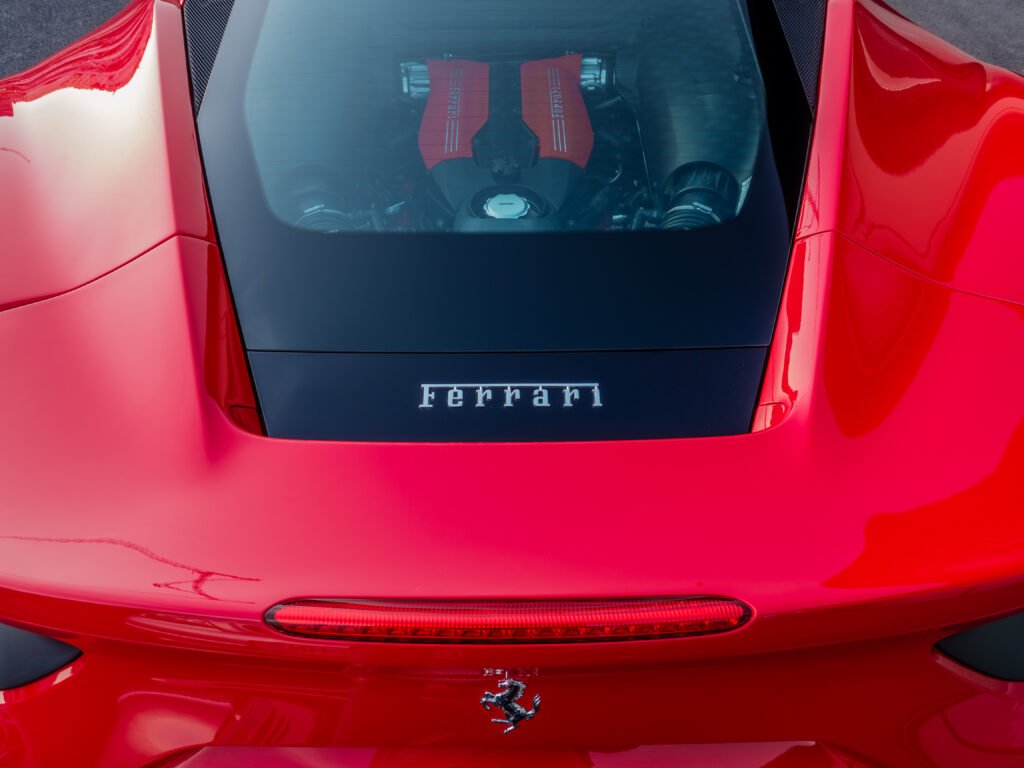
Ferrari just learned a brutal lesson about the difference between design innovation and brand loyalty: the market hates the Luce, and it didn’t waste time saying so.
The Italian marque’s first fully electric vehicle arrived to fanfare befitting a major automotive milestone. Instead, it triggered one of the sharpest stock reactions we’ve seen to a new car reveal. On the day of the unveiling, Ferrari’s Milan-listed shares dropped 8.4%, while New York-traded stock fell 5.1%—losses that erased roughly $2 billion in market capitalization in a single trading session. That’s not a correction. That’s a referendum.
A Design That Doesn’t Look Like a Ferrari
The core problem is deceptively simple: the Luce doesn’t look like a Ferrari. It looks like something else entirely.
Rather than trusting longtime design chief Flavio Manzoni with the project, Ferrari handed the keys to Jony Ive’s LoveFrom design studio—the same creative force behind Apple’s most iconic products. The collaboration promised radical rethinking. What it delivered was a four-door sedan that splits the difference between a Honda Accord and a Tesla Model 3, according to observers who watched the reveal unfold. Social media didn’t hold back: critics struggled to identify any traditional Ferrari DNA at all in the proportions, the grille-less face, or the flat, minimalist side profile.
This matters because Ferrari isn’t selling transportation. It’s selling identity. A Luce buyer isn’t just getting an electric car; they’re supposed to be buying into decades of prancing horse mythology. But mythology doesn’t translate to five-door family sedans, no matter how many electric motors live underneath.
The Specs Are Impressive. The Design Isn’t.
On paper, the Luce is genuinely impressive. A quad-motor setup producing 1,035 hp delivers a 2.5-second sprint to 62 mph and a top speed of 193 mph. It’s also the first five-seater in Ferrari‘s 76-year history—a decision that alone signals how far the brand is willing to go to chase EV volume and profitability.
Pricing starts above €520,000 (roughly $600,000 USD), which positions it as a genuine luxury statement. That’s not budget-conscious EV money. That’s “I have taste and disposable income” money. And that affluent buyer base—the one that’s accustomed to the roar of a 12-cylinder engine and the swagger of a mid-engine sports car—apparently just isn’t interested in owning what looks like a premium sedan, no matter how many electrons it can push.
The Market Has Spoken
One financial analyst told CNBC the stock move represented “the sharpest reaction we’ve seen for a car design,” and they weren’t overstating it. Automotive brands deal with backlash. They rarely deal with $2 billion evaporating in hours.
The concerns aren’t purely aesthetic, though. EV development is brutally expensive, and the automotive industry is currently littered with cautionary tales. Just in the past year, major manufacturers have walked back aggressive EV timelines after watching losses pile up faster than battery cells. Porsche and Lamborghini—direct rivals of Ferrari—have already pumped the brakes on their EV ambitions after seeing demand softer than their own forecasts. For an investor watching the Luce’s soft reception, the question becomes obvious: if a premium EV sedan can’t move the needle with Ferrari’s most passionate customers, how many will Ferrari actually sell?
CEO Benedetto Vigna has positioned the Luce as a philosophical pivot. In his telling, emotion matters more than the sound of an engine. Tradition matters less than technology. A different kind of Ferrari experience is possible—one that respects the physics of electric propulsion and the reality of a changing market.
That’s probably true. But timing matters in automotive messaging, and Ferrari just delivered a design that asks wealthy buyers to accept a fundamental visual rewriting of what a Ferrari is. The stock market’s answer was swift, brutal, and unambiguous.
What Comes Next?
Ferrari isn’t backing down. The Luce is built, it’s being produced, and customers with deep enough pockets will eventually own one. But the market reaction raises a genuine question: Did Ferrari solve an engineering problem by creating a design problem instead?
Porsche managed to make the Taycan look unmistakably Porsche despite going all-electric. Even traditional Ferrari design language has evolved through the decades without losing its essential character. The Luce feels less like an evolution and more like a restart—and investors just made clear that restart might be financially catastrophic.
Only time will reveal which approach was correct: Ferrari’s bet-the-company pivot toward a new aesthetic, or Porsche and Lamborghini’s more cautious retreat. For now, the only certainty is that the Luce doesn’t look like the car the market hoped for, and the financial consequences arrived instantly.
- Ferrari’s first EV, the Luce, triggered an 8.4% stock crash and wiped $2 billion in market cap on reveal day.
- Designed by Jony Ive’s LoveFrom studio, the Luce looks like a premium sedan, not a traditional Ferrari—and buyers apparently hate it.
- The quad-motor EV delivers 1,035 hp and 2.5-second 0-62 times, but design matters more to Ferrari’s customers than specs.
- Rival brands Porsche and Lamborghini have already scaled back EV plans due to weak demand; the market is questioning if Ferrari made the wrong bet.
Sources: Carscoops