The 2027 Toyota Grand Highlander Hybrid Is the Family Hauler That Actually Makes Sense
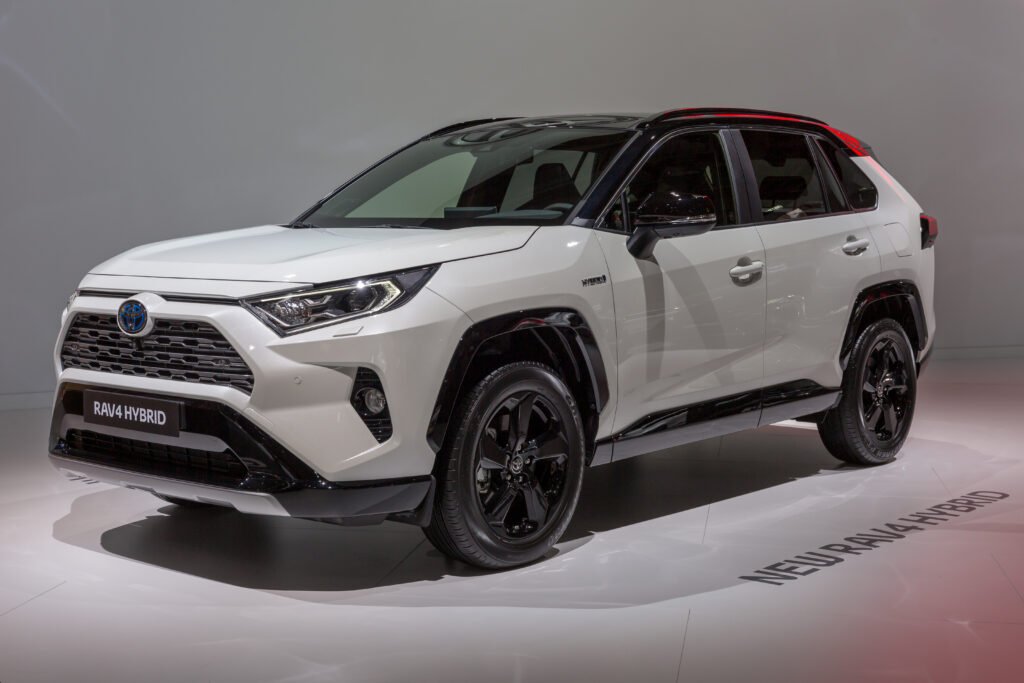
If you’re shopping for a three-row family SUV and you don’t get genuinely excited about gas pumps, Toyota just handed you the obvious choice. The 2027 Grand Highlander Hybrid does what three-row hybrids should do: it maximizes interior space, keeps fuel costs reasonable, and doesn’t pretend to be something it isn’t.
The trick is knowing which powertrain to actually buy—because Toyota is playing a game here, and it’s worth calling out.
Two Powertrains, Two Entirely Different Philosophies
The Grand Highlander Hybrid gives you a choice, and it’s a genuinely meaningful one. The base hybrid pairs a 2.5-liter four-cylinder with two electric motors for 245 horsepower, driving through a continuously variable transmission. Step up to the Hybrid Max, and you get a turbocharged 2.4-liter four paired with a single electric motor producing 362 horsepower and 400 pound-feet of torque—fed through a six-speed automatic.
Here’s where it gets interesting: the base hybrid is the one Toyota actually engineered for efficiency. The Hybrid Max is what you buy if you want to pretend this is a sports car and accept the fuel economy penalty that comes with that delusion. Testing by Car and Driver found the base hybrid hits 37 mpg city, 34 mpg highway, and 36 mpg combined. The Hybrid Max drops to 26 city, 27 highway, and 27 combined—which is barely better than the non-hybrid Grand Highlander‘s 29-mpg highway performance.
Performance-wise, the Hybrid Max accelerates to 60 mph in 5.6 seconds, which is legitimately quick for a three-row people mover. The standard hybrid needs 7.8 seconds. For most families, that difference is academic. For some, it justifies burning an extra 7-9 mpg.
Space That Actually Works
The “Grand” designation means something here: Toyota added another row compared to the standard Highlander Hybrid, and more critically, they made that third row livable. It gets 5.5 inches more legroom and 2.5 inches more shoulder width than the non-Grand version, which sounds incremental until you’re actually sitting three kids back there without them staging a mutiny.
Cargo capacity is genuinely impressive. With both rear rows folded, you’re looking at 98 cubic feet of space—Car and Driver’s testing confirmed you can fit 21 carry-on suitcases. Behind the third row alone, there’s 21 cubes available. That’s the kind of real-world math that matters when you’re road-tripping with a family.
The cabin itself is competent, not luxurious. Every model gets a 12.3-inch touchscreen with wireless Apple CarPlay and Android Auto. Higher trims bump the gauge cluster up to 12.3 inches as well. Wireless phone charging is standard except on the base LE. An 11-speaker JBL stereo is available on upper trims, which is fine for a family hauler but won’t impress anyone who cares about sound quality.
Where the Grand Highlander Hybrid Actually Wins
This thing rides like a cloud. The suspension absorbs bumps with a soft, cushy composure that makes it genuinely comfortable on longer drives—the kind of ride quality that parents actually notice because it means fewer whiny back-seat passengers. Handling is confident enough for daily driving, though the steering feels unnervingly light.
Safety features come packaged under Toyota’s TSS 3.0 suite, which includes blind-spot monitoring, automated emergency braking, adaptive cruise control, automatic high-beam headlamps, and road sign recognition. More usefully for families, traffic-jam assist and automated parking are available options.
The warranty structure is typical for Toyota but worth noting: eight years or 100,000 miles on hybrid components, plus two years of complimentary scheduled maintenance. That hybrid warranty is longer than most rivals offer, and the free maintenance is genuinely valuable for budget-conscious buyers.
The Catch: This Isn’t Luxury
Car and Driver’s expert take nails this: the Hyundai Palisade Hybrid blends efficiency with actual luxury in a way the Grand Highlander doesn’t. If you’re shopping Platinum trims and expecting the quiet refinement of a Lexus, you’re going to be mildly disappointed. The interior is functional and modern but pedestrian. You’re buying space and efficiency, not premium ambiance.
Towing capacity is respectable but unimpressive. The base hybrid is rated for 3,500 pounds, while the Hybrid Max gets 5,000 pounds. That puts it in line with the Honda Pilot and Kia Telluride but nowhere near the Dodge Durango’s 8,700-pound capability. For most families hauling a small trailer or jet ski, it’s sufficient. For serious towing, look elsewhere.
Which Trim Actually Makes Sense?
Car and Driver recommends the XLE as the sweet spot. You get power-adjusted heated front seats, the 12.3-inch touchscreen, wireless charging, power liftgate, and full TSS 3.0 driver assistance—all paired with the base hybrid’s 36-mpg combined efficiency. That’s the recipe: skip the Hybrid Max unless you genuinely need the acceleration, and avoid the base LE unless you’re budget shopping hard.
The bottom line here is refreshingly straightforward. The 2027 Grand Highlander Hybrid is a three-row SUV that prioritizes comfort, space, and real-world efficiency over premium cabin materials or performance credentials. It’s precisely what it appears to be, which is rarer than you’d think in this segment. If you’re comparing it to luxury-adjacent rivals and expecting similar design language or interior quality, you’ll be disappointed. If you’re comparing it to other mainstream three-row hybrids and valuing actual mpg numbers and backseat legroom, it’s the obvious choice.
- Base hybrid delivers 37 mpg city/34 highway; Hybrid Max drops to 26/27 mpg despite 362 hp.
- Third row has 5.5 inches more legroom than standard Highlander; 98 cubic feet of cargo space with rows folded.
- XLE trim is the value pick with 12.3-inch touchscreen, heated seats, and TSS 3.0 safety suite.
- Eight-year/100,000-mile hybrid warranty plus two years free maintenance; interior is functional but not luxury.
- Skip the Hybrid Max unless you need 5.6-second 0–60 times; base hybrid does the job and saves gas.
Sources: Car and Driver